Low Taper vs Mid Taper vs High Taper Fade: Which One Is Right for You?
Choosing a fade height sounds simple until you’re sitting in the barber’s chair and realize “low taper,” vs “mid taper,” and “high” all kind of blur together. Each one changes your whole look — from how sharp your hairline appears to how often you’ll need a touch-up.
This guide breaks down the low taper vs mid taper, and high taper fade in plain terms, so you can walk into your next appointment knowing exactly what to ask for.
What Is a Taper Fade?
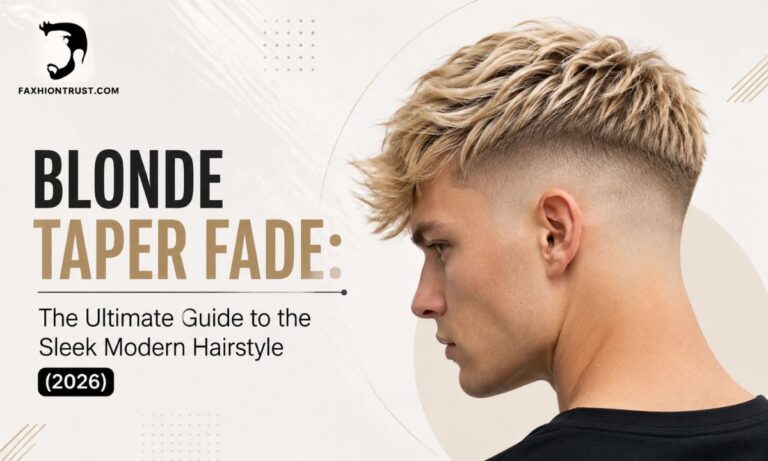
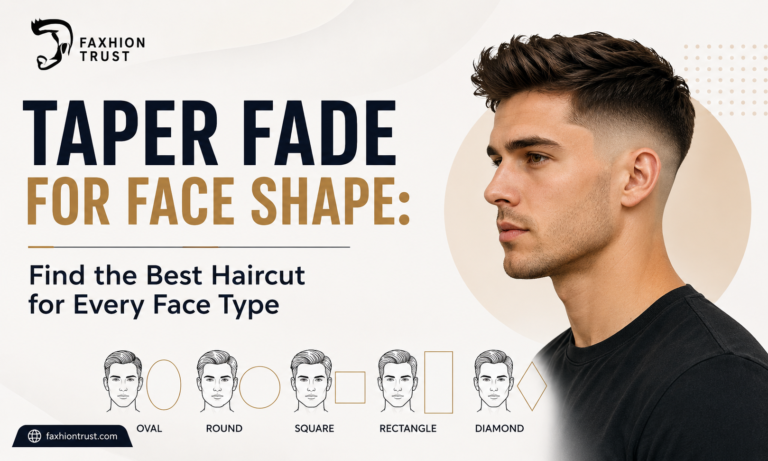
A taper fade is a haircut where the hair gradually shortens as it moves down the sides and back of the head, blending smoothly into the skin or a short length near the neckline. The top stays longer, while the sides “fade” from thick to thin without any harsh lines.
The word “taper” refers to this gradual shortening, while “fade” describes how close to the skin that shortening goes. Together, a taper fade gives you a clean, natural-looking transition that works with almost any hairstyle on top — buzz cuts, quiffs, crops, curls, or pompadours.
Taper vs Fade: What’s the Difference?
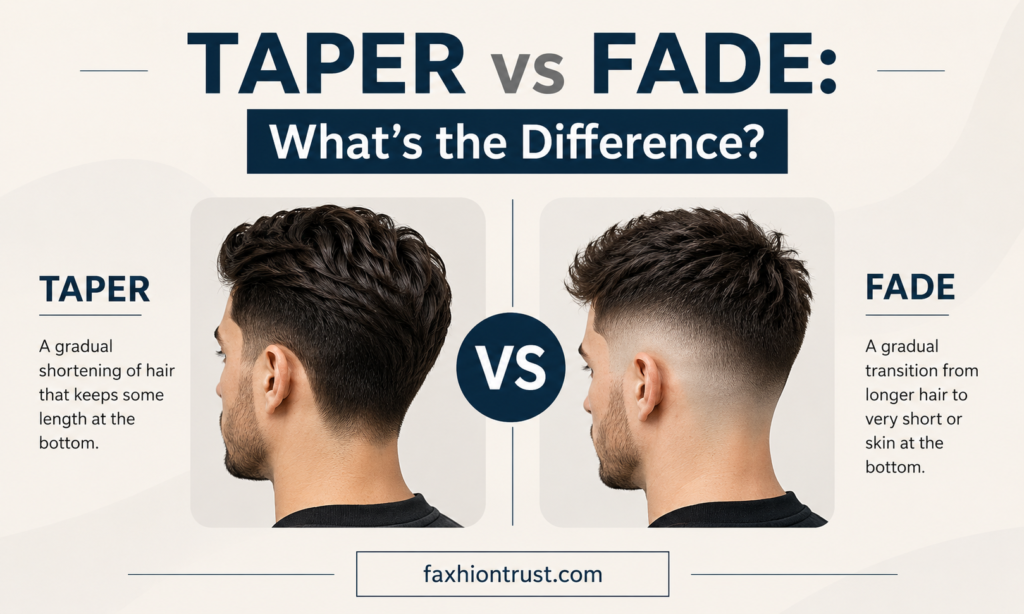
People often use “taper” and “fade” interchangeably, but they’re not quite the same thing.
- Taper: A subtle shortening of hair, usually kept slightly longer and not always going down to the skin. Common around the neckline and sideburns.
- Fade: A more dramatic shortening that blends hair down to the skin or near-skin length, creating sharper contrast.
- Taper fade: A combination of both — the gradual blend of a taper with the close, skin-level finish of a fade.
In short, a taper is softer and more conservative, a fade is bolder and more defined, and a taper fade sits comfortably between the two.
Low Taper Fade
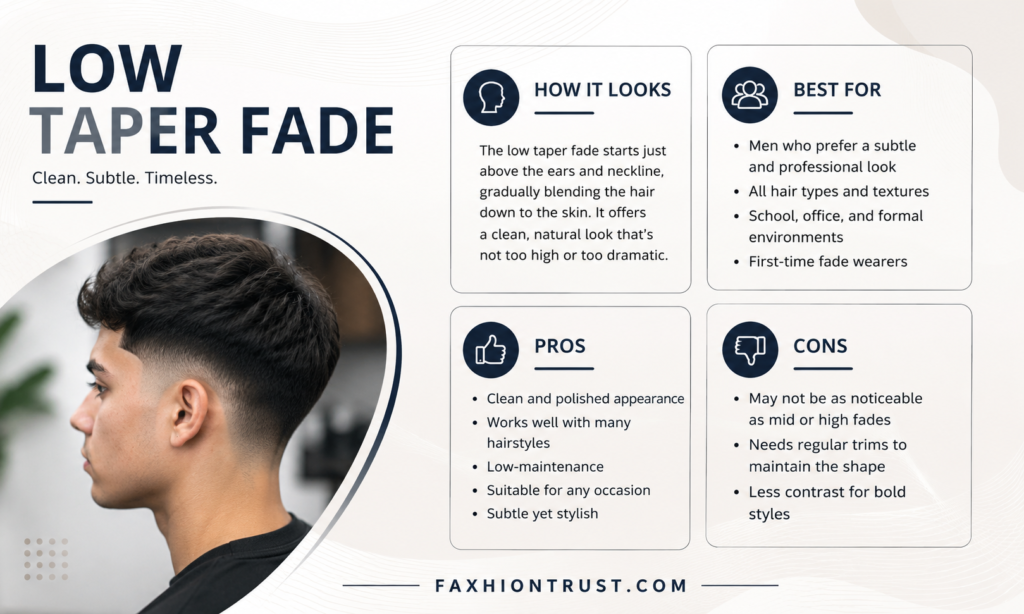
How It Looks
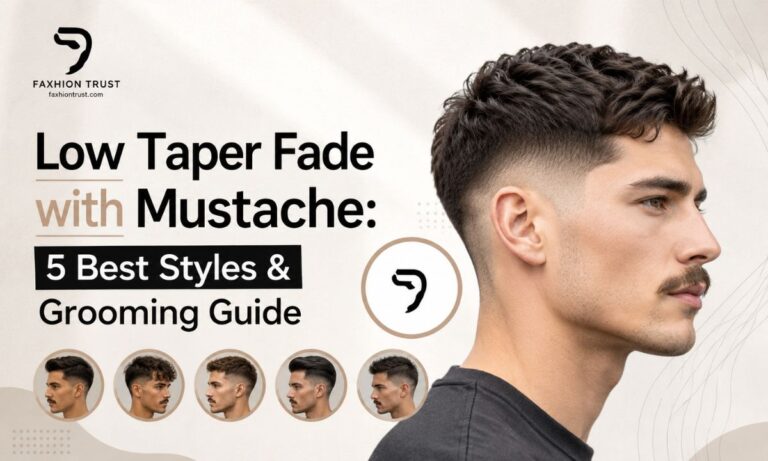
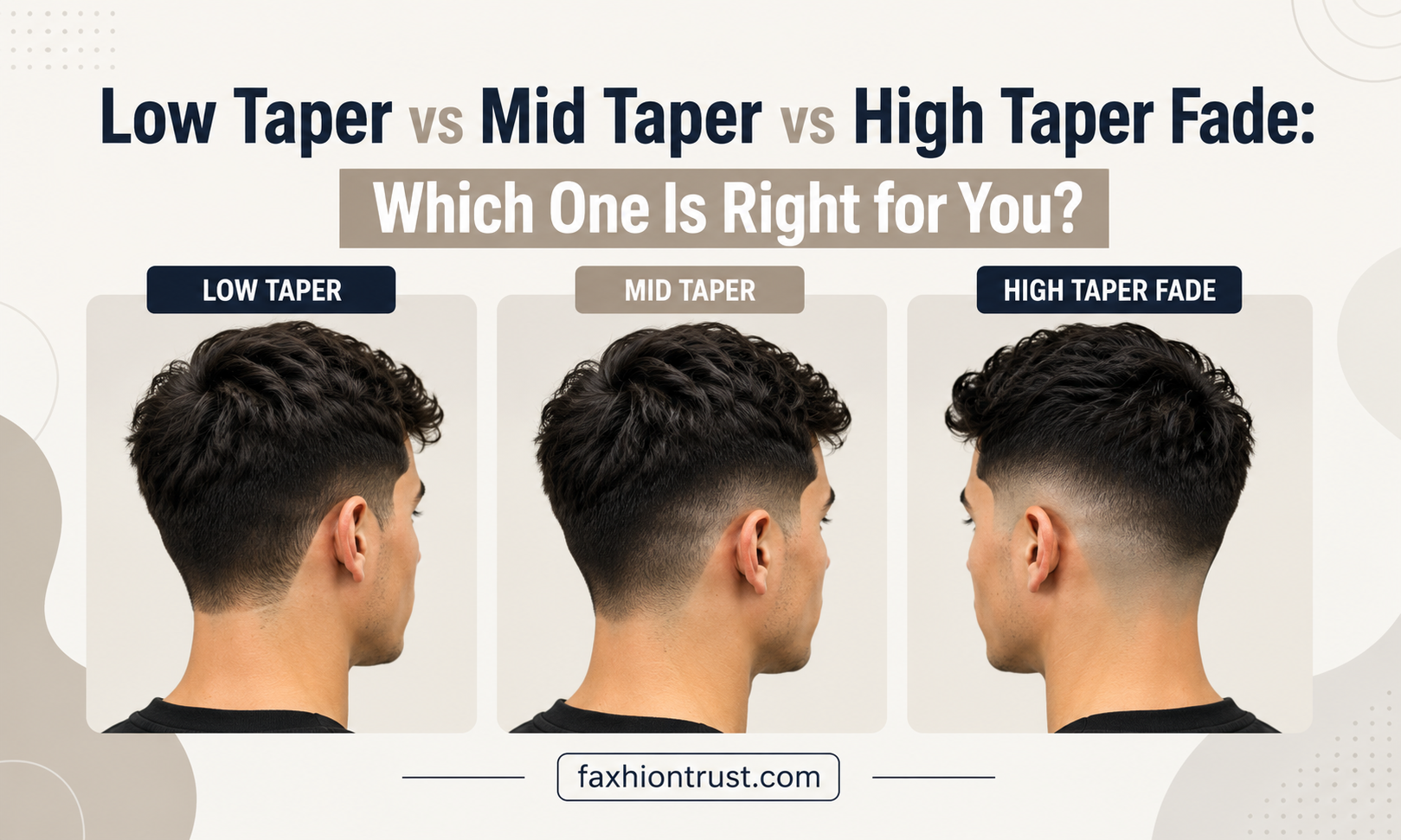
The low taper fade starts just above the ears and along the neckline, keeping more hair on the sides before it begins to blend. The fade itself stays low and close to the hairline, so the contrast between the top and sides is subtle.
Best For
- Round or oval face shapes
- First-time fade wearers
- Conservative workplaces or dress codes
- Longer hairstyles on top (quiffs, curls, textured fringes)
Pros
- Looks natural and grows out gracefully
- Easy to maintain with fewer barber visits
- Works well in professional and formal settings
- Suits almost every hair type
Cons
- Less dramatic contrast
- Can look similar to a regular haircut from a distance
- May not suit those wanting a bold, edgy style
Mid Taper Fade
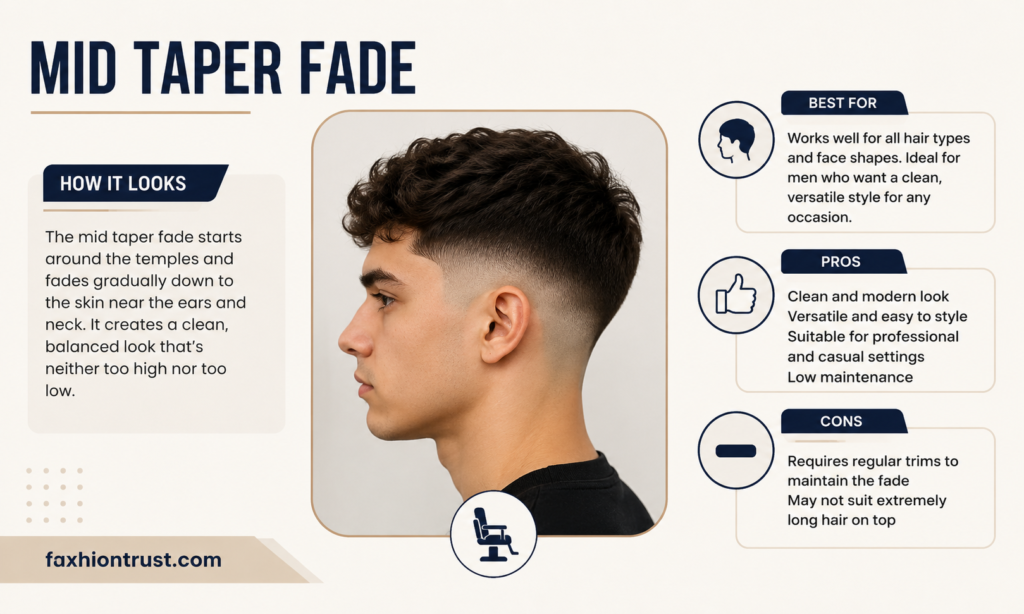
How It Looks
The mid taper fade begins around the temple area, roughly between the ear and the top of the head. It offers more visible contrast than a low taper without going to extremes, making it a versatile middle-ground option.
Best For
- Square or oval face shapes
- Thick, wavy, or curly hair
- Everyday versatility — casual and semi-formal looks
- Textured crops, pompadours, or messy styles
Pros
- Balances subtlety with noticeable definition
- Works with a wide range of hairstyles
- Adds shape without looking too sharp
- A safe choice if you’re unsure what to pick
Cons
- Needs more frequent trims than a low taper
- May look too plain for those wanting maximum contrast
- Slightly less forgiving on certain face shapes than a low taper
High Taper Fade (Bold & Sharp)
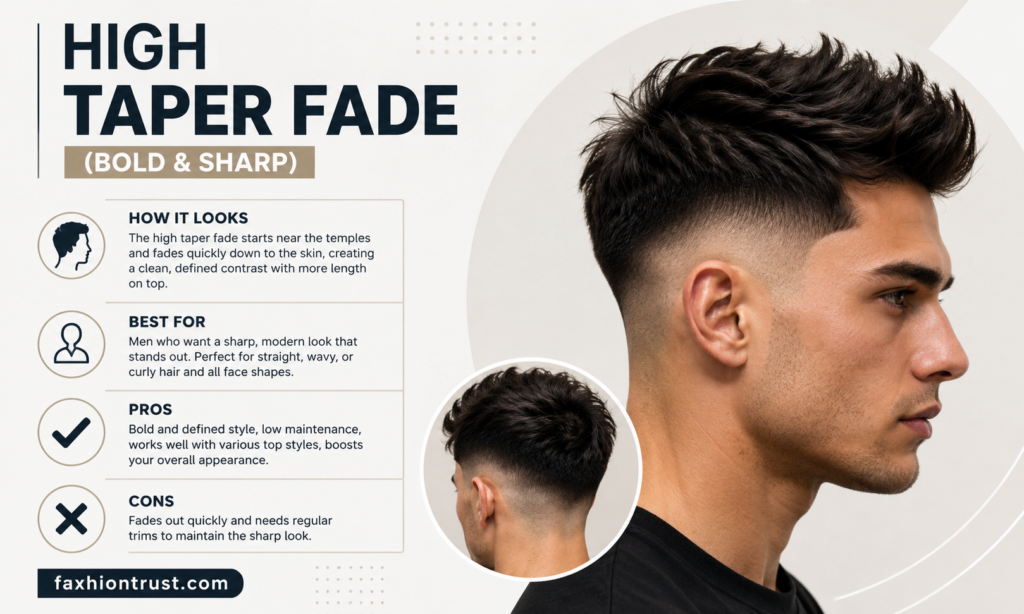
How It Looks
The high taper fade starts above the temple, cutting much higher on the sides and back. This creates the most dramatic contrast between the short sides and the longer hair on top, giving the haircut a sharp, modern edge.
Best For
- Trend-focused, bold styles
- High-volume tops like afros, pompadours, or spiky styles
- Thick or coarse hair that holds shape well
- Anyone wanting maximum definition
Pros
- Strong, eye-catching contrast
- Makes the top hair appear fuller and more voluminous
- Looks sharp immediately after a cut
- Pairs well with fades that include hard part lines or designs
Cons
- Grows out faster, requiring trims every 1–2 weeks
- Can look messy if not maintained regularly
- Not ideal for conservative or formal environments
Low Taper vs Mid Taper: Which Should You Pick?
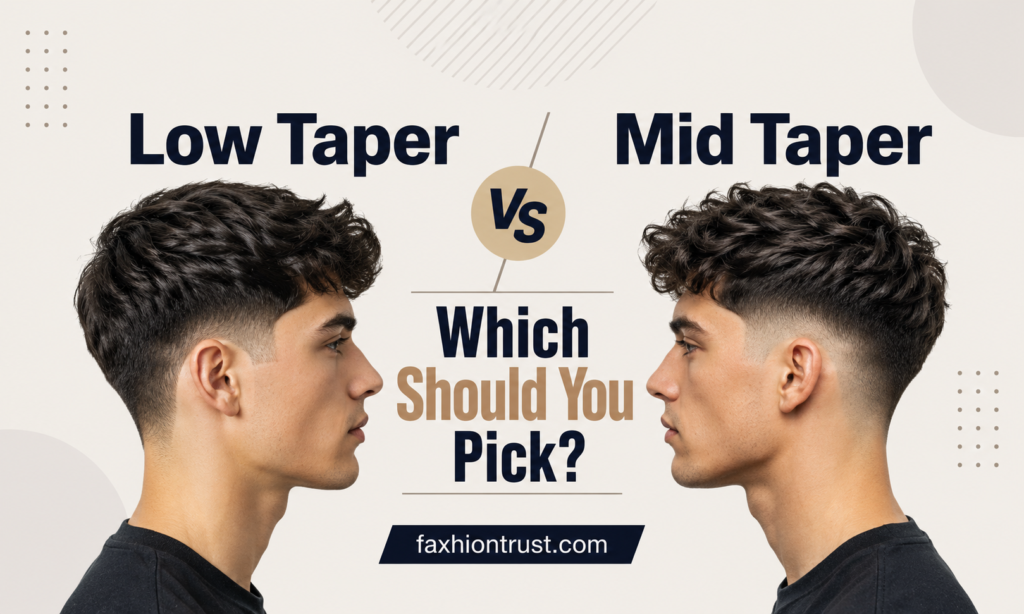
The choice between a low taper vs mid taper usually comes down to how much contrast you want and how often you can visit the barber.
A low taper is the better pick if you want something subtle that grows out cleanly and barely needs upkeep between cuts. A mid taper works better if you want a bit more shape and definition without committing to a bold look.
If your hair is thick or wavy, a mid taper often blends more naturally and adds structure to your style. If you have fine or straight hair, a low taper tends to look smoother and more polished.
High Taper Fade vs Low Taper Fade: Side-by-Side
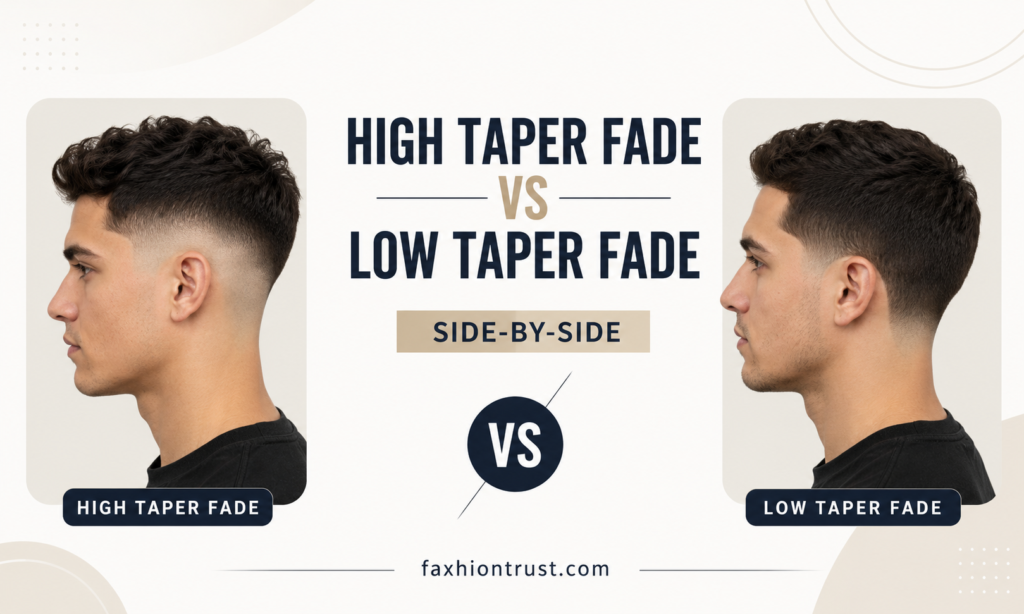
| Feature | Low Taper Fade | High Taper Fade |
| Starting point | Above the ears/neckline | Above the temples |
| Contrast level | Subtle | Dramatic |
| Maintenance frequency | Every 4–6 weeks | Every 1–2 weeks |
| Best face shapes | Round, oval | Square, oval, diamond |
| Workplace friendly | Yes | Depends on workplace |
| Hair type suited | All types | Thick or coarse hair |
Low Taper vs Mid Taper vs High Taper Fade — Quick Comparison Table
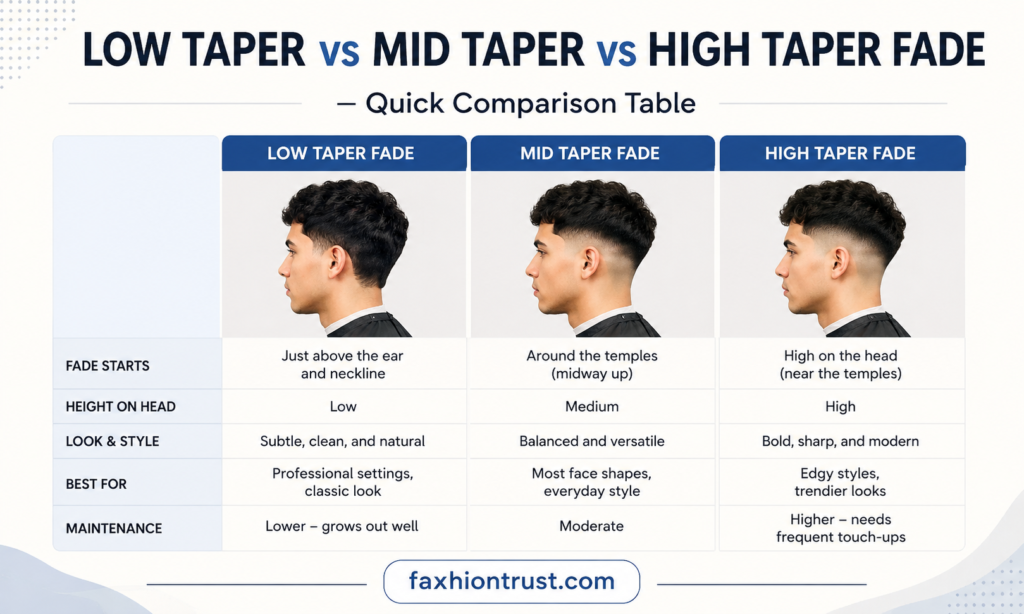
| Aspect | Low Taper | Mid Taper | High Taper |
| Fade starting point | Ear/neckline level | Temple level | Above temples |
| Visual impact | Subtle, natural | Balanced, defined | Bold, sharp |
| Maintenance | Low | Moderate | High |
| Best for | First-timers, formal settings | Everyday versatility | Trend-driven, bold looks |
| Pairs well with | Quiffs, curls, classic crops | Textured crops, pompadours | Afros, high-volume tops |
Which Taper Fade Should You Choose?
Choose a Low Taper Fade if:
- You want a subtle, low-maintenance haircut
- You’re in a formal or conservative work environment
- You’re getting a fade for the first time
- You prefer longer hair on top
Choose a Mid Taper Fade if:
- You want noticeable shape without going too bold
- You have thick or wavy hair that needs structure
- You like styles such as textured crops or pompadours
- You want a haircut that suits both casual and dressier occasions
Choose a High Taper Fade if:
- You want maximum contrast and a modern, sharp look
- You’re comfortable visiting the barber every 1–2 weeks
- You wear high-volume styles like afros or spiky tops
- You want your haircut to make a statement
What to Tell Your Barber
Clear communication saves you from leaving the chair disappointed. Try these simple scripts:
- Low taper fade: “I’d like a low taper fade, starting just above my ears, with a soft blend and a clean neckline.”
- Mid taper fade: “Give me a mid taper fade starting around my temples — noticeable but not too extreme.”
- High taper fade: “I want a high taper fade, starting above my temples, with sharp contrast on the sides.”
It also helps to bring a reference photo and mention your face shape, hair type, and how often you can come in for touch-ups.
Maintenance & Styling Tips
- Trim on schedule: Low tapers can wait 4–6 weeks; high tapers look best with trims every 1–2 weeks.
- Use the right products: A lightweight pomade or styling cream keeps the top textured without weighing it down.
- Blend with home tools: A trimmer with multiple guard sizes helps you maintain the fade between barber visits.
- Moisturize your scalp: Shorter sides can dry out faster, especially with high tapers — a light scalp oil keeps things healthy.
- Communicate changes early: If you’re growing out a high taper into a mid or low taper, tell your barber so they can adjust gradually instead of cutting it all at once.
Final Thoughts
There’s no single “best” low taper vs mid taper — only the one that fits your face shape, hair type, lifestyle, and how much upkeep you’re willing to commit to. A low taper offers easy, professional styling, a mid taper strikes a balance for everyday wear, and a high taper delivers bold, head-turning contrast for those who love a sharp edge.
Whichever you choose, the key is clear communication with your barber and consistent maintenance to keep the fade looking sharp.
“If you want to dive deeper into the history and technical roots of this style, check out this detailed overview of the fade haircut on Wikipedia.”