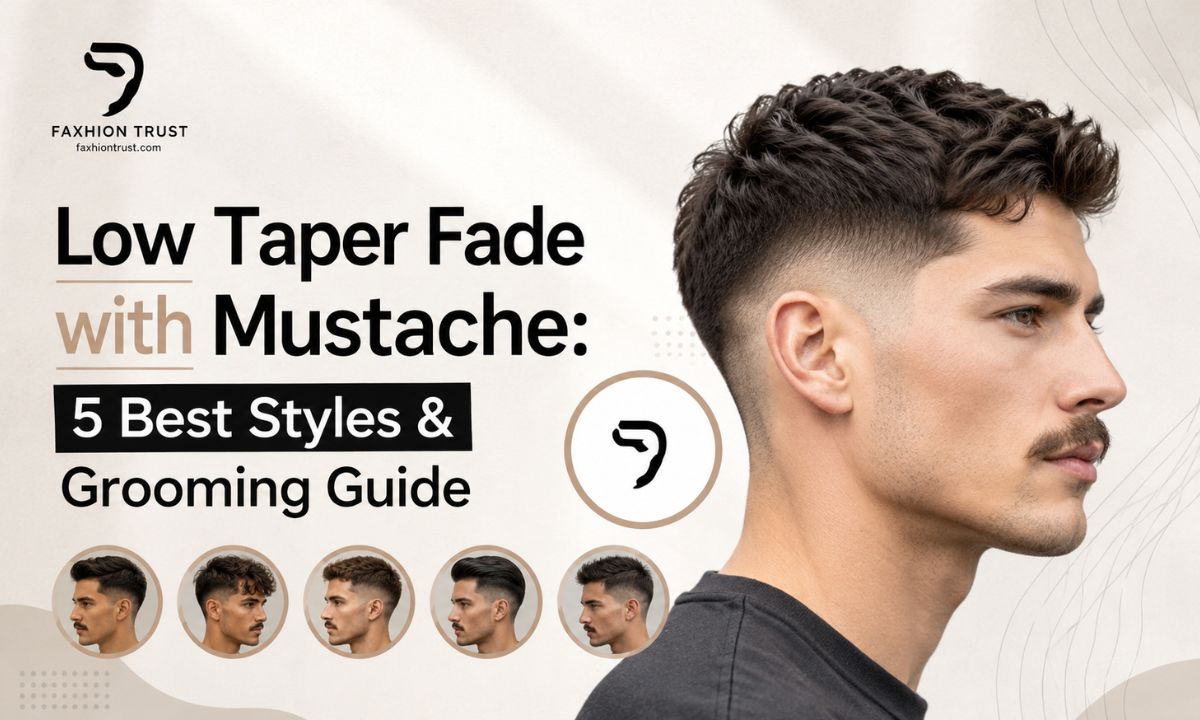
Low Taper Fade with Mustache: 5 Best Styles & Grooming Guide
You step out of the barbershop with a fresh cut — sides tight, neckline clean — and something still feels off. The haircut is not the problem. Most of the time, it comes down to the face.
A well-chosen mustache next to a low taper fade does not just add facial hair; it finishes the whole look. Here is everything you need to know to get it right.
What Is a Low Taper Fade
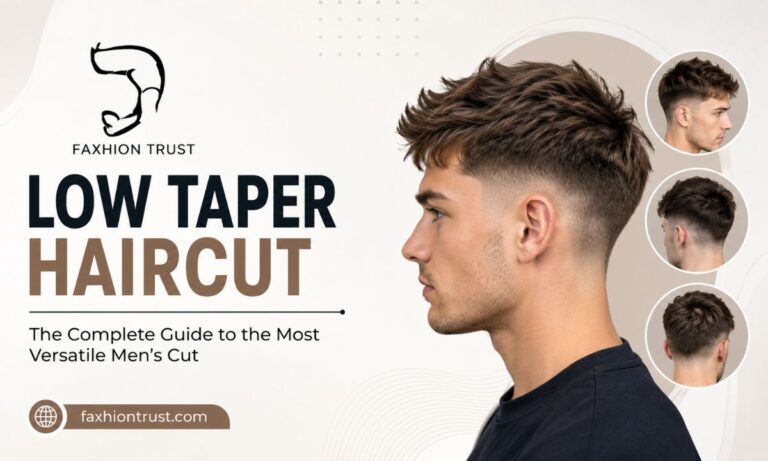
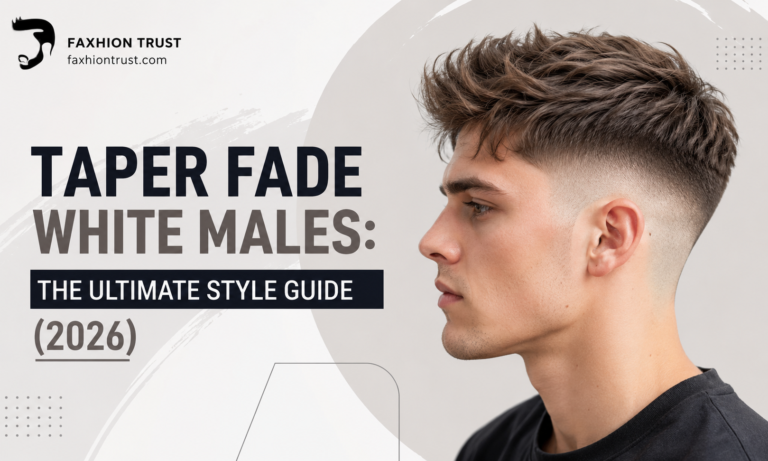
A low taper fade is a haircut where the hair gradually gets shorter on the sides and back, starting just above the ears and blending cleanly down to the neckline. The word “low” tells you where the fade begins — close to the ears, not high up on the head like a mid or high fade.
The result is a subtle, refined look. It works at job interviews, weddings, and weekend hangouts without missing a beat. Because the transition happens lower on the head, the sides keep more hair than bolder fade styles, making it one of the most professional and versatile cuts a man can wear.
Why a Mustache Completes the Look
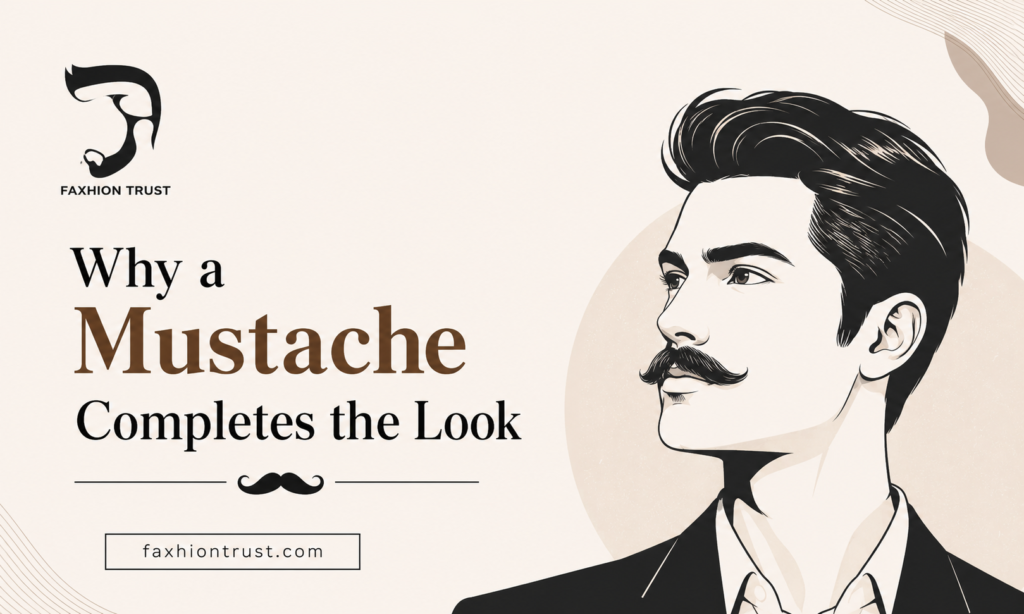
A low taper fade draws attention to the structure of the face. A mustache builds on that by adding definition near the upper lip, balancing the clean sides, and giving the whole look a finished, intentional quality.
Without something going on up front, even a sharp fade can fall flat. The mustache anchors the face and turns a good haircut into a complete grooming look.
5 Best Mustache Styles for a Low Taper Fade
Classic Natural Mustache
The natural mustache sits just above the lip with minimal shaping. It is low-maintenance, suits almost every face shape, and works especially well for men new to facial hair styling. Pair it with a low taper fade for a clean, understated look.
Best for: Oval and round faces, beginners, professional settings.
Chevron Mustache
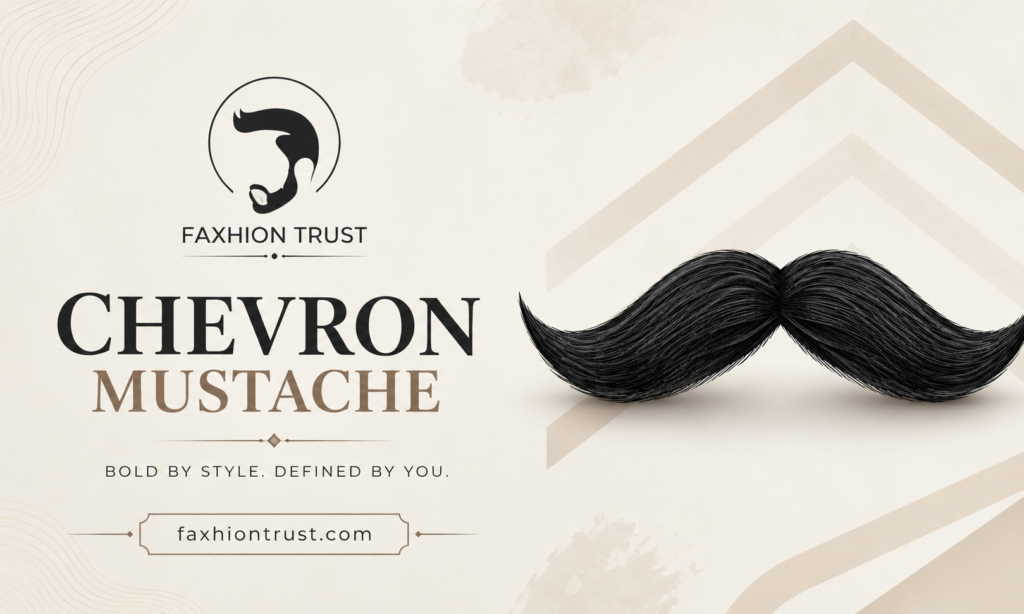
The chevron is a fuller, downward-angled mustache that tapers toward the corners of the mouth. Think Tom Selleck — thick, confident, and unmistakably masculine. It adds strong definition to the upper lip and pairs naturally with the clean sides of a low taper.
Best for: Round faces that need definition, square and oval faces.
Pencil Thin Mustache
A thin, precise line of hair sitting just above the lip. It takes more upkeep than the chevron but delivers a sharp, polished look. This style works best when the barber handles the initial shaping, and you maintain the lines at home.
Best for: Oval faces, men who prefer a refined, detail-oriented style.
Beardstache
A beardstache is a bold, thick mustache paired with short, lightly grown stubble on the chin and cheeks. The mustache takes center stage while the stubble adds rugged texture. Combined with a low taper fade, it creates a strong contrast that looks deliberate and modern.
Best for: Square and oval faces, men who want a bold, edgy look.
Horseshoe Mustache
The horseshoe drops down from the corners of the mouth in two vertical lines, framing the chin. It is a strong, statement-making style with a retro edge. It looks best on men with angular jawlines where the low taper’s clean sides balance the heaviness of the horseshoe shape.
Best for: Square faces with strong jaws. Avoid round faces — it widens the lower face.
For a deeper look at mustache growth timelines and shaping techniques, Beardbrand’s mustache style guide is a helpful reference.
Which Combo Suits Your Face Shape
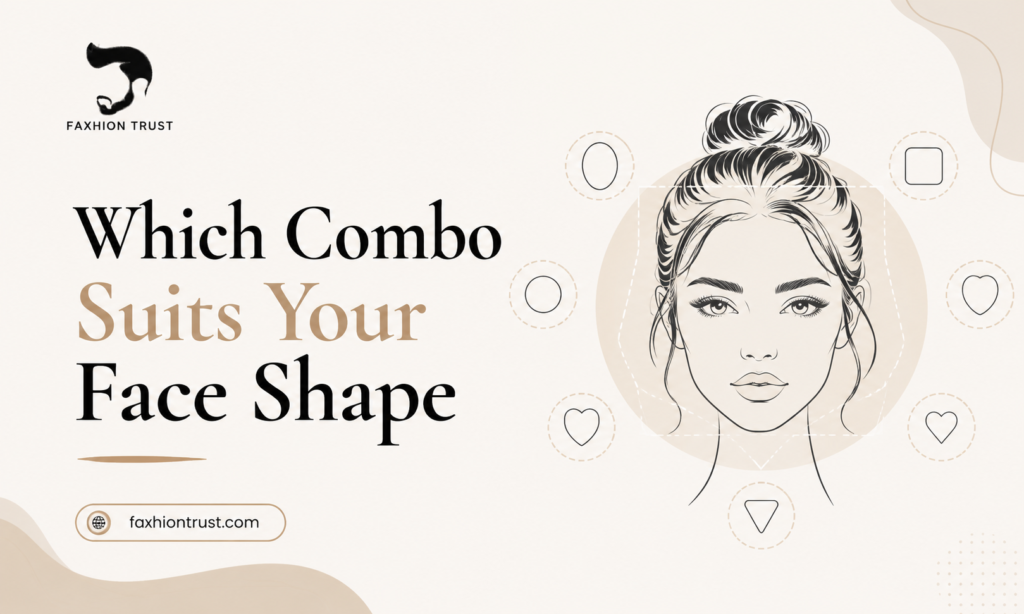
| Face Shape | Best Mustache Style | Why It Works |
| Round | Chevron or Natural | Adds vertical definition, reduces roundness |
| Square | Chevron, Beardstache, or Horseshoe | Balances a strong jaw without overdoing it |
| Oval | Almost any style | Proportional face works with most options |
| Diamond | Natural or Pencil Thin | Keeps the focus subtle on strong cheekbones |
| Oblong | Natural or Beardstache | Adds width without lengthening the face |
Low Taper Fade with Mustache for Different Hair Types
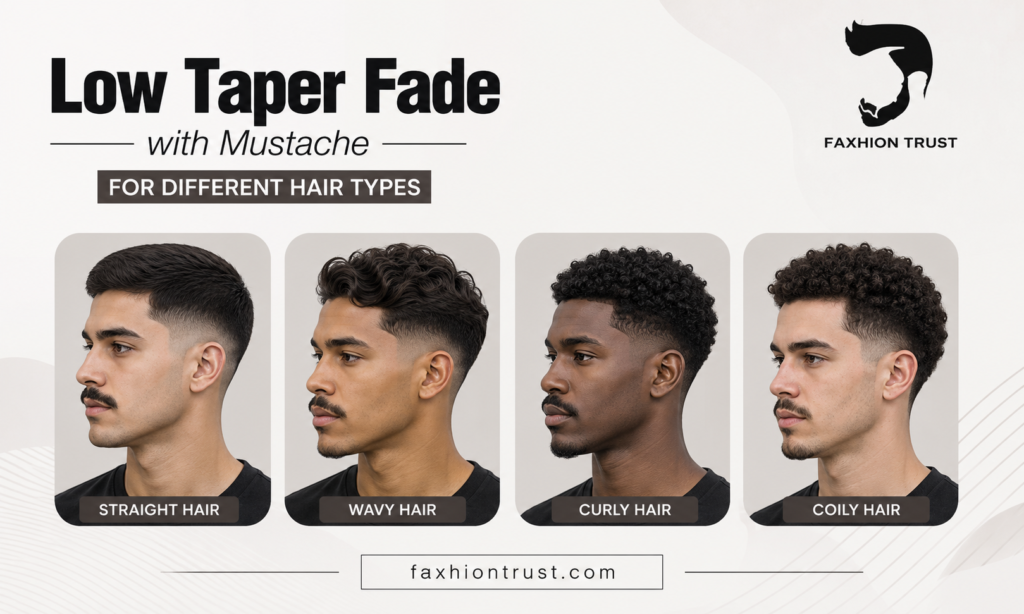
Straight Hair
Straight hair shows fade lines clearly, making the low taper look especially crisp. On top, it holds pomade and comb-overs well. Keep the sides faded tight and let the top do the styling work.
Curly Hair
Curly hair and a low taper fade are a natural match. The fade controls the sides while curls add volume and texture on top. Use a curl cream or light mousse after washing to define the curls and keep them from frizzing.
Thick Hair
Thick hair benefits most from the taper because it removes bulk from the sides without losing length on top. Ask your barber to layer through the top to reduce weight if needed. Regular trims every two to three weeks keep thick hair from looking heavy.
Wavy Hair
Wavy hair sits nicely between straight and curly — it holds shape but still has natural movement. A low taper with a textured or messy top looks effortlessly stylish. Use a light sea salt spray or texture cream to enhance the wave.
Low Taper Fade with Mustache for Different Age Groups
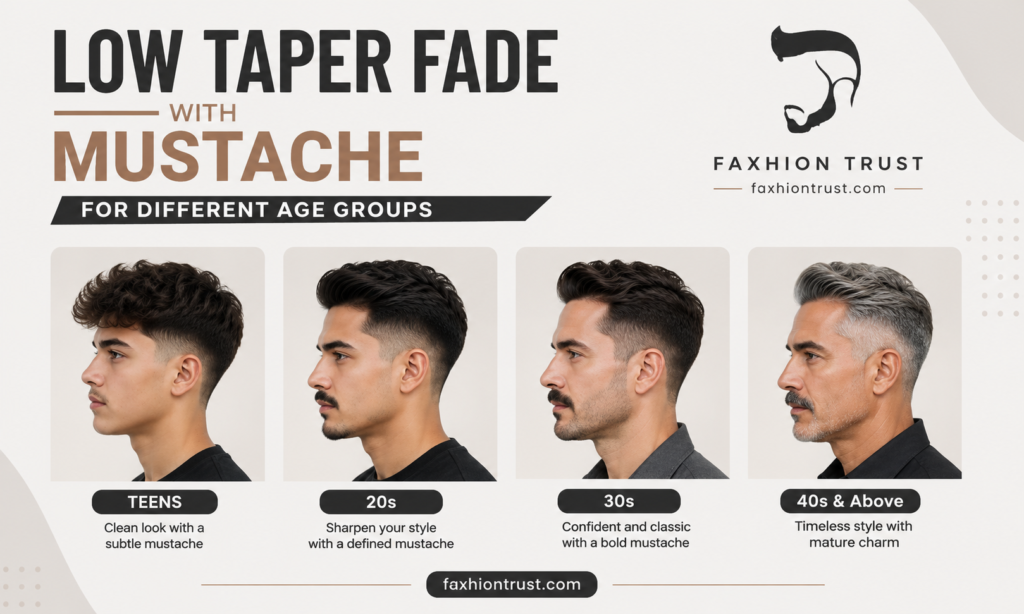
Teen Boys
Teen boys can pull off a low taper fade with a natural or pencil thin mustache, though most younger guys are still developing facial hair. Keep the mustache light and well-groomed rather than trying to force a heavier style before it grows in fully.
Young Men
Young men in their 20s and 30s have the most flexibility. The beardstache, chevron, and horseshoe all land well at this age. Experiment with different styles until you find the one that fits your face and lifestyle.
Mature Men
Mature men benefit from the understated elegance of the low taper fade. A chevron or natural mustache keeps things polished without looking like you’re trying too hard. Salt-and-pepper facial hair actually pairs beautifully with a tight fade — the contrast is striking.
Not sure which cut suits you best? Read our detailed breakdown of Undercut vs Fade to find your perfect match.
Low Taper Fade vs Mid Taper Fade: What’s the Difference?
| Feature | Low Taper Fade | Mid Taper Fade |
| Fade starts at | Just above the ears | Around the temples |
| Contrast level | Subtle and gradual | Moderate, more noticeable |
| Best setting | Professional, versatile | Casual to semi-formal |
| Maintenance | Every 3–4 weeks | Every 2–3 weeks |
| Best face shapes | Most face shapes | Oval, square |
The low taper is the quieter, more versatile option. The mid taper makes more of a visual statement and suits men who want a bolder contrast on the sides.
Low Fade vs Low Taper Fade
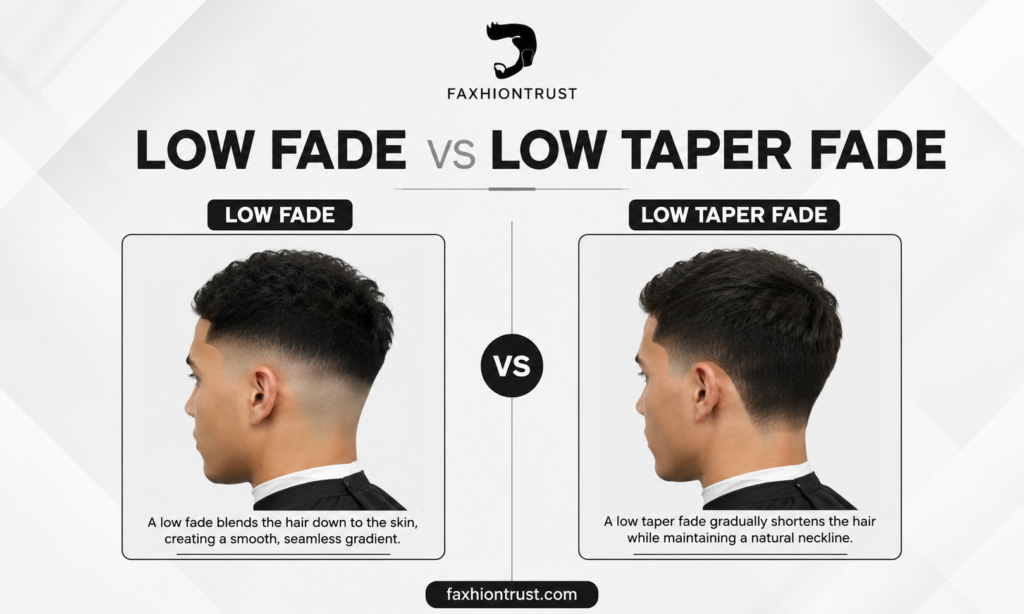
These two terms are often used interchangeably, but there is a difference:
- Low fade: Hair blends down to bare skin (skin fade) or very close to it. The contrast is sharper.
- Low taper fade: Hair gradually shortens but does not necessarily reach the skin. The transition is softer and more natural-looking.
If you want a clean, polished look that does not shout “fresh cut” from across the room, the low taper fade is the better pick. If you want visible contrast and edge, go with the low skin fade.
If you love the taper fade look with facial hair, check out our guide on the Taper Fade with Goatee for more style inspiration.
How to Tell Your Barber What You Want
Most guys walk in, say something vague, and walk out with something almost right. Be specific — it takes thirty seconds:
“Low taper fade — start it just above my ears and bring it clean down to the neckline. Keep the top at [your preferred length]. Shape my mustache into a [chevron / pencil thin / horseshoe / natural].”
Bring a reference photo if possible. Even experienced barbers prefer a visual reference over a verbal description alone.
Simple Daily Grooming Routine
Every morning:
- Comb the mustache flat
- Apply a small amount of mustache wax if you need the shape to hold all day
Every 2–3 days:
- Check the edges of the mustache
- Trim anything creeping over the lip or going uneven on the sides
Every week:
- Do a proper trim to maintain length
- Always trim dry — wet hair looks longer and you will cut more than intended
Every 2–4 weeks:
- Book your barber for a fade refresh. The moment you think it can last a bit longer is usually when you should book.
Common Mistakes to Avoid
- Trimming wet hair: It looks longer wet and you’ll cut too much off.
- Over-trimming the mustache at home: Let the barber set the shape first, then maintain it.
- Letting the fade grow out too long: A low taper fade loses its shape faster than you expect. Stick to your barber schedule.
- Choosing a mustache style for trends, not your face shape: Match the style to your face shape, not the one you saw online.
- Skipping mustache wax: Without product, a longer mustache droops over the lip and loses definition fast.
- Going too heavy too fast: If you’re new to facial hair, start with a natural mustache and build from there.
Wrapping It Up
A low taper fade paired with the right mustache is one of the most complete, versatile looks in men’s grooming. It works for almost every hair type, face shape, and age group — and it holds up in professional and casual settings equally well.
Start with the classic natural or chevron mustache if you’re new to this. Build your grooming routine, get comfortable with the maintenance, and then experiment with bolder styles. The guys who consistently look sharp are not always the ones getting the most expensive cuts — they’re the ones who know their look and maintain it well.