Low Taper Haircut: The Complete Guide to the Most Versatile Men’s Cut (2026)
If you want a haircut that looks sharp at the office, holds up at the gym, and never screams for attention, the low taper is it. It’s the quiet workhorse of men’s grooming — clean enough for a job interview, relaxed enough for a weekend, and forgiving enough that you won’t be back in the barber’s chair every ten days.
This guide breaks down exactly what a low taper is, how it differs from a fade, which variations are trending in 2026, and how to ask for (and maintain) the cut without any of the usual barber-shop guesswork.
What Is a Low Taper Haircut?
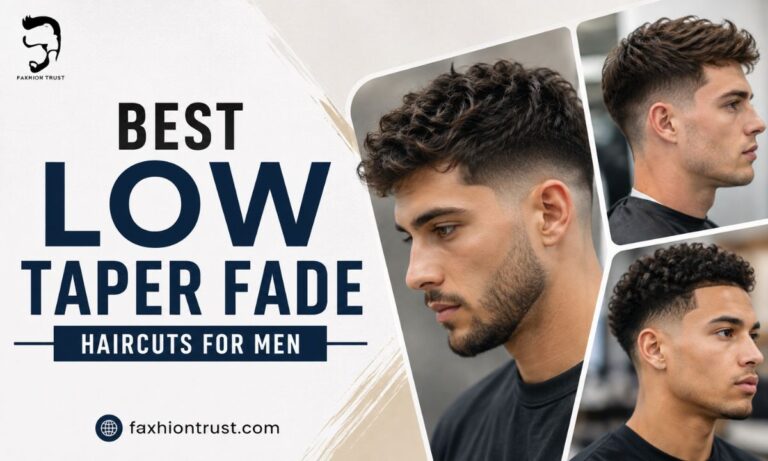
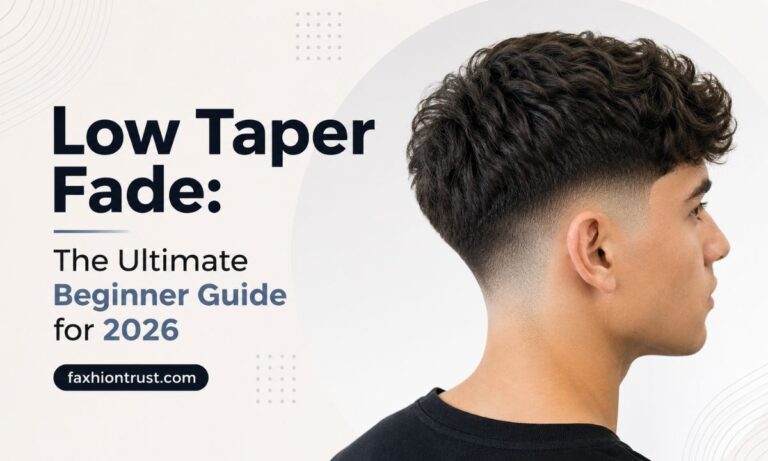
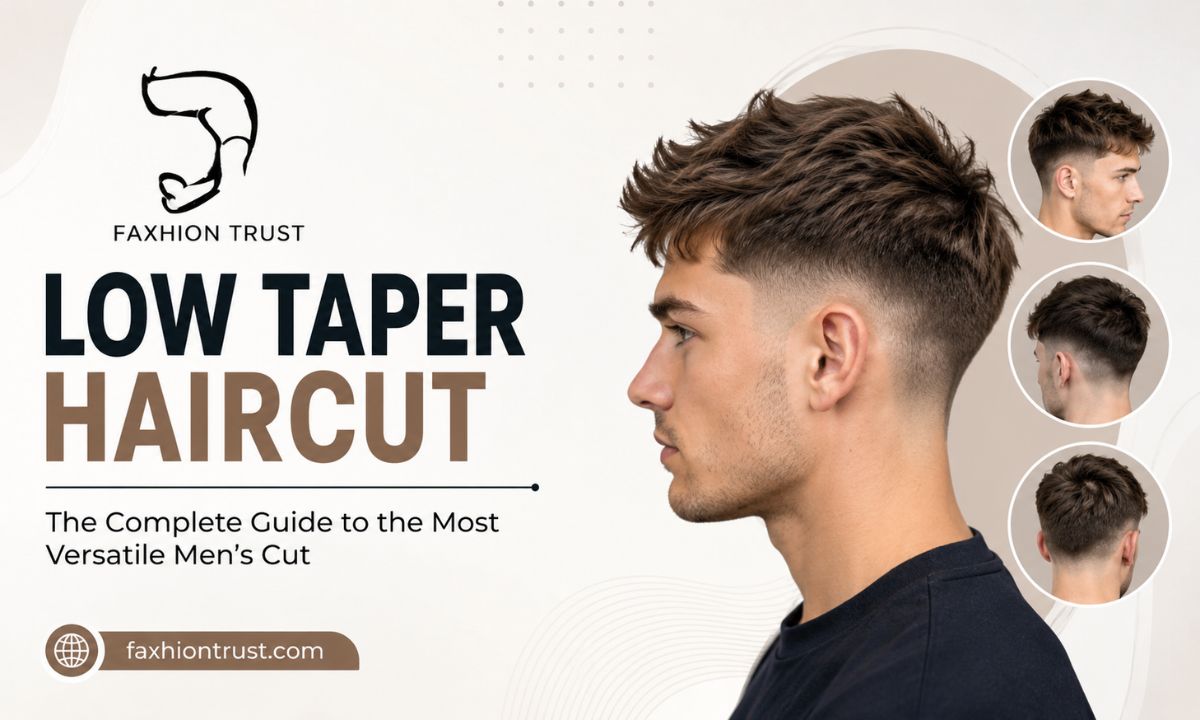
A low taper haircut is a style where the hair gradually shortens down the sides and back, with the fade or taper line starting low — just above the ears and near the neckline — instead of higher up on the head.
The word “low” refers to where the taper begins, not how short the overall cut is. Hair up top can stay long, medium, or short; the defining feature is that the sides blend gently and stay closer to the natural hairline.
Key traits of a low taper:
- Subtle transition — the change from short to shorter is gradual, not sudden
- Starts near the ears/neckline — the most conservative starting point of any taper
- Keeps more hair on the sides compared to mid or high tapers
- Works with any hairstyle on top — buzz cuts, curls, quiffs, or long, textured tops
- Low-maintenance — grows out cleanly without looking messy
Because the taper sits so low, it reads as neat rather than “styled,” which is exactly why it’s a favorite for professional settings.
Low Taper vs Fade: What’s the Difference?
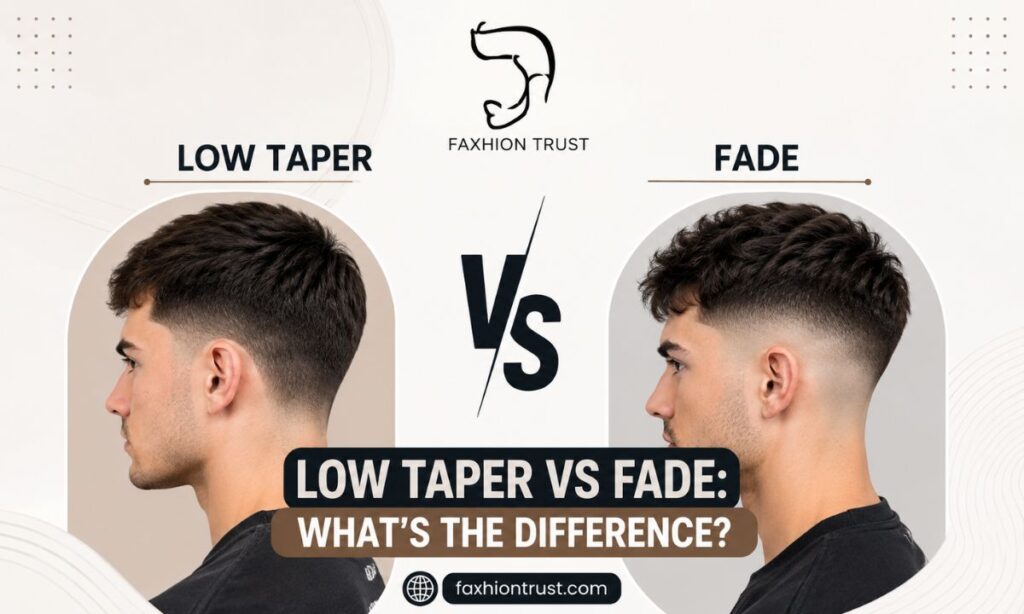
This is one of the most searched comparisons, and the confusion is understandable — the terms get used interchangeably in barbershops all the time.
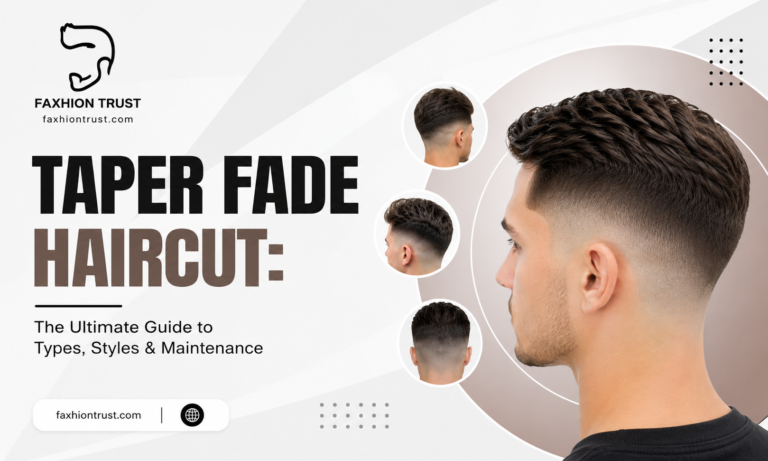
A taper shortens hair gradually with a soft, blended transition and rarely goes down to bare skin. A fade, on the other hand, blends much more sharply, often fading all the way down to the skin for a crisp, high-contrast finish.
| Feature | Low Taper | Fade |
| Transition style | Soft, gradual | Sharp, high-contrast |
| Does skin? | Rarely | Often (especially skin/bald fades) |
| Where it starts | Near the ears/neckline | Can start anywhere (low, mid, high) |
| Best for | Professional, subtle looks | Bold, statement looks |
| Maintenance | Every 3–4 weeks | Every 1–2 weeks |
In practice, most barbers give you a taper fade by default — a hybrid that blends the softness of a taper with the definition of a fade. If you want the most understated version of that, “low taper” is the exact term to use.
Why Do Guys Keep Choosing the Low Taper?
The low taper has stayed popular for one simple reason: it works everywhere, on everyone, with almost no upkeep.
- Office-friendly — it looks polished without appearing “cut.”
- Grows out gracefully — because the taper is subtle, you don’t get an awkward, patchy look between trims.
- Face-shape flexible — it doesn’t add dramatic width or height, so it suits round, square, oval, and oblong faces alike.
- Works with every hair type — straight, wavy, curly, or coily hair all take a low taper well.
- Low commitment — you can go 3–4 weeks between cuts without losing the shape, unlike high or skin fades that need weekly touch-ups.
Read More: Blonde Taper Fade
It’s also the safest first fade for anyone who’s never had a taper done before — there’s very little room for it to look “off.”
Popular Low Taper Styles
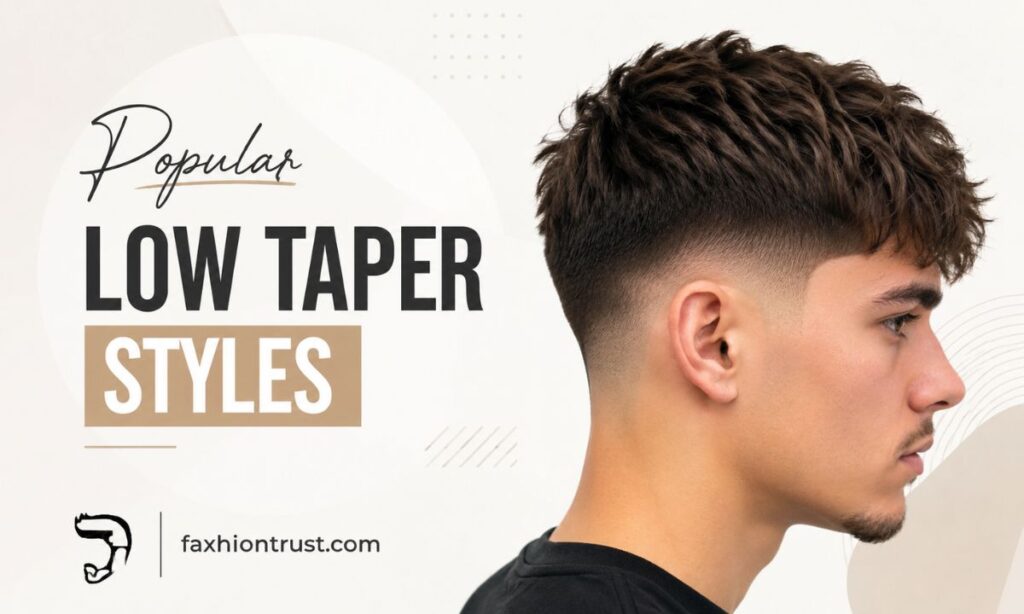
The low taper isn’t one fixed look — it’s a base that adapts to hair type, texture, and personal style. Here are the most requested variations.
Low Taper Black
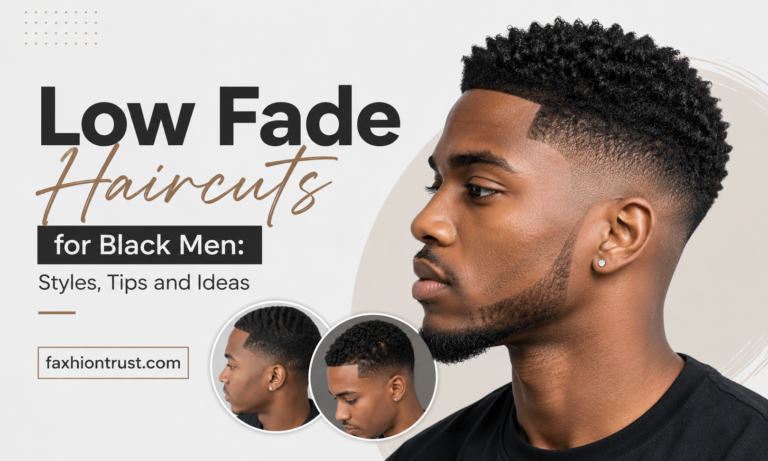
For Black men, the low taper is often paired with textured tops, waves, or a fresh line-up for extra sharpness. The low fade keeps the sides clean while letting natural texture — coils, waves, or a short afro — stay the focal point on top. A crisp edge-up around the hairline and temples finishes the look.
Low Taper Black Male
This version leans slightly more conservative, often kept close-cropped on top with a defined part or a simple brush-up. It’s a go-to for workplaces with strict grooming standards because it stays sharp with minimal daily styling — a quick brush and some light hold product is usually enough.
Low Taper Curly Hair
Curly hair pairs beautifully with a low taper because the contrast between the clean sides and voluminous curls on top does most of the styling work for you. Barbers typically leave more length on top to let the curl pattern show, then use the low taper to keep the silhouette controlled rather than bulky.
Classic Low Taper Haircut
This is the no-frills version: short, evenly tapered sides with a slightly longer top styled straight back or with a simple side part. It’s the low taper at its most timeless — the cut you can request anywhere in the world and get a consistent result.
Low Taper vs Mid Taper Fade
Choosing between a low and mid taper comes down to how much contrast you want and how bold you’re willing to go.
Mid Taper Fade
A mid taper fade starts around temple height, roughly midway up the side of the head. It creates noticeably more contrast than a low taper without going as extreme as a high fade — a middle-ground choice for guys who want their haircut to look intentional at a glance.
Mid Fade Low Taper
This term usually describes a hybrid: the fade portion sits at mid-height while the overall taper still tapers down low toward the neckline, creating a blended effect with contrast up top and softness at the base. It’s a good option if you like the sharper look of a mid fade but still want a soft, natural finish near the ears and neck.
| Comparison | Low Taper | Mid Taper Fade |
| Starting point | Near the ears | Temple height |
| Visual contrast | Subtle | Moderate |
| Best setting | Corporate, conservative | Casual, trend-forward |
| Regrowth visibility | Minimal | Slightly more noticeable |
Also Read this: Low Taper Fade Edgar
How to Ask Your Barber for a Low Taper
Miscommunication at the chair is the #1 reason people leave unhappy. Be specific with these points:
- Say “low taper,” not just “taper” — otherwise many barbers default to a mid taper fade.
- Specify the guard number for the sides (commonly a #2 or #3 fading down to a #1 or 0.5).
- Show a reference photo — visuals remove almost all guesswork.
- Mention your top length — do you want it short, medium, or long?
- Ask for a “shadow fade” or “taper only” if you want zero skin showing at any point.
- Confirm the neckline style — rounded, straight, or blocked.
A simple script that works in any barbershop: “Low taper on the sides and back, blending into [your desired top length], no skin showing, natural hairline.”
How to Style and Maintain a Low Taper
The low taper’s biggest selling point is how little effort it takes to keep it looking sharp.
Daily styling:
- Use a lightweight pomade or matte clay for texture and control
- Blow-dry or air-dry with your fingers to lift the roots if you want volume
- Curly types should use a light curl cream to define texture without weighing it down
Maintenance schedule:
- Trim every 3–4 weeks — low tapers grow out more gracefully than high or mid fades
- Clean up the neckline and hairline every 1–2 weeks if you want crisp edges between full cuts
- Use a boar-bristle brush to train hair direction on top
At-home upkeep:
- A clipper with adjustable guards can maintain the taper between barber visits
- Trim in good lighting using two mirrors to check the back
- When in doubt, leave more length — you can always take more off later
Who Looks Best with a Low Taper Haircut?
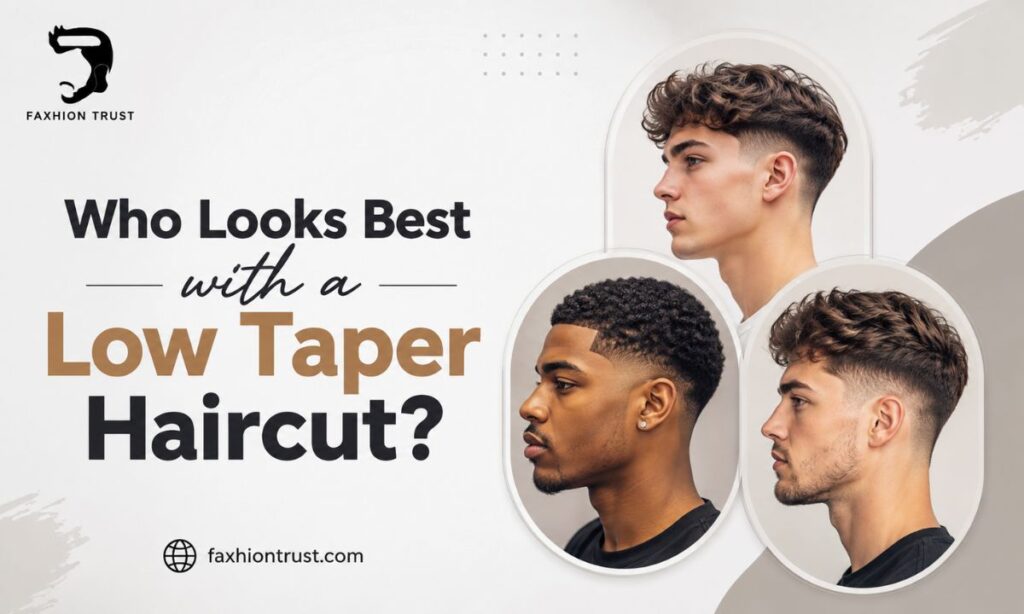
Almost anyone. That’s the point of the style. But it particularly suits:
- Professionals who need a polished look for client-facing roles
- Guys with round or square faces, since the low, subtle taper avoids adding extra width
- Anyone with fine or thinning hair, because it keeps volume on top without harsh contrast lines drawing attention to the scalp
- First-timers trying a taper, since it’s the most forgiving and least dramatic entry point
- Curly and coily hair types, who get to keep their natural texture as the star of the look
For a deeper look at how fades evolved as a hairstyle category, see Wikipedia’s overview of fade haircuts.
Why the Low Taper Is Still Trending in 2026
Men’s grooming trends have shifted toward “quiet” haircuts — sharp, deliberate, but not attention-seeking — and the low taper fits that shift perfectly. It pairs effortlessly with the current wave of natural, textured tops (curls, waves, messy quiffs) that dominate 2026 style boards, while still reading as put-together in professional settings. Add in the practical appeal — fewer barber visits, easier upkeep, and universal face-shape compatibility — and it’s clear why this cut isn’t fading out anytime soon.
Conclusion
The low taper haircut earns its popularity honestly: it’s clean, adaptable, and doesn’t demand constant upkeep. Whether you’re pairing it with curls, a classic comb-back, or a simple crop, it delivers a polished result that works in almost any setting.
If you’re unsure where to start, walk into your next appointment with the phrase “low taper” and a reference photo that alone will get you 90% of the way to the cut you want.