Drop Fade vs Taper Fade: Complete Comparison & Style Guide (2026)
Picking between a drop fade vs taper fade comes down to one thing: how much contrast you want your haircut to show. Both cuts trim the sides and back shorter than the top, but they get there in completely different ways and that difference changes how the cut looks, how it grows out, and how often you’re back in the barber’s chair.
This guide breaks down both styles in plain terms: what each one actually is, who it suits, how they perform across hair types, and how to talk to your barber so you walk out with the cut you pictured.
What Is a Taper Fade?
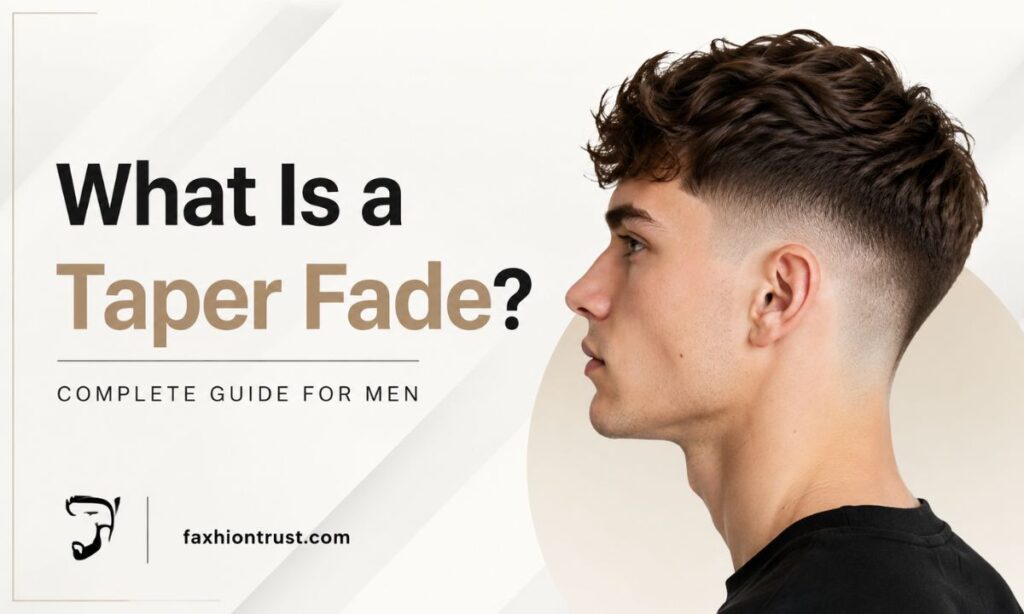
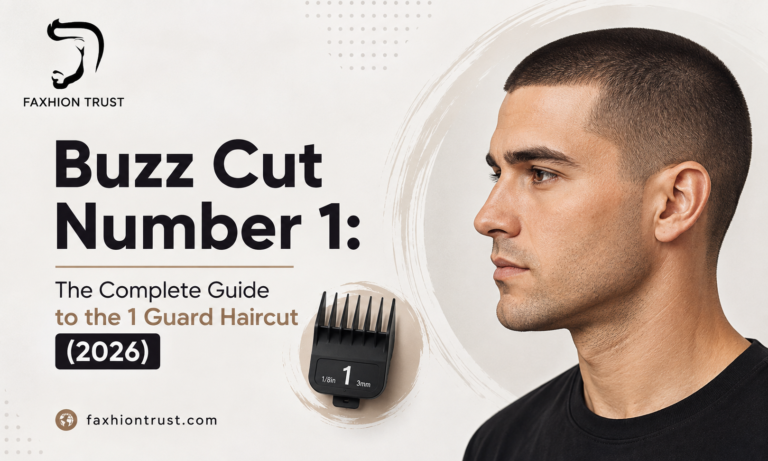
A taper fade keeps most of the sides at a fairly even length and only shortens the hair right at the edges — the sideburns and the neckline. There’s no visible line running around the head. The hair simply gets shorter as it nears the skin, so the transition is smooth and easy to miss unless you’re looking for it.
Barbers often call this the “safe” fade because there’s very little room for error. The clippers are only working two small zones instead of shaping a curve across the entire side of the head.
Because the blend stays close to the natural hairline, a taper fade also tends to be the quicker of the two cuts to execute in the chair. There’s no curved line to build and match on both sides, so the appointment itself usually takes less time — useful if you’re squeezing a haircut into a packed schedule rather than setting aside a longer block for it.
Who Is a Taper Fade Best For?
- First-timers who’ve never had a fade before
- Anyone in a corporate or client-facing job
- Men who want a cut that grows out gracefully
- Guys who don’t want to visit the barber every two weeks
- Anyone with a straight or fine hair texture that shows clean lines easily
Taper Fade Characteristics
- Sides stay close to one length, with shaping only at the temples and nape
- No hard line or curve running around the skull
- Subtle, low-contrast finish
- Easy to maintain between cuts
- Works with almost every hair type and length on top
Read More: Best Caesar Cuts for Men
Best Hairstyles for a Taper Fade in 2026
Classic Side Part
A sharp side part with a taper fade is the definition of polished. The tapered sides keep attention on the part line without adding bulk.
Crew Cut
Short, even length on top with a soft taper underneath. Low effort, zero fuss, and it works for every face shape.
Comb Over
A longer top swept to one side pairs naturally with a taper because the sides stay soft instead of pulling focus with a hard edge.
Buzz Cut with Beard
A short buzz on top with a taper fade blending into a full beard creates a clean, masculine finish that needs almost no daily styling.
What Is a Drop Fade?
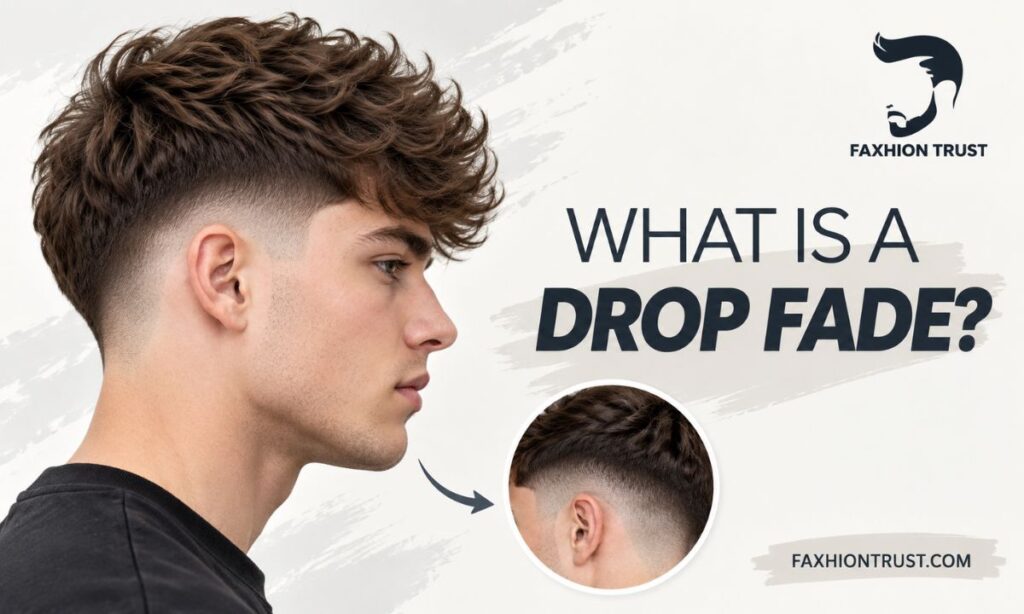
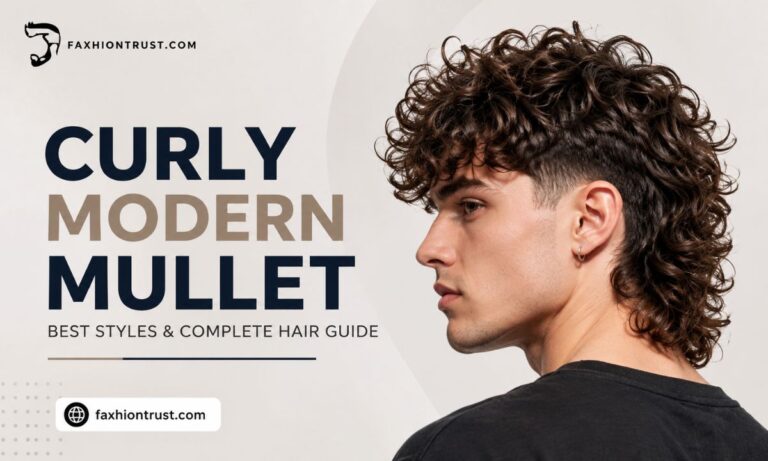
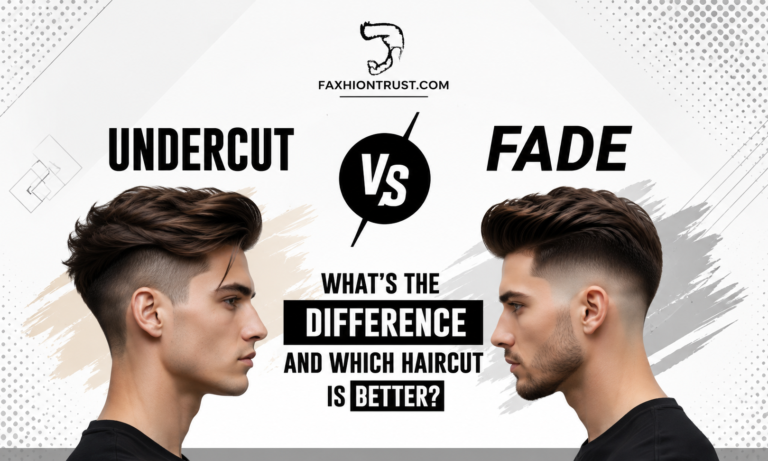
A drop fade is a taper or fade that curves — or “drops” — behind the ear before continuing into the neckline. Instead of a straight line moving down the side of the head, the fade line bends to follow the natural curve of the skull, dropping lower behind the ear than it sits at the front.
This curve is what makes a drop fade instantly recognizable. It’s also what makes it harder to execute — the arc has to look even and intentional from every angle, not just straight on. A proper drop fade usually works through three or four clipper guard sizes as the line curves downward, with each one blending smoothly into the next rather than cutting off in a straight vertical drop. That’s a lot more technical work than a taper fade’s edge-only shaping, which is exactly why the skill of the barber shows up so clearly in the final result.
Who Is a Drop Fade Best For?
- Guys with round or oval face shapes who want extra definition
- Anyone who wants a bolder, more sculpted look
- Men with thick, straight, or textured hair that shows off the curve
- Clients willing to book more frequent touch-ups
- Anyone pairing the cut with a faux hawk, curly top, or other volume-heavy style
Drop Fade Characteristics
- A curved fade line that drops behind the ear
- Higher contrast between the top and sides
- Adds shape and dimension around the head
- Requires a skilled barber to keep the arc symmetrical
- Grows out faster than a taper fade because the line is more defined
Best Hairstyles for a Drop Fade in 2026
Textured Crop
Choppy, textured length on top gives the drop fade’s curve something to play off, creating contrast between messy texture and a clean line.
Faux Hawk
The narrow strip of length down the middle draws the eye straight to the dropped curve on the sides — bold and unmistakable.
Curly Top
Curls naturally follow the same rounded lines as a drop fade, so the two work together instead of competing.
Pompadour
A tall, swept-back pompadour with a drop fade underneath balances height on top with sharp definition at the sides.
Drop Fade vs Taper Fade: Key Differences That Actually Matter
Contrast Level
A taper fade offers a soft, low-contrast blend. A drop fade creates a much sharper visual break between the top and sides thanks to its curved line.
Styling Vibe
Taper fades read as clean and understated. Drop fades read as bold and intentional — the kind of cut people notice.
Maintenance
Taper fades can stretch three to five weeks before looking overgrown. Drop fades need a refresh roughly every two to three weeks to keep the curve sharp.
Head Shape Enhancement
A drop fade follows and highlights the natural curve of the skull, adding shape. A taper fade doesn’t try to reshape anything — it just cleans up the edges.
Neckline Finish
Taper fades taper the neckline smoothly into skin with no hard stopping point. Drop fades finish with the curved line continuing into or near the neckline, creating a more defined edge.
Beard Compatibility
Both pair well with beards, but taper fades blend into a beard more seamlessly since there’s no competing line. Drop fades can look sharper alongside a well-lined beard that echoes the same curve.
Face Shape Suitability
Drop fades add definition to round and oval faces by creating an angular break at the sides. Taper fades are close to face-shape neutral, which is why they work on almost anyone.
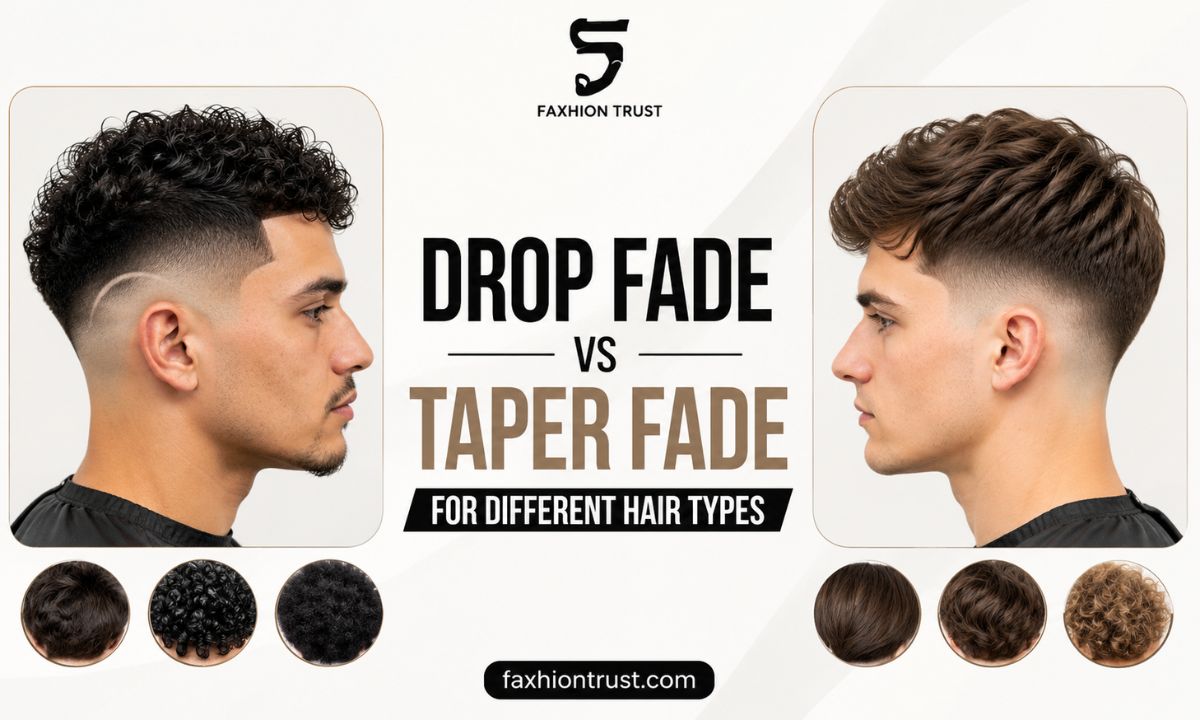
Drop Fade vs Taper Fade for Different Hair Types
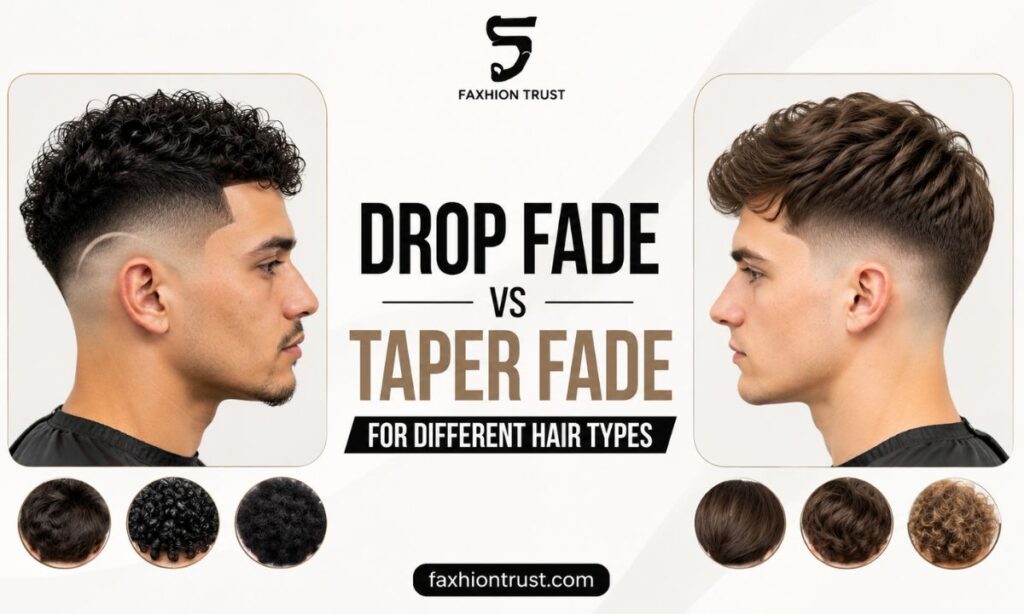
Drop Fade vs Taper Fade Straight Hair
Straight hair shows off clean lines clearly, so both cuts look sharp. A taper fade suits straight hair styled with a side part or slick-back, since the flat texture highlights the gradual blend. A drop fade on straight hair makes the curve extremely visible, which is great if you want a bold look but means any unevenness will show too.
Drop Fade vs Taper Fade for Black Men
Both cuts work well on coily and kinky textures. A taper fade is often chosen for a low-maintenance, professional look, while a drop fade is popular for adding shape and pairing with waves, a curly top, or a fade-into-beard combo. Skin fades combined with either style are common for maximum contrast.
Also Read This: Low Taper Haircut
Drop Fade vs Taper Fade for Curly Hair
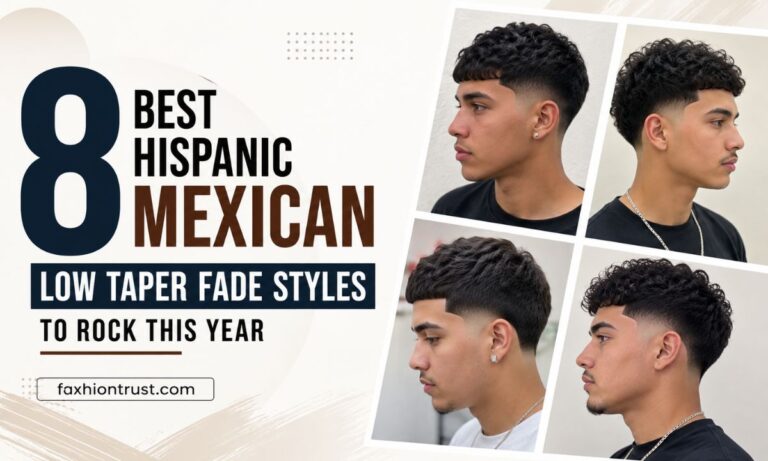
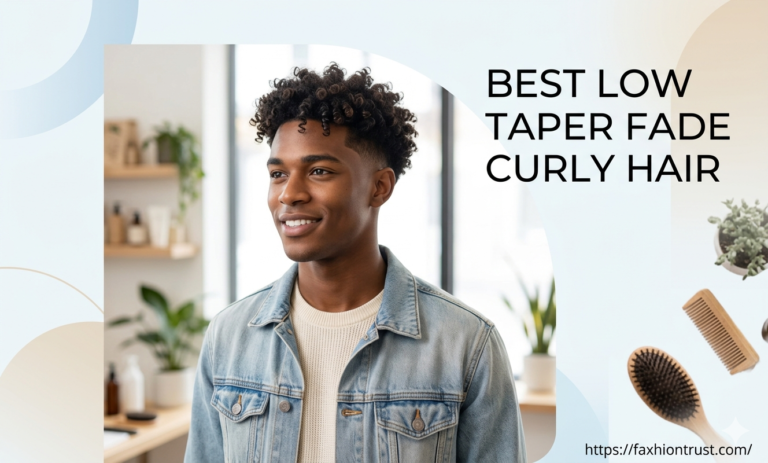
Curly hair adds natural volume, which makes a drop fade especially effective — the curve follows the same rounded lines as the curls themselves. A taper fade works too, keeping curls controlled at the edges while leaving more length and bounce on top.
Side-by-Side: Drop Fade vs Taper Fade
| Feature | Taper Fade | Drop Fade |
| Fade line shape | Straight, edge-only | Curved, drops behind the ear |
| Contrast | Low to moderate | Moderate to high |
| Maintenance frequency | Every 3–5 weeks | Every 2–3 weeks |
| Best for | First fades, professional settings | Bold, statement looks |
| Face shape benefit | Neutral, suits most shapes | Adds definition to round/oval faces |
| Hair type | Works with all textures | Best with thick, straight, or curly hair |
| Barber skill required | Moderate | High |
| Styling effort | Low | Low to moderate |
Taper Fade Types You Should Know
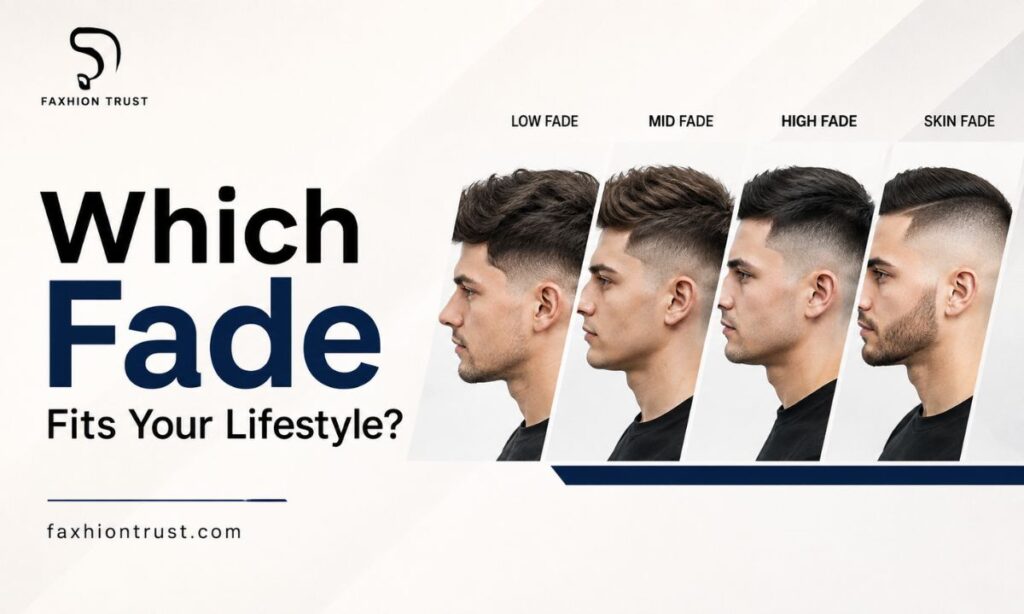
Low Taper Fade
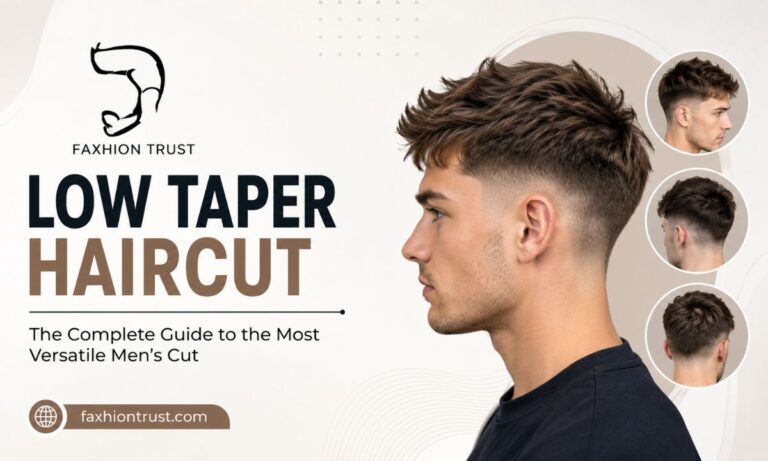
Starts just above the ears, close to the hairline. Subtle and barely noticeable, making it the most conservative option.
Mid Taper Fade
Begins around eyebrow level or slightly above the ear. Balances a visible fade with a still-professional finish.
High Taper Fade
Starts higher on the sides, creating the boldest and most dramatic version of a taper fade while still keeping the neckline and sideburns clean.
Low Taper
Essentially a light taper right at the perimeter — hairline and neckline only — with no real blend further up the head. This is the lowest-maintenance version of the cut.
Taper Fade vs Burst Fade: What’s the Difference?
A taper fade only shapes the sideburns and neckline, leaving the area around and behind the ear untouched. A burst fade fans out in a half-moon shape around the ear itself, creating a rounded burst of contrast that a taper fade never touches. Burst fades demand more frequent maintenance and deliver far more visual impact, while taper fades stay subtle and easy to stretch between cuts.
Can You Combine a Drop Fade with a Taper Fade?
Yes. A drop taper fade is a real, common request. It keeps the softer, more gradual blend of a taper but adds the curved drop behind the ear for extra shape. It’s a good middle ground for anyone who wants more definition than a standard taper but isn’t ready for the full contrast of a skin-level drop fade.
What I’ve Seen Behind the Chair
A few weeks back, a client named Daniel came in fresh off a layoff, gearing up for a string of interviews. He didn’t want anything flashy — just sharp and put-together. We went with a mid taper fade blended into a clean side part, nothing that would draw attention for the wrong reasons.
He messaged me after his third interview: “Landed it. I felt like a different person walking in.” That’s the thing about a taper fade — it doesn’t shout, but it quietly does its job every single time you look in the mirror.
Then there’s Marcus, a regular of mine who works in graphic design and treats his haircut like part of his portfolio. He’s been rocking a drop fade with a faux hawk for over a year now. Every few weeks he’s back in the chair to keep that curve crisp, because for him, the cut isn’t just maintenance — it’s identity. People at his studio spot him by that fade line before they even see his face.
Two guys, two totally different reasons for sitting in the same chair. One wanted to disappear into the background and let his skills do the talking. The other wanted his haircut to say something before he ever opened his mouth. Neither of them was wrong — that’s really what this whole decision comes down to. It’s not just hair. It’s how you want to walk into a room.
Which Fade Fits Your Lifestyle?
Grooming Routine
If you’re not into frequent barbershop visits, a taper fade fits your routine better. If you don’t mind a standing appointment every couple of weeks, a drop fade rewards the upkeep.
Styling Effort
Taper fades need almost no daily styling. Drop fades paired with textured or voluminous tops may need a little product to keep the shape looking intentional.
Work & Personal Style
Conservative workplaces lean toward taper fades. Creative fields, or anyone who wants their haircut to make a statement, tend to prefer drop fades.
For extra grooming guidance, check out the American Academy of Dermatology’s hair care tips.
Confidence Factor
A taper fade is dependable and low-risk. A drop fade is a conversation starter — if you want people to notice your cut, this is the one that gets noticed.
Final Thoughts
A taper fade and a drop fade solve two different problems. One keeps things clean, subtle, and easy to maintain. The other adds shape, contrast, and a bit of drama to your haircut. Neither is objectively better. The right choice depends on your hair type, your face shape, and how often you’re realistically willing to sit in a barber’s chair.
Bring reference photos, describe your routine honestly, and let your barber guide the final call. That conversation matters more than the name of the cut itself.