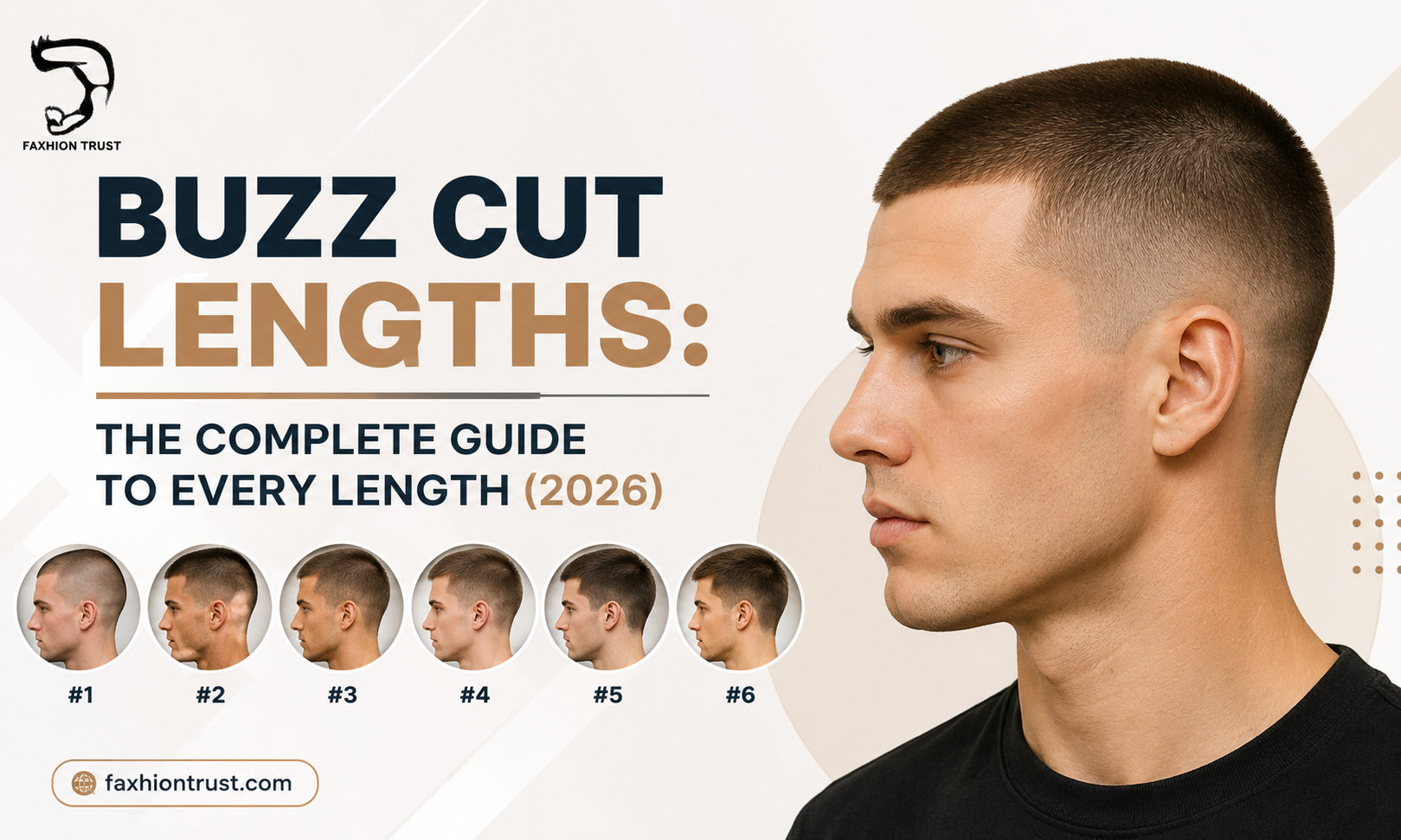
Buzz Cut Lengths: The Complete Guide to Every Length (2026)
Picking a buzz cut sounds simple until you’re standing in front of a barber who asks, “What number?” One wrong guard size and you’re stuck looking at a mirror you didn’t expect for the next two weeks.
This guide breaks down every buzz cut lengths from #0 to #8, in millimeters and inches, so you know exactly what you’re getting before the clippers touch your head. You’ll also learn which length fits your face shape, the most common buzz cut mistakes, and how to keep the style sharp between trims.
Buzz Cut Lengths Breakdown: Numbers 0 to 8
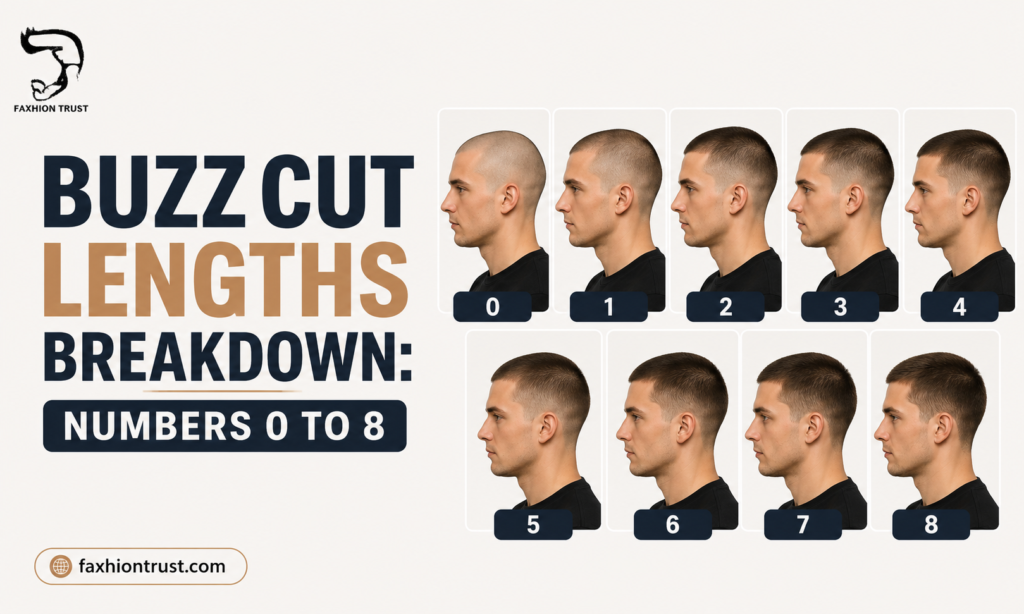
Clipper guard numbers control how much hair stays on your head after a cut. Lower numbers leave less hair and more visible scalp; higher numbers leave more length and room for texture. Here’s the full size chart most professional clippers follow.
| Guard Number | Length (mm) | Length (inches) | Look |
| #0 | 0–1.5 mm | 1/16 inch | Near-bald, skin fade base |
| #1 | 3 mm | 1/8 inch | Classic short buzz |
| #2 | 6 mm | 1/4 inch | Slightly softer buzz |
| #3 | 10 mm | 3/8 inch | Textured, natural-looking |
| #4 | 13 mm | 1/2 inch | Balanced short crop |
| #5 | 16 mm | 5/8 inch | Crew cut territory |
| #6 | 19 mm | 3/4 inch | Styleable short top |
| #7 | 22 mm | 7/8 inch | Longer buzz, brushable |
| #8 | 25 mm | 1 inch | Longest standard guard |
Brands vary slightly in their measurements, so always check the number printed on the guard itself rather than assuming every clipper matches this chart exactly.
Buzz Cut Number 0
The #0 guard is as close as clippers get without switching to a razor. It leaves almost no hair, so your scalp is fully visible and skin tone becomes part of the look. It’s the go-to base for skin fades and bold, low-maintenance styles. Regrowth shows within days, so this length demands frequent touch-ups if you want to keep the clean look consistent.
Buzz Cut Number 1
A #1 buzz cut leaves about 3 mm of hair — enough to add slight texture without softening the sharp, military-inspired look. It’s one of the most popular short buzz cut lengths because it’s still extremely low-maintenance while looking a little less severe than a #0.
Buzz Cut Number 2
At 6 mm, the #2 is my favorite middle ground. It shows a bit of natural hair color and texture, hides minor scalp imperfections better than shorter guards, and still needs almost no daily styling. It works well for people easing into shorter hair for the first time.
Buzz Cut Number 3
The #3 guard, at roughly 10 mm, is where natural hair texture starts becoming visible. This length works for both casual and professional settings, pairs well with a beard, and only needs a trim every 4–5 weeks to stay neat.
READ MORE: Taper Fade White Males
Buzz Cut Number 4
A #4 buzz cut sits at about 13 mm — the point where the cut feels less like a “shave” and more like a genuine short haircut. There’s enough length here for very light styling with a small amount of product, making it a versatile choice for everyday wear.
Buzz Cut Number 5
At 16 mm, the #5 crosses into crew cut territory. Hair has enough body to be pushed into a simple direction with a comb or fingers, and thicker hair types start showing real volume at this length.
Buzz Cut Number 6
The #6 guard leaves about 19 mm of hair, giving you enough length for basic styling — a slight side part, texture on top, or a light quiff. This length suits people who want the low-maintenance ease of a buzz cut but with more flexibility.
Buzz Cut Number 7
At around 22 mm, a #7 buzz cut is long enough to comb, style with texturizing paste, or pair with a fade on the sides for contrast. It’s a strong option for anyone who wants a short haircut that still looks intentional and styled.
Buzz Cut Number 8
The #8 is typically the longest standard clipper guard, leaving about 25 mm (1 inch) of hair. This length looks more like a cropped short haircut than a traditional buzz and offers the most room for styling, waves, or texture among all buzz cut numbers.
How to Choose the Right Buzz Cut for Your Face Shape
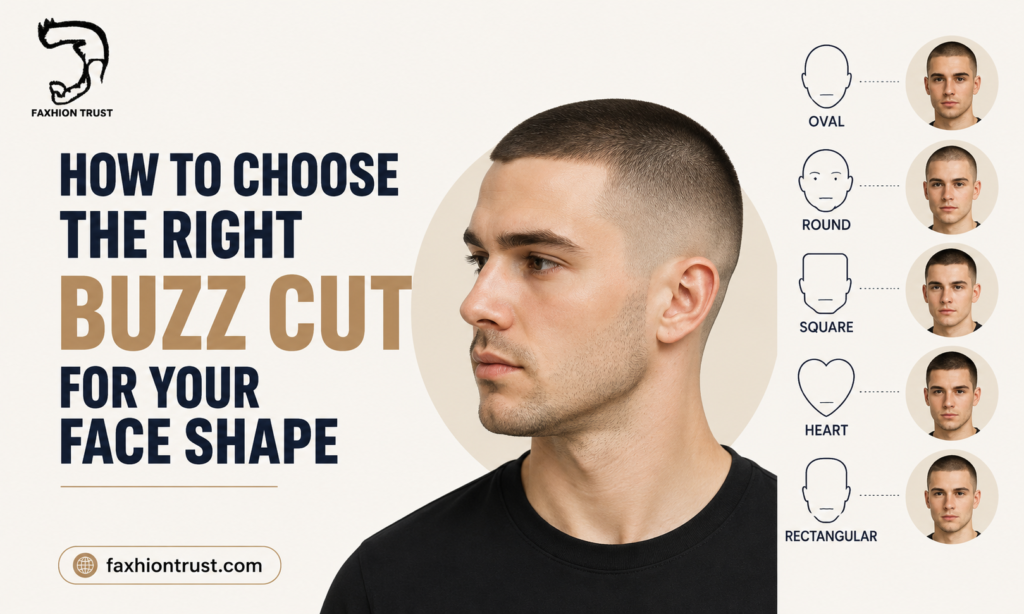
The right length can balance your facial proportions; the wrong one can exaggerate them. Here’s how to match a buzz cut lengths to your face shape.
Round Face
Round faces benefit from added height and angles. Go with a #4–#6 on top paired with shorter sides (#1–#2) to create contrast and make the face appear longer and less wide.
Oval Face
Oval faces are the most versatile — nearly every length from #1 to #8 works well. Since there’s no proportion to correct, choose based on hair texture and maintenance preference rather than face-balancing needs.
Square Face
Square faces have strong, angular jawlines. Softer, uniform lengths like a #5–#7 all over reduce harsh angles and create a more rounded, balanced appearance.
Rectangular / Oblong Face
Longer faces should avoid extra height on top. A shorter, even length such as #2–#4 all over keeps proportions balanced without adding vertical length.
Heart-Shaped Face
Heart-shaped faces are wider at the forehead and narrower at the chin. A medium length like #3–#5 with slightly shorter sides helps balance the narrower jaw against the broader forehead.
Common Buzz Cut Mistakes (And How to Avoid Them)
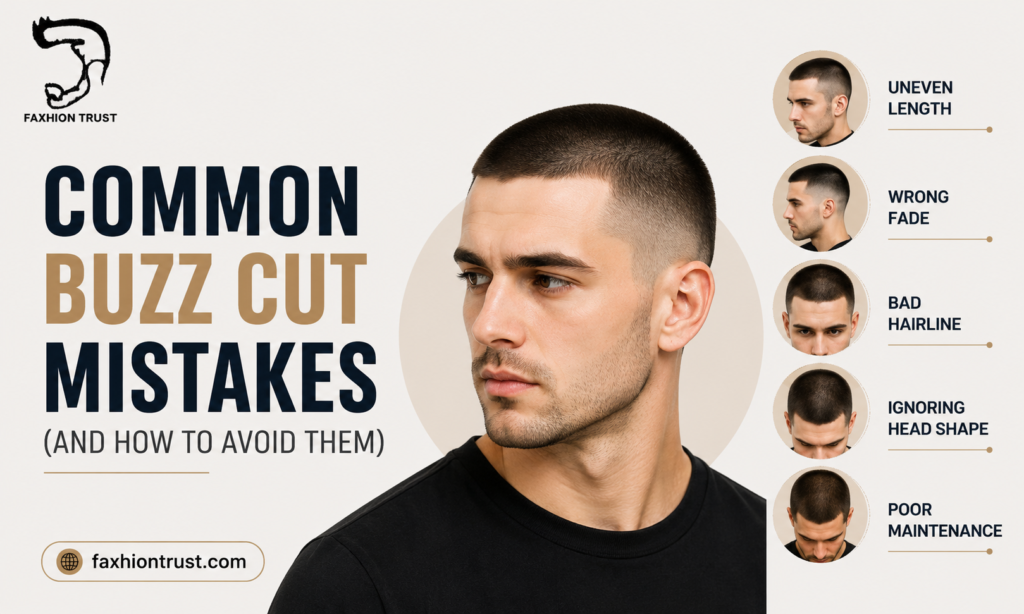
- Choosing a length based on trends, not face shape or hair type. What looks great on someone else may not suit your proportions.
- Skipping a patch test at a longer guard first. If you’re unsure, start with a higher number — you can always go shorter next time.
- Ignoring scalp shape and skin condition. Very short lengths (#0–#1) expose bumps, scars, or uneven skin tone that longer lengths would hide.
- Using dull or dirty clipper blades. This causes uneven cutting, pulling, and irritation instead of a clean finish.
- Not accounting for hair growth speed. Fine, fast-growing hair looks patchy within days at ultra-short lengths without regular upkeep.
- Forgetting sun protection on exposed scalp. Short buzz cuts leave more skin exposed to sunburn than people expect.
ALSO READ THIS: Mexican Taper Fade Haircut
Buzz Cut Maintenance and Styling Tips
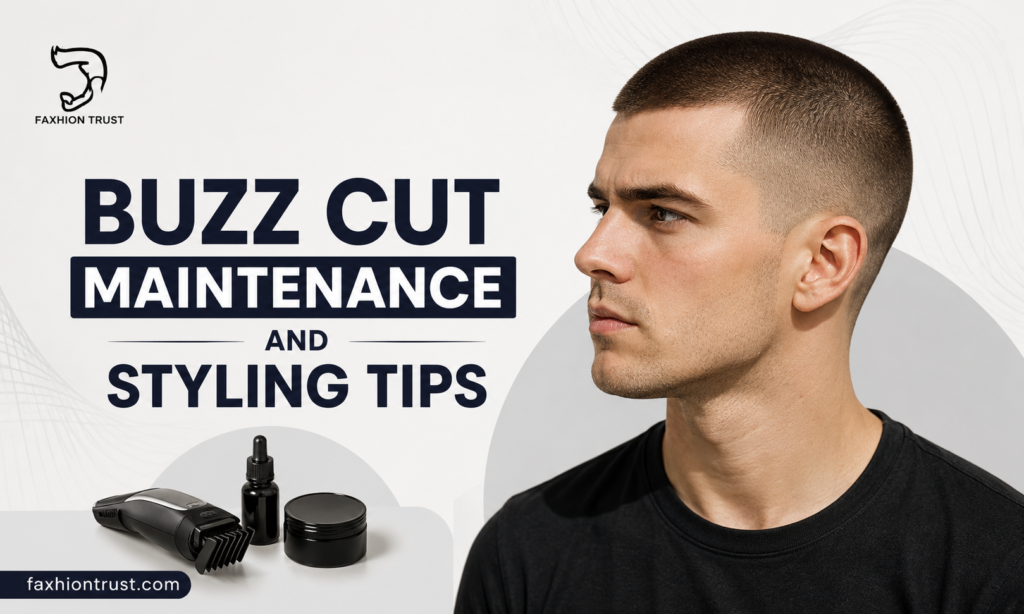
A buzz cut is low-maintenance compared to longer styles, but it isn’t zero-maintenance. Keeping it sharp takes a simple routine.
Trimming Schedule
- #0–#2: Trim every 1–2 weeks; regrowth shows fast at these lengths.
- #3–#5: Trim every 3–4 weeks.
- #6–#8: Trim every 4–6 weeks, depending on how much shape you want to maintain.
Scalp Care
At shorter lengths, your scalp is essentially exposed skin. Treat it accordingly:
- Cleanse with a gentle, sulfate-free shampoo to avoid dryness.
- Moisturize with a lightweight scalp lotion or oil.
- Apply SPF on exposed scalp skin, especially at #0–#2 lengths.
For the most accurate clipper guard measurements straight from a leading manufacturer, check out Wahl’s Ultimate Guide to Hair Clipper Guard Sizes.
Styling Products
Longer buzz cuts (#5–#8) can be styled with a small amount of matte clay or texturizing paste for subtle definition. Shorter lengths (#0–#3) usually don’t need a product at all.
Keep It Sharp
- Use the same guard consistently for an even length across your entire head.
- Get clean edges around the hairline and ears with a trimmer between full cuts.
- Check your buzz cut in natural light — indoor lighting can hide uneven patches.
Buzz Cuts for Specific Hair Types and Concerns
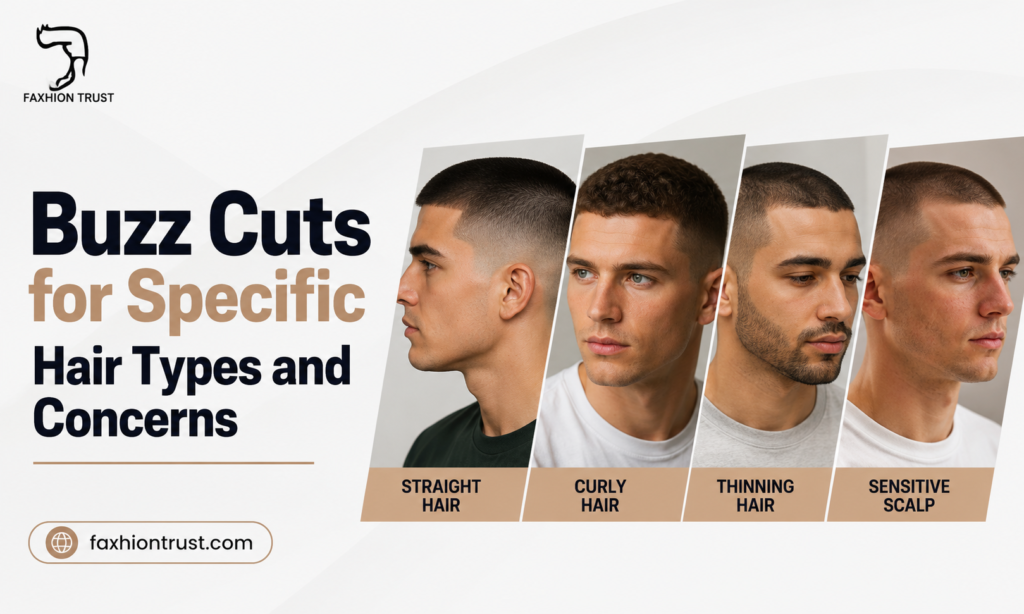
- Thick hair: Handles almost any length well, from #1 to #8, since there’s enough density to fill in and look full even at shorter guards.
- Fine or thinning hair: Shorter lengths (#1–#3) create the illusion of denser coverage since less scalp-to-hair contrast is visible.
- Curly or coily hair: Longer guards (#5–#8) preserve curl pattern and texture; very short lengths can look sparse or uneven on tight curls.
- Receding hairline: Uniform short lengths (#1–#3) all over blend the hairline into the rest of the cut instead of drawing attention to it.
- Sensitive scalp: Slightly longer lengths (#3 and up) reduce direct clipper contact with the skin, lowering irritation risk.
Conclusion
Every number from #0 to #8 creates a distinct look, and the “best” length comes down to your face shape, hair type, and how much maintenance you’re willing to commit to.
Shorter guards mean a bolder, lower-upkeep style; higher guards leave room for texture and light styling. Use the chart and face-shape guide above to pick your starting point, then adjust at your next trim once you’ve seen how it actually looks and grows on you.