Taper Fade White Males: The Ultimate Style Guide (2026)
Finding the right haircut shouldn’t feel like guesswork. If you’ve been scrolling through barbershop photos trying to figure out which fade actually suits you, the taper fade is probably the answer you’re looking for. It’s clean, it’s low-maintenance, and it works with almost any hair type or face shape.
This guide breaks down everything white males need to know about taper fades in 2026 — the variations, how to pick one, and how to keep it looking sharp between appointments.
Low Taper White Guy Black

One question that comes up a lot: does a low taper fade look different on a white guy versus a Black guy, and does it matter for hair that’s naturally dark or black in color?
The short answer is no — the cutting technique stays the same. The low taper fade actually has its roots in Black barbershop culture, where barbers perfected the art of blending tight coils into smooth, gradual transitions. That same technique now works beautifully on straight, wavy, or dark hair common among white males.
If your hair is naturally black or very dark brown, a low taper fade will give you extra contrast between the top and the sides, since darker hair shows the gradient more clearly than lighter shades. A few things to keep in mind:
- Dark hair shows scalp shadowing more, so ask your barber to blend carefully near the ears
- Straight black hair holds a side part or comb-over exceptionally well with a low taper
- Slight waves or texture on top pair nicely with the tighter sides of a low taper
Bottom line: the cut is universal. Your hair color just changes how visible the contrast looks, not how the fade is done.
READ MORE: Taper Fade for Face Shape
What is a Taper Fade?
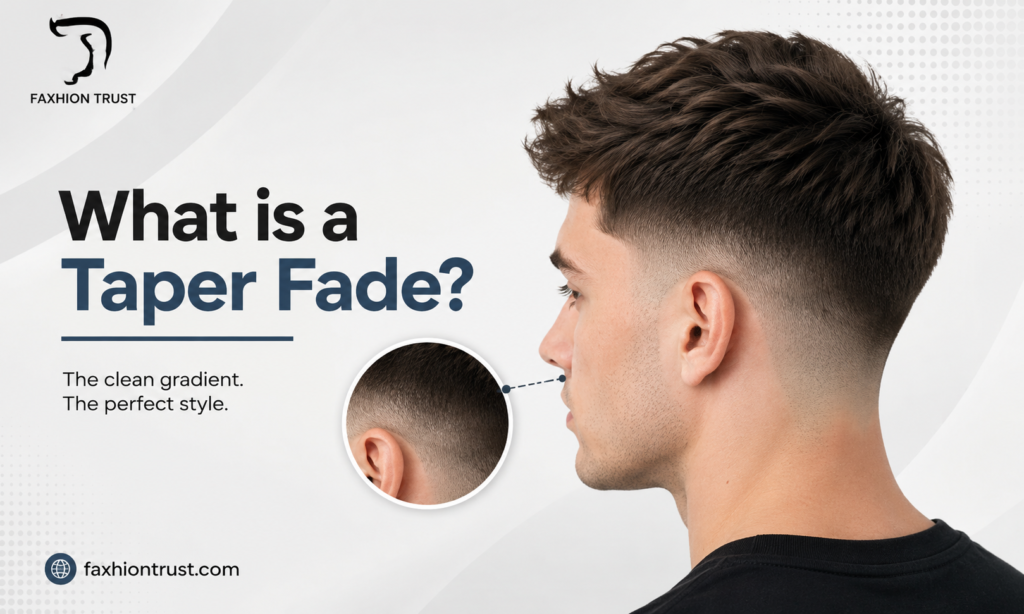
A taper fade is a haircut where the hair gradually shortens as it moves from the top of the head down toward the ears and neckline. Instead of one uniform length, the hair blends step by step, creating a smooth, natural-looking transition instead of a hard line.
Here’s how it differs from a regular fade:
| Feature | Taper | Fade |
| Transition style | Gradual, subtle | Sharper, more defined |
| Where it starts | Lower, near the hairline | Can start higher up the head |
| Look | Natural, understated | Bold, high-contrast |
| Best for | Everyday, professional looks | Statement styles |
Taper fades work with virtually any hair texture — straight, wavy, or curly — which is a big reason they’ve become the default haircut request at barbershops everywhere.
Choosing the Right Taper Fade for White Males
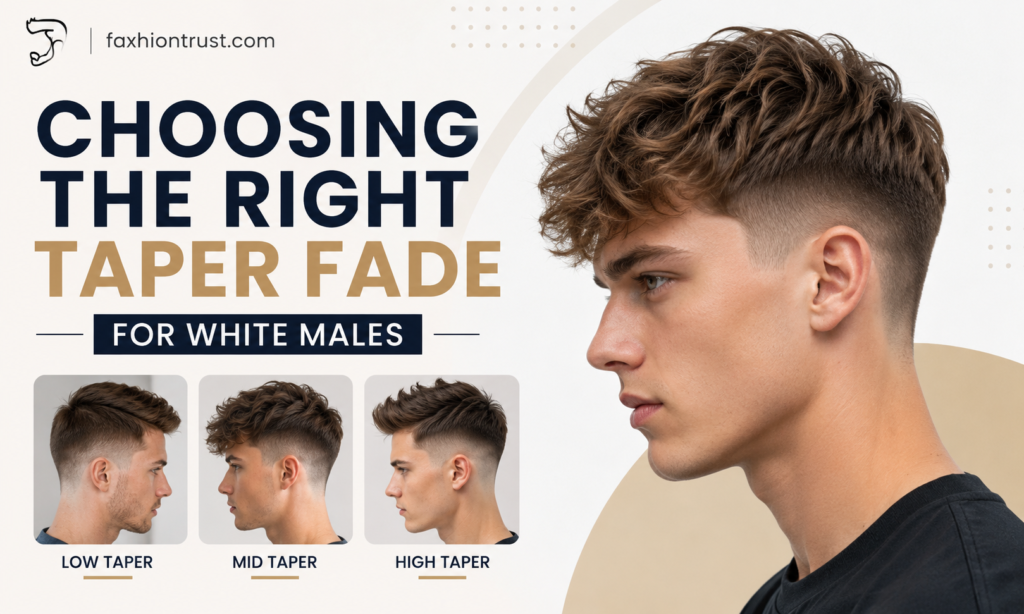
Not all taper fades look the same. The height of the fade, the guard length, and how much hair you leave on top all change the final result. Below is a breakdown of the most popular variations for white males.
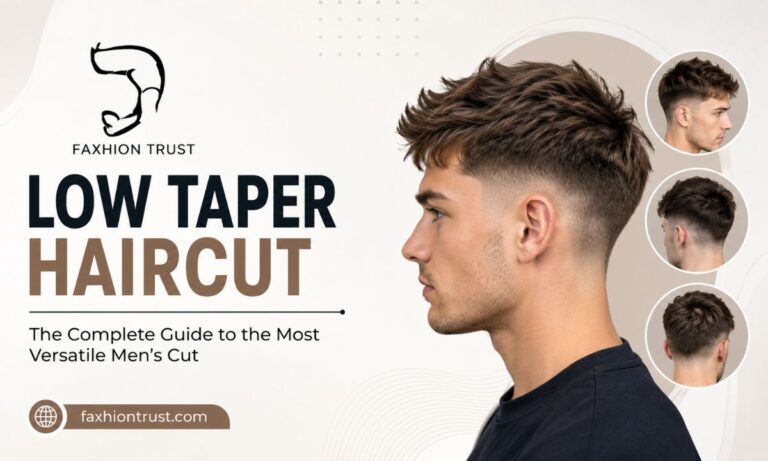
Low Taper Fade for White Male
The low taper fade starts just above the ears and fades gently toward the neckline. It’s the most subtle version of the cut, which makes it a favorite for office settings and anyone who wants a clean look without dramatic contrast.
- Keeps more length on the sides
- Works well with straight or slightly wavy hair
- Pairs nicely with a side part, quiff, or comb-over
- Low-maintenance and grows out gracefully
Mid Taper Fade for White Male
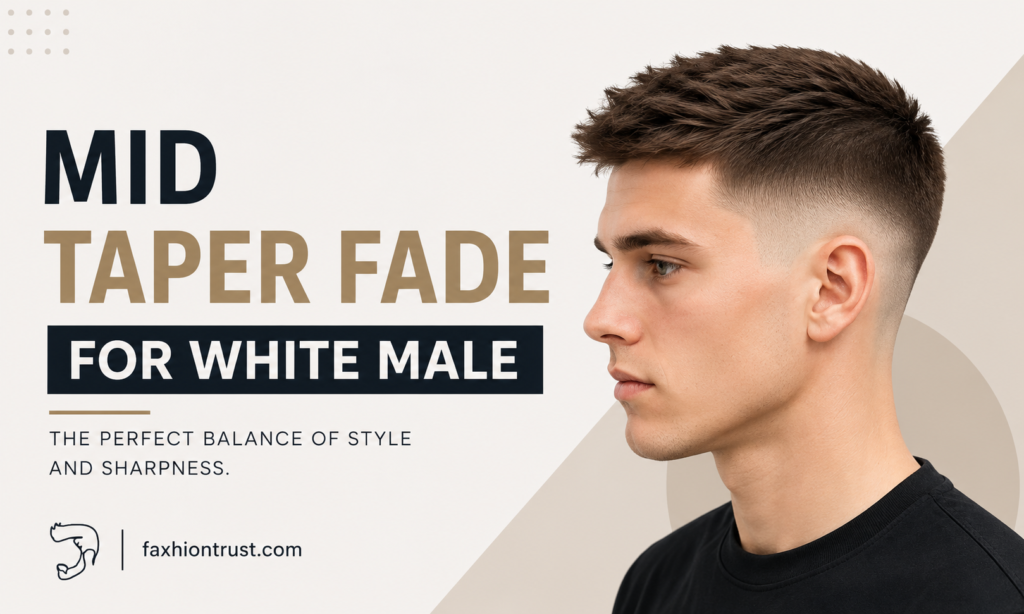
The mid taper fade begins around the temples, higher than the low version, creating more visible contrast between the top and sides.
- Offers a sharper, more modern silhouette
- Complements textured crops and slick-backs
- A good middle ground between subtle and bold
High Taper Fade for White Male
The high taper fade starts near the crown, leaving very little hair on the sides. It’s the boldest of the three main heights and demands more upkeep.
- Creates maximum contrast and definition
- Best suited to guys with strong facial features
- Needs a touch-up every 2–3 weeks to stay sharp
Short Taper Fade for White Male
This version keeps the top short as well, usually under an inch, giving a neat, uniform look that’s easy to maintain.
- Ideal for a polished, no-fuss appearance
- Requires minimal daily styling
- Works well for thinning or fine hair
Buzz Cut Taper Fade for White Male

Here, the top is clipped down with a guard (typically a #2 or #3) while the sides fade using standard taper technique.
- Extremely low-maintenance
- Great for active lifestyles and hot climates
- Puts the focus on facial features and jawline
Curly Taper Fade for White Male
Curly hair pairs surprisingly well with a taper fade because the fade controls bulk on the sides while letting natural curls shine on top.
- Low to mid taper heights work best for curly textures
- Keeps curls from looking unruly
- Creates natural volume and definition on top
Bald Taper Fade for White Male
Also called a skin fade, this version takes the sides down to the skin at the lowest point before tapering into more length on top.
- The sharpest, cleanest possible finish
- Requires frequent barber visits to maintain the skin-level fade
- Pairs well with beards for a fully groomed look
ALSO READ THIS: Teen Boy Fade Haircut
Styling and Maintenance Tips for Taper Fades
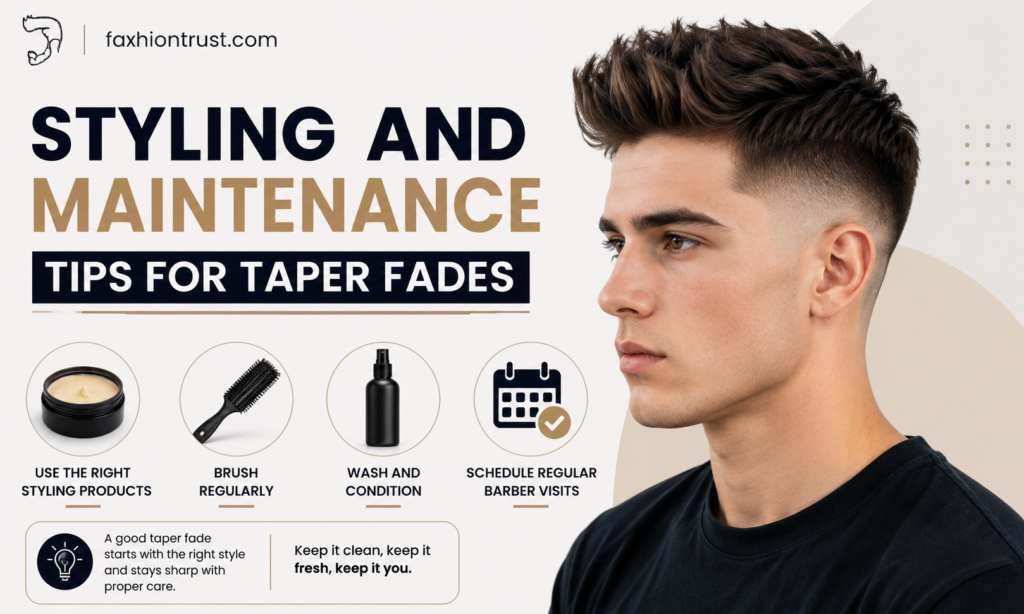
A great taper fade only looks great if you keep it up. Here’s how to maintain it between barber visits:
- Book touch-ups every 2–4 weeks — the higher the fade, the more often you’ll need a trim.
- Use the right product for your hair type — matte clay or paste for straight hair, lightweight curl cream for curly hair.
- Wash with a gentle, sulfate-free shampoo to avoid drying out the scalp near the fade line.
- Blow-dry on low heat before styling to give the top natural lift and texture.
- Comb or brush the top daily to train hair in the direction you want it to sit.
- Moisturize the scalp if you’ve gone with a skin fade, since exposed skin can dry out faster.
- Communicate clearly with your barber — bring a reference photo and specify the fade height (low, mid, or high) every visit.
According to barbering experts, low taper fades tend to last the longest between trims since the blend sits closer to your natural hairline.
Low Taper White Guy Straight Hair
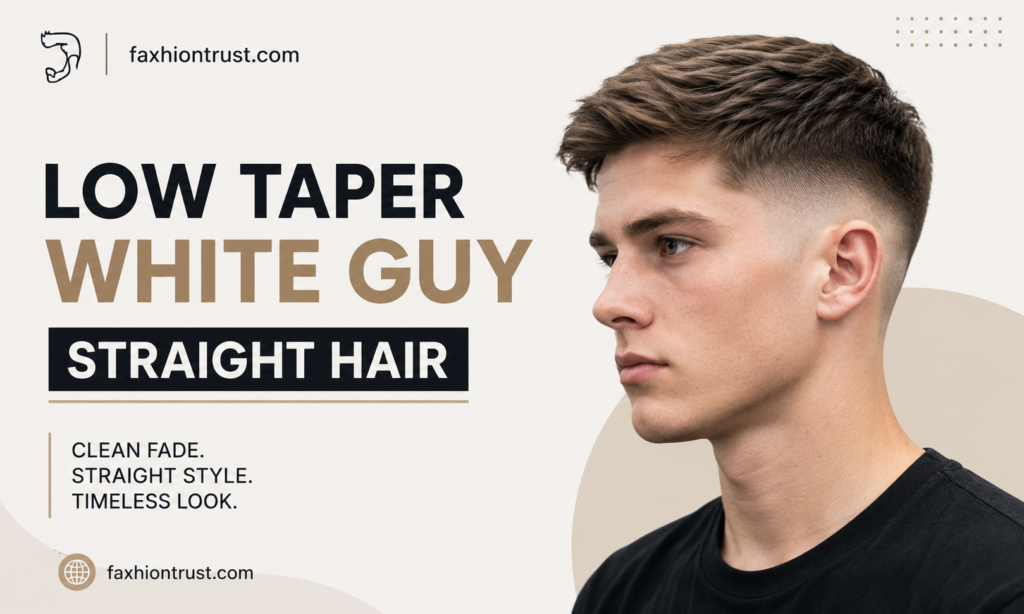
Straight hair is one of the easiest textures to work with when it comes to a low taper fade. Because it lies flat naturally, straight hair shows off the clean lines of the fade without extra effort.
Why it works so well:
- The smooth surface highlights the sharp blend between top and sides
- Straight hair holds sleek styles like a side part or slick-back with minimal product
- It grows out evenly, so the cut stays presentable even between trims
- Styling takes just a few minutes with a light pomade or matte cream
For most white males with straight hair, a low taper fade paired with a textured crop or classic side part remains the safest, most versatile choice for 2026.
Conclusion
The taper fade has earned its place as one of the most reliable, versatile haircuts for white males — and for good reason. Whether you go low, mid, or high, buzzed or bald, curly or straight, there’s a version of this cut that fits your hair type, face shape, and lifestyle.
Start with a low taper fade if you want something subtle and professional, and work your way up to bolder versions as you get comfortable. Bring a clear reference to your barber, stay consistent with touch-ups, and you’ll have a haircut that looks sharp no matter where 2026 takes you.