Taper Fade for Face Shape: Find the Best Haircut for Every Face Type
Not every taper fade suits every face. The same haircut that sharpens one guy’s jawline can make another face look longer or wider than it actually is. That’s why the smartest move before your next barbershop visit isn’t picking a style off Pinterest — it’s figuring out your face shape first.
This guide breaks down exactly which taper fade works for oval, round, square, oblong, heart, and diamond face shapes, how to measure your face shape at home, and the barber tips that make any fade look sharper.
Which Taper Fade Fits Your Face Shape?

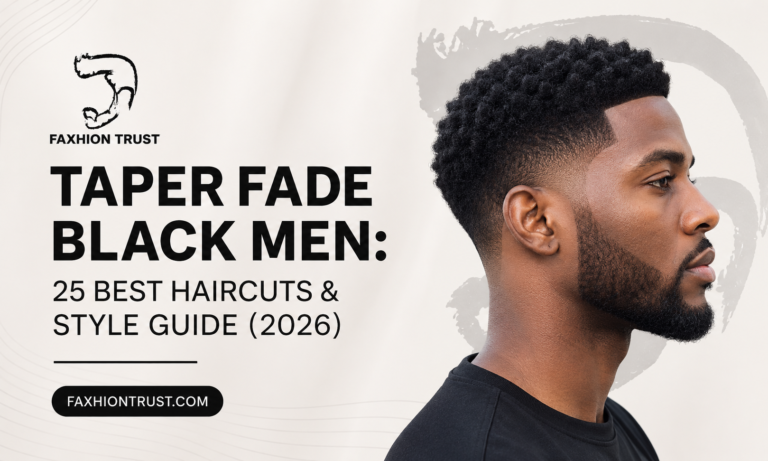
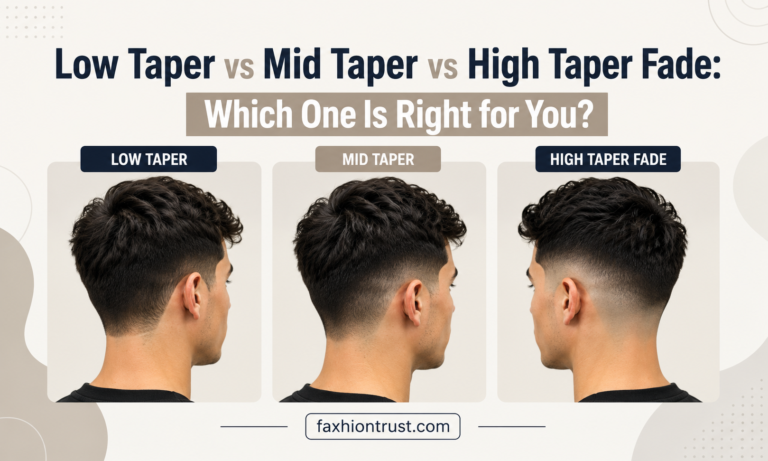
A taper fade gradually shortens hair from the top down to the neckline and around the ears, blending smoothly instead of cutting straight to skin. The fade height — low, mid, or high — changes how much structure and volume it adds to your face.
As a general rule:
- Low taper fade – adds length and softness, best for round or fuller faces
- Mid taper fade – balanced option that suits most face shapes
- High taper fade – adds sharp contrast and height, best for oval or square faces with strong bone structure
Once you know your face shape, choosing between these becomes simple.
How to Determine Your Face Shape
Before booking your cut, take five minutes to identify your face shape. It’s the single biggest factor in whether a taper fade will flatter or fight your features.
READ MORE: Teen Boy Fade Haircut
Measure Your Face (Mirror Method)

- Stand in front of a mirror and pull your hair back completely.
- Using a washable marker or lipstick, trace the outline of your face on the mirror.
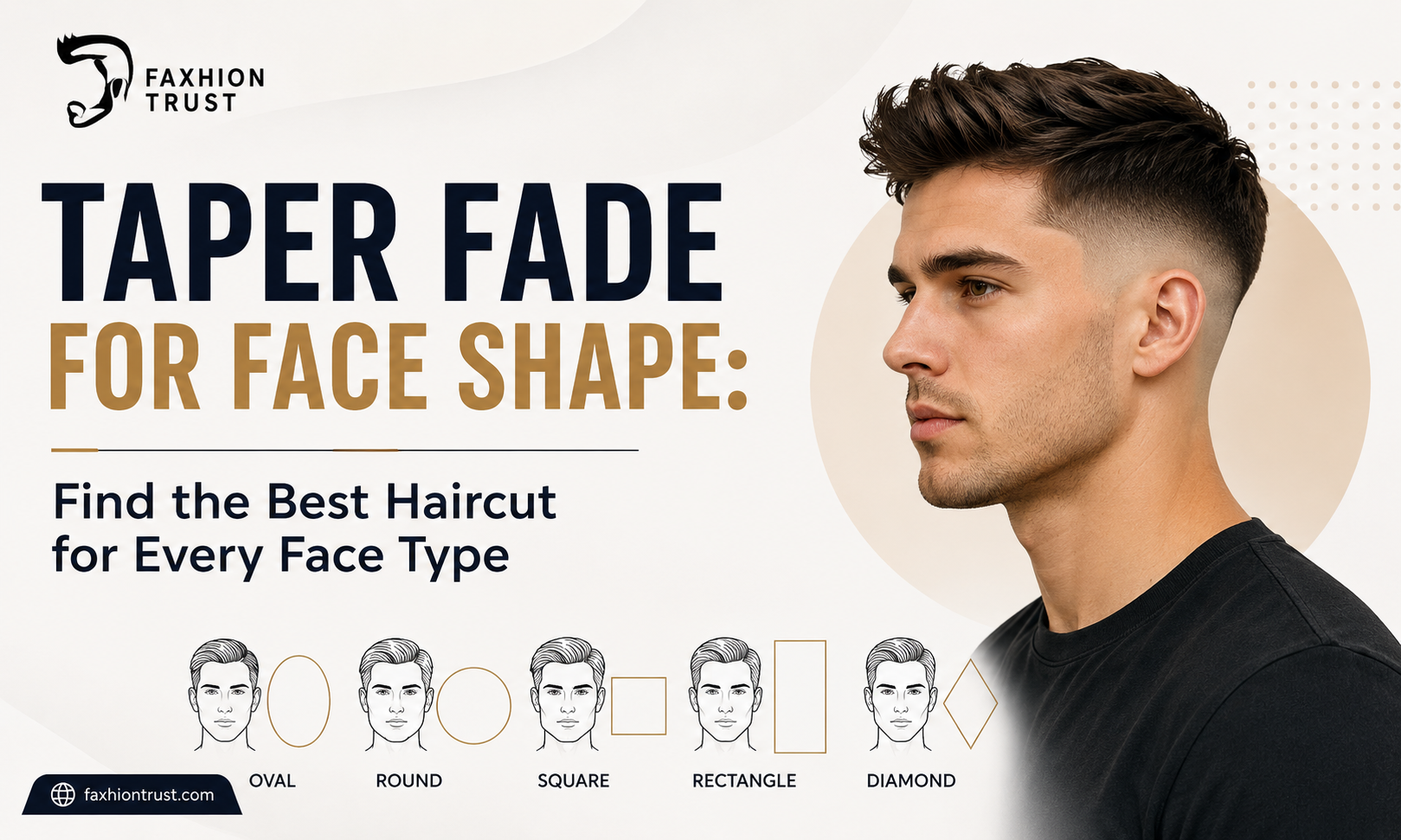
- Step back and compare the outline to these common shapes:
- Oval – balanced length, slightly narrower jaw than forehead
- Round – similar width and length, soft curves, no sharp angles
- Square – strong, angular jawline with a straight hairline
- Oblong/Rectangle – face is noticeably longer than it is wide
- Heart – wide forehead tapering to a narrow chin
- Diamond – narrow forehead and jaw with wide, prominent cheekbones
You can also measure your forehead, cheekbones, and jawline width with a tape measure for a more precise result — whichever measurement is widest usually points to your shape.
Best Taper Fade for Every Face Shape

1. Oval Face Shape – The Most Versatile
Oval faces are naturally balanced, so almost any taper fade works.
- Best fade type: Low, mid, or high — all are flattering
- Why it works: Symmetrical proportions give you flexibility with length and texture
- Styling tip: Try a textured crop, pompadour, or slick back to add personality without disrupting balance
2. Round Face Shape – Add Height & Sharpness
Round faces benefit from added height on top and tighter sides to create the illusion of length.
- Best fade type: Low to mid taper fade with volume on top
- Why it works: Height elongates the face while a low fade avoids adding extra width
- Styling tip: Ask for a textured quiff or brush-up; avoid flat, wide silhouettes on top
3. Square Face Shape – Balance Strong Jawlines
A square jaw already has plenty of structure, so the goal is softening rather than sharpening.
- Best fade type: Low taper fade with a middle or side part
- Why it works: Softer top styling balances the angular jawline instead of emphasizing it
- Styling tip: A textured crop or side-swept fringe breaks up the straight lines of the face
ALSO READ: Kids Taper Fade Haircuts
4. Oblong/Rectangle Face Shape – Avoid Too Much Height
Longer faces don’t need extra height — they need width and shorter visual length.
- Best fade type: Low to mid taper fade, kept close on top
- Why it works: Keeping length short on top prevents the face from looking stretched
- Styling tip: A textured fringe or side part adds width across the forehead
5. Heart/Triangle Face Shape – Balance Forehead Width
Heart-shaped faces have a wider forehead and narrower chin, so the aim is to reduce top-heavy volume.
- Best fade type: Low to mid taper fade, kept some length at the sides
- Why it works: Keeping some length at the sides balances the narrower jawline while the fade adds refinement
- Styling tip: Try a side part, textured fringe, or wavy top to add movement lower on the face
6. Diamond Face Shape – Highlight Cheekbones
Diamond faces have narrow foreheads and jaws with wide, defined cheekbones — a shape that can handle bold styling.
- Best fade type: Mid to high taper fade
- Why it works: Higher fades draw attention to the cheekbones and eyes, echoing the face’s natural angles
- Styling tip: Textured tops, modern pompadours, or forward-styled looks work beautifully here
Comparison Table – Best Taper Fade by Face Shape
| Face Shape | Best Fade Height | Top Length | Key Benefit |
| Oval | Low, Mid, or High | 2–3 inches | Total flexibility |
| Round | Low to Mid | Medium-long, textured | Adds height and length |
| Square | Low | Short to medium | Softens jawline |
| Oblong | Low to Mid | Short | Prevents extra length |
| Heart | Low to Mid | Medium, textured | Balances forehead width |
| Diamond | Mid to High | Medium, textured | Highlights cheekbones |
Common Mistakes to Avoid When Choosing a Taper Fade
- Ignoring your face shape and picking a trending style just because it looks good on someone else
- Going too high on a round or oblong face, which can make the face look longer or narrower than intended
- Keeping too much volume on top for square or diamond faces, hiding your strongest features
- Skipping the barber consultation — always describe your face shape and goals, don’t just point at a photo
- Not accounting for hair texture — curly and coily hair behave differently under a fade than straight hair
For expert-backed insight into matching taper fade styles to different hair types and face shapes, check out this barber-reviewed guide from Man of Many.
Expert Barber Tips for a Perfect Taper Fade

- Ask for a clean taper around the neck and temples, leaving the top slightly longer for volume
- Bring a reference photo, but tell your barber your face shape so they can adjust the style to fit
- Refresh your fade every 2–3 weeks to keep the blend sharp and edges clean
- Use a lightweight matte clay or pomade for texture instead of heavy gels that flatten volume
- If you have thick or curly hair, ask your barber to remove weight without losing volume on top
Final Thoughts
The right taper fade isn’t about following trends — it’s about matching the cut to your bone structure. Oval faces can experiment freely, round and oblong faces benefit from added height or restraint, square jaws need softening, and heart or diamond shapes should play to their natural angles.
Take five minutes to map your face shape, bring this guide to your next barber appointment, and you’ll walk out with a taper fade that genuinely works for you — not just one that looks good in a photo.