
45 Best Burst Fade Mullet Styles & Modern Haircut Guide
The burst fade mullet is one of the most requested men’s haircuts right now, and it’s easy to see why. It mixes a sharp, rounded fade around the ear with a longer, textured back giving you a cut that looks clean up close but still has an attitude. Whether you have straight, curly, thick, or fine hair, there’s a version of this style built for you.
Below is a complete breakdown of 45 modern mullets with burst fade styles, plus a full guide on styling, maintenance, and picking the right cut for your face shape and hair type.
What Is a Modern Mullet with Burst Fade?
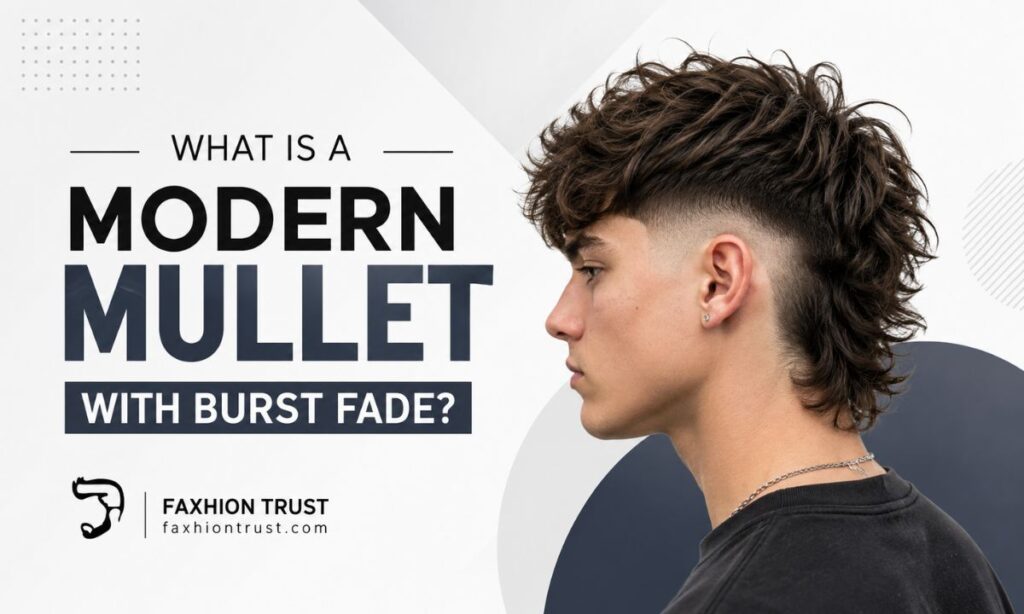
A modern mullet with burst fade is a haircut that pairs short, faded sides with longer hair left at the crown and back. The “burst” part refers to how the fade curves in a rounded arc around the ear instead of cutting straight across the neckline like a traditional fade.
This rounded shape is what separates a burst fade from a drop fade or a taper fade. It keeps the sides tight and sharp while letting the top and back carry length, texture, and movement. The result is a haircut that feels current, is easy to maintain, and works on nearly every hair type and face shape.
Compared to the old-school mullet, the modern version is more tailored. The bulk is gone. The sides are sculpted. The back is layered instead of just left long. It’s the difference between a haircut that looks accidental and one that looks intentional.
| Feature | Classic Mullet | Modern Burst Fade Mullet |
| Sides | Left long or roughly trimmed | Faded in a rounded arc |
| Back | Long, blunt | Long, layered, textured |
| Top | Flat or unshaped | Textured, often with fringe or volume |
| Overall look | Retro, undone | Sharp, deliberate, modern |
45 Modern Mullet with Burst Fade Styles
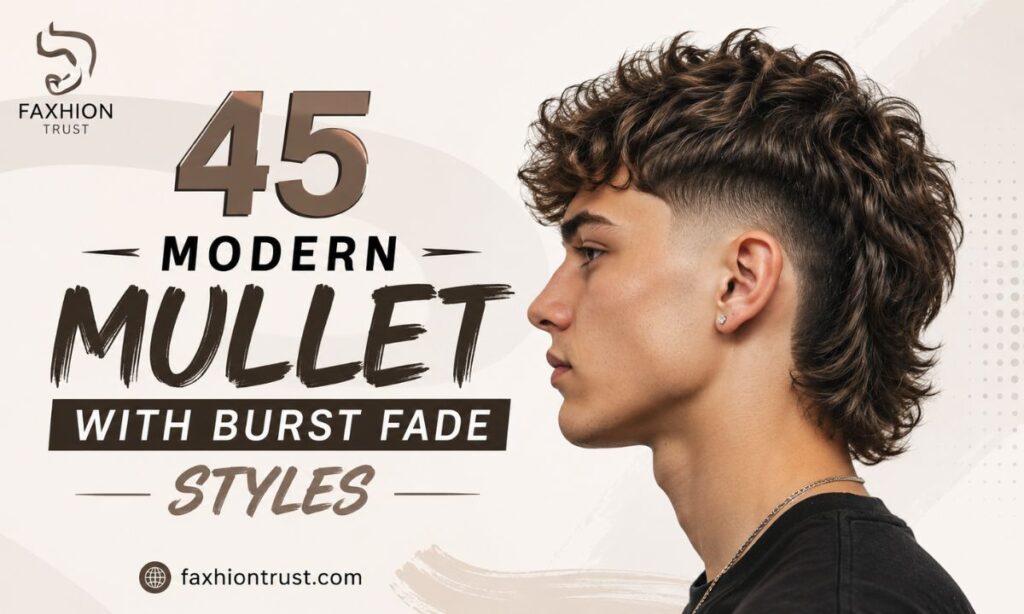
Classic Modern Mullet with Burst Fade
This is the foundation style that every other version on this list builds from. The sides are faded in a clean, rounded arc around the ear, while the top is left with moderate length for easy styling. The back is tapered rather than left blunt, so it flows naturally into the length instead of ending abruptly.

It suits almost any face shape because the proportions stay balanced between short and long. Barbers usually recommend this as a starting point for first-time mullet wearers, since it’s easy to adjust later. If you’re unsure which version to ask for, describe this one and let your barber fine-tune the details to match your hair type.
Short Modern Mullet with Burst Fade
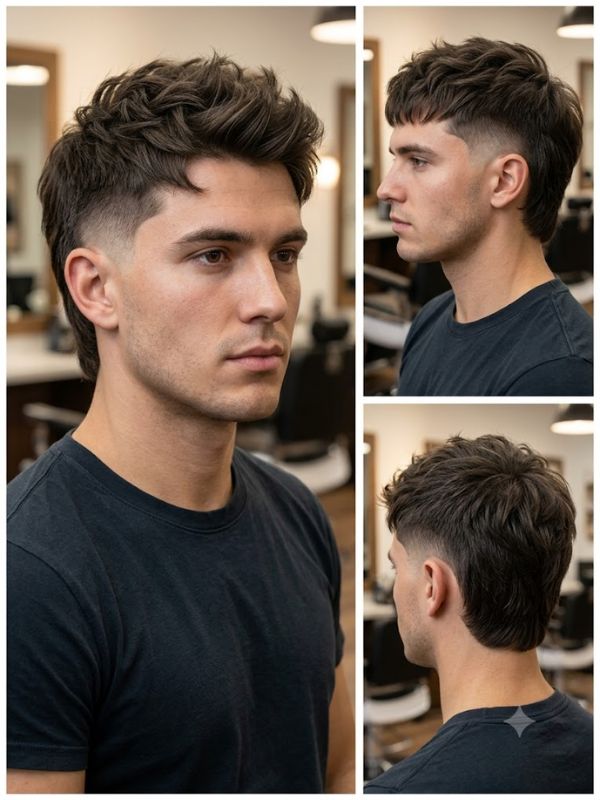
This version keeps the overall length shorter across the top and back, so the mullet shape is present but understated. It’s a good pick for guys who want the look without committing to months of growth, or for anyone who prefers lower daily styling effort. The shorter length also means the cut holds its shape longer between trims, since there’s less hair to fall out of place.
It works especially well for active lifestyles, since shorter hair stays neater through workouts or humid weather. Barbers can still add texture on top with light layering, so it doesn’t look plain. This is often the easiest style to transition into from a regular fade haircut.
Medium-Length Mullet with Burst Fade

This is the most requested length category because it hits a sweet spot between the short and long versions. There’s enough hair on top to style with a bit of height, texture, or a light fringe, and enough length at the back to show off the mullet’s signature shape. It doesn’t require heavy daily styling, since a small amount of paste or clay is usually enough to hold it in place.
This length also transitions well as hair grows, meaning you get more mileage between full trims. Most face shapes and hair types can wear this version comfortably. It’s a reliable middle-ground choice if you’re not sure how far to push the length.
Read More: Drop Fade vs Taper Fade
Long Modern Mullet with Burst Fade
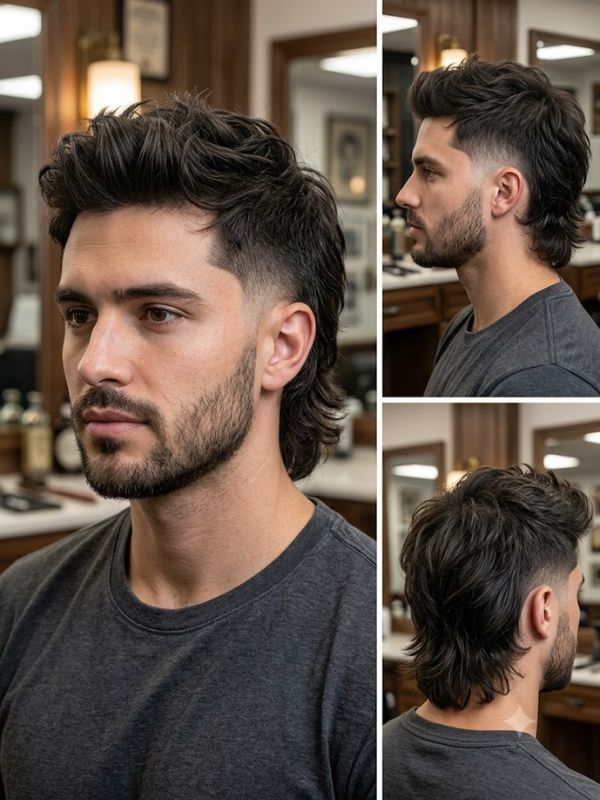
For guys who want maximum flow and movement at the back, this is the boldest length option on the list. The burst fade keeps the sides sharp and controlled, which stops the extra length from looking messy or overgrown. This contrast between tight sides and long, flowing back is what gives the long mullet its dramatic effect.
It usually takes several months of consistent growth to reach, so it’s more of a commitment than shorter versions. Regular trims at the back help maintain shape without sacrificing length. This style photographs well and tends to stand out the most in a crowd.
Textured Modern Mullet with Burst Fade
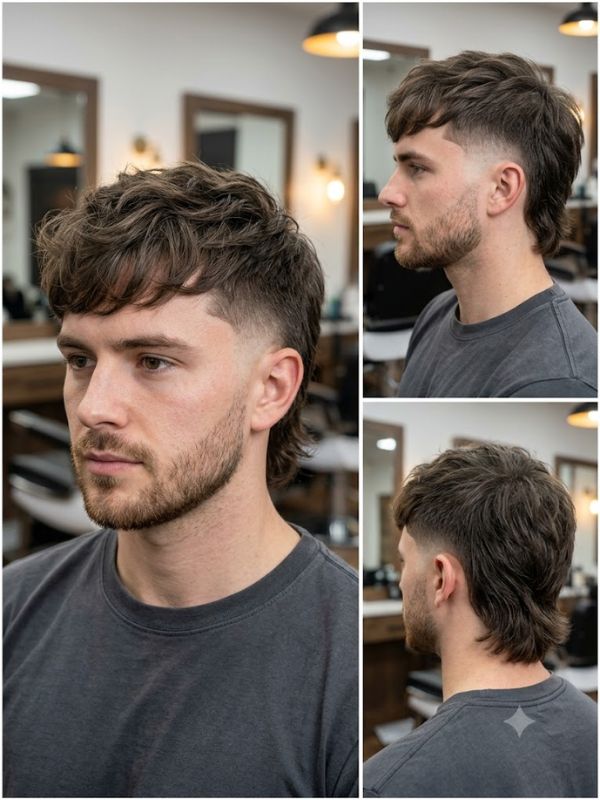
Instead of a flat, uniform top, this version relies on point-cut layers to create natural texture and separation. A matte finishing product enhances that texture without adding shine, giving the hair a lived-in, effortless look. It works particularly well on straight or wavy hair that would otherwise sit flat without some help.
The layering also reduces bulk, which makes styling faster on busy mornings. Barbers often use texturizing shears to thin out dense sections while keeping the overall length intact. This style pairs well with almost any fade height, from low to skin.
Low Burst Fade Mullet

The fade in this version starts just above the ear, keeping the transition between short and long hair subtle. It’s one of the more conservative options on this list, making it a strong choice for office environments or more formal settings. Because the contrast is softer, it also grows out more gracefully than higher fades.
This makes it lower maintenance, since you can go slightly longer between barber visits without the fade looking messy. It still delivers the classic burst arc shape, just with less visual drama. Guys who want a mullet that doesn’t draw too much attention often choose this option first.
Mid Burst Fade Mullet
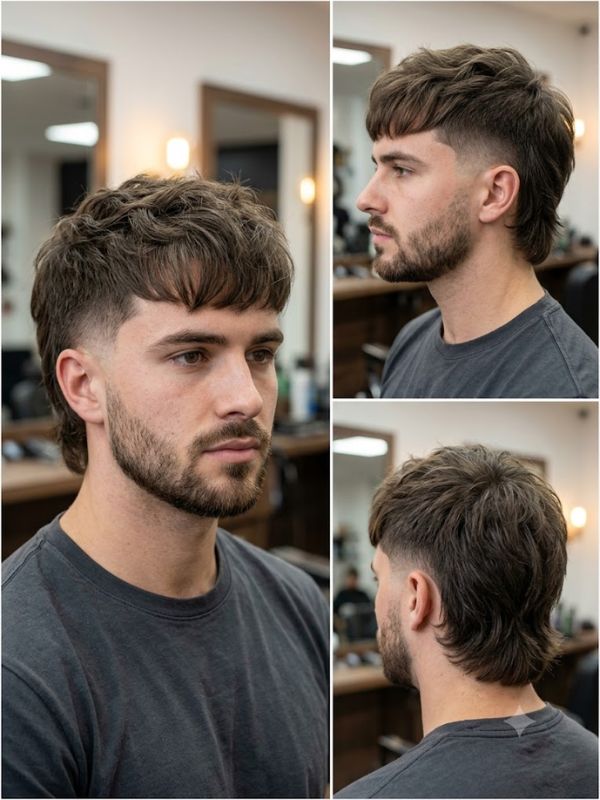
Sitting between low and high, the mid burst fade starts around temple height and offers a balanced level of contrast. It’s noticeable enough to look intentional and styled, but not so bold that it overwhelms your features. This makes it one of the most versatile fade heights, suiting a wide range of face shapes and hair densities.
It also works well with most top lengths, from short and textured to long and flowing. Many barbers recommend this height as the default when clients aren’t sure what to ask for. It strikes a comfortable balance between edgy and everyday-wearable.
High Burst Fade Mullet

This version pushes the fade higher up the sides, creating maximum contrast between the skin-close area and the length left on top. It’s a bold, attention-grabbing choice that works best when there’s enough volume on top to balance out the sharp sides. Thicker hair types tend to suit this fade height best, since thinner hair can look disproportionate against such a dramatic line.
The high fade also requires more frequent touch-ups, since regrowth becomes visible faster at this height. It’s a great option for anyone who wants their haircut to make a statement. Pair it with a beard fade or line up for an even sharper finish.
Skin Burst Fade Mullet

Also known as a bald burst fade, this style takes the sides down to the skin for the sharpest possible line. The contrast between the bald sides and the longer top and back is dramatic, making the mullet shape stand out even more clearly. This version demands the most frequent maintenance, typically every one to two weeks, since regrowth is immediately visible against bare skin.
It works on nearly all hair types, though it looks especially crisp with straight or wavy hair. Barbers need precise clipper control to keep the arc clean, so it’s worth going to someone experienced with skin fades. This is the boldest fade option on this entire list.
Taper Burst Fade Mullet

This softer alternative blends the rounded burst arc into a gentle taper near the neckline instead of a harsh, defined line. It grows out far more evenly than a skin or high fade, which means longer gaps between barber visits. The overall look is subtler, making it a good fit for workplaces with stricter grooming expectations.
It still keeps the sides tidy and controlled, just without the sharp contrast of a bolder fade. This style suits guys who want the mullet silhouette but prefer a more understated finish. It’s often recommended for first-timers easing into fade haircuts.
Straight Hair Burst Fade Mullet
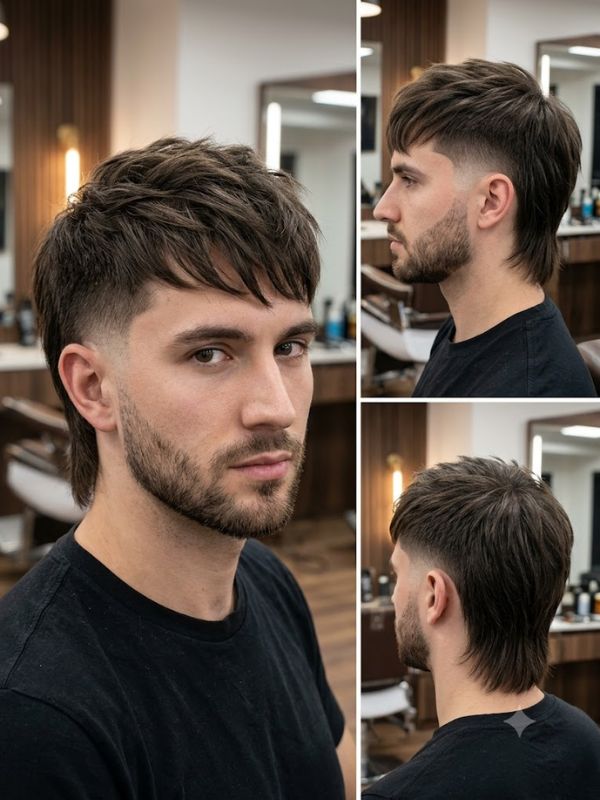
Straight hair holds a crisp, sharp line at the fade and falls naturally at the back without much extra effort. Because straight strands can sometimes look flat or heavy on top, barbers usually add soft, feathered layers to introduce movement. This keeps the cut from looking stiff or one-dimensional.
A light styling cream or matte paste is usually enough to control straight hair throughout the day. The fade itself tends to look extremely clean on straight hair, since there’s no natural texture disrupting the line. This combination is popular for its low-maintenance, sleek appearance.
Wavy Burst Fade Mullet

Natural waves add movement and dimension to both the top and back sections of the mullet, giving it a relaxed, effortless feel. A light sea salt spray enhances these waves without weighing the hair down, making styling quick and simple. The burst fade on the sides keeps the overall look controlled, so the waves don’t turn into an unstructured mess.
This version tends to look great both freshly styled and a day or two after washing. It suits guys who prefer a more casual, beachy vibe over a polished, precise finish. Waves also help hide minor inconsistencies in the fade as it grows out.
Curly Hair Burst Fade Mullet
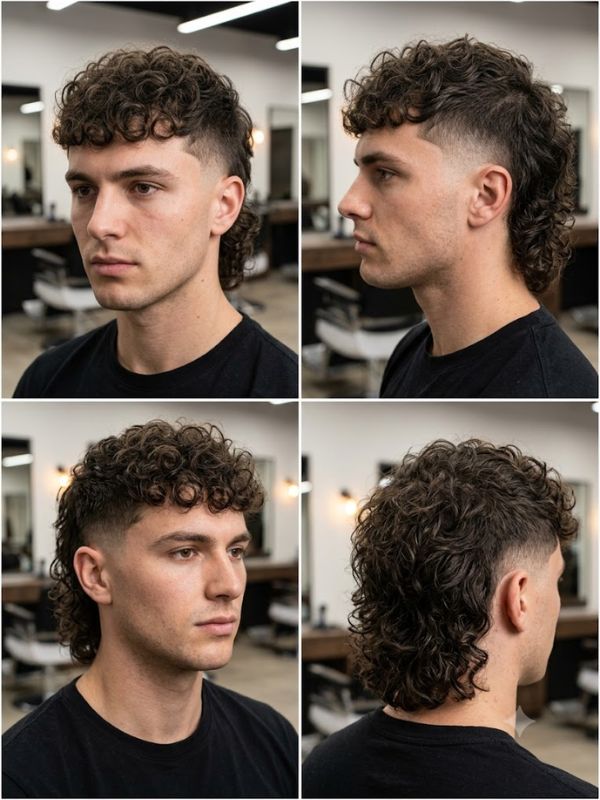
Curls bring natural volume and bounce to the top of the mullet, creating striking contrast against the tightly controlled, faded sides. This combination is one of the most visually dynamic on the list, since the curls do most of the styling work on their own. A lightweight curl cream or leave-in conditioner helps define individual curls without adding heaviness.
Curly hair also tends to disguise regrowth better than straight hair, meaning slightly more time between fade touch-ups. Barbers often shape the curls at the crown to prevent them from growing too wide or unruly. This style celebrates natural texture rather than fighting against it.
Thick Hair Burst Fade Mullet

Thick hair holds its shape exceptionally well and gives the top of the mullet real, noticeable volume. Because there’s so much density to work with, barbers usually thin the hair out slightly using texturizing shears so the transition into the fade doesn’t look bulky or heavy. This also makes the hair easier to style and quicker to dry.
Thick hair pairs especially well with higher fade heights, since the volume on top balances out the sharp contrast on the sides. Regular trims help manage the weight and keep the shape from becoming too dense. This is a great option for guys who want a fuller, statement-making mullet.
Fine Hair Burst Fade Mullet

Fine hair needs a different approach, since it can look flat or thin without the right cut and product. Shorter layers throughout the top help create the illusion of density, while a lightweight texture powder adds lift at the roots. A slightly higher fade also helps, since it makes the remaining length look fuller by comparison.
Heavy products should be avoided, as they can weigh fine hair down and make it look greasy rather than voluminous. Frequent, smaller trims work better than infrequent, larger ones for maintaining shape. With the right styling routine, fine hair can still pull off a full, well-balanced mullet.
Messy Modern Mullet with Burst Fade
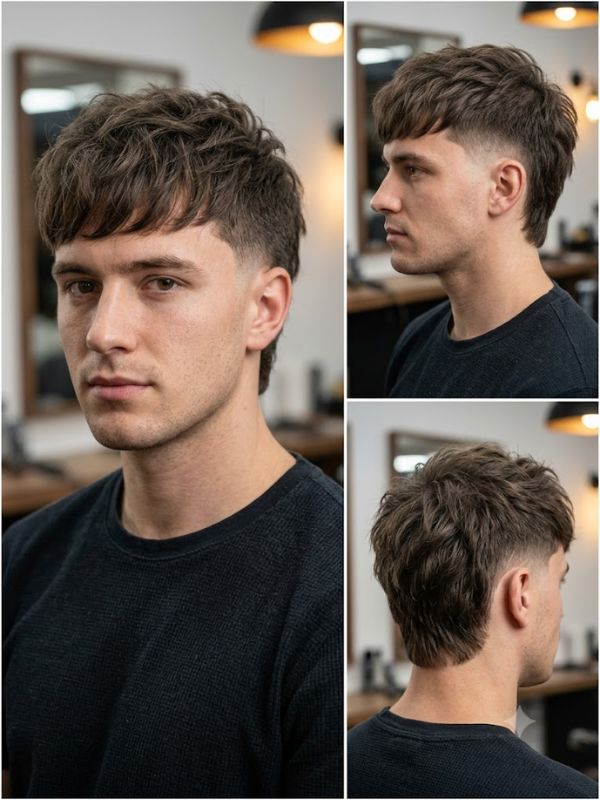
This version skips precision styling in favor of a deliberately undone, tousled finish. It’s achieved by working a light matte paste through damp or dry hair with your fingers rather than a comb, letting pieces fall naturally. The burst fade on the sides still keeps things looking intentional, even though the top is loose and relaxed.
It’s one of the fastest styles to put together in the morning, often taking under a minute. This look works particularly well on wavy or curly hair, which naturally supports the messy texture. It’s a favorite for guys who want a high-impact look with minimal daily effort.
Shaggy Burst Fade Mullet
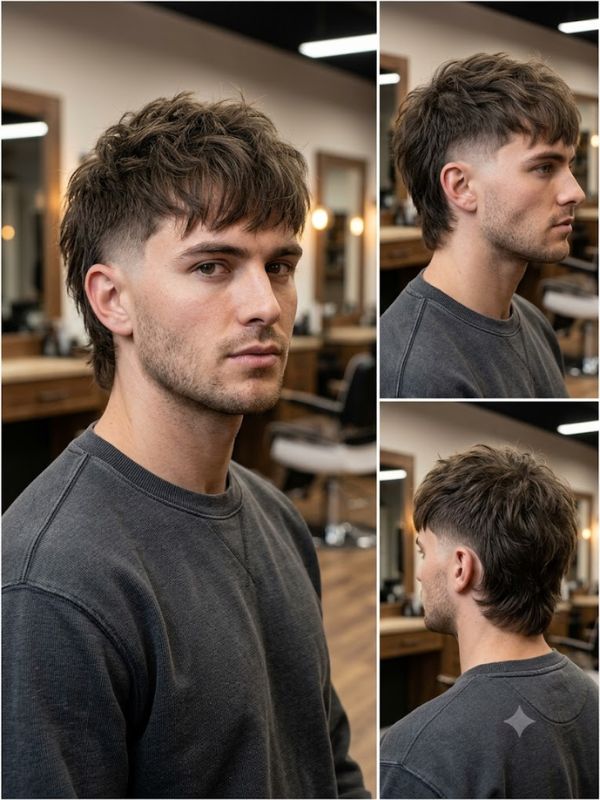
Longer, choppy layers run through both the top and back, giving this cut a relaxed, retro-rock-inspired feel. It leans into imperfection, with pieces of varying length creating natural texture rather than a smooth, uniform silhouette. Pairing this shag with a mid or low burst fade keeps the sides from looking too extreme next to the shaggier top.
This style works well on wavy or slightly curly hair, which enhances the choppy, layered effect. It requires minimal daily styling, since the layers are designed to look effortless rather than precise. It’s a strong choice for anyone drawn to a more vintage aesthetic.
Layered Burst Fade Mullet
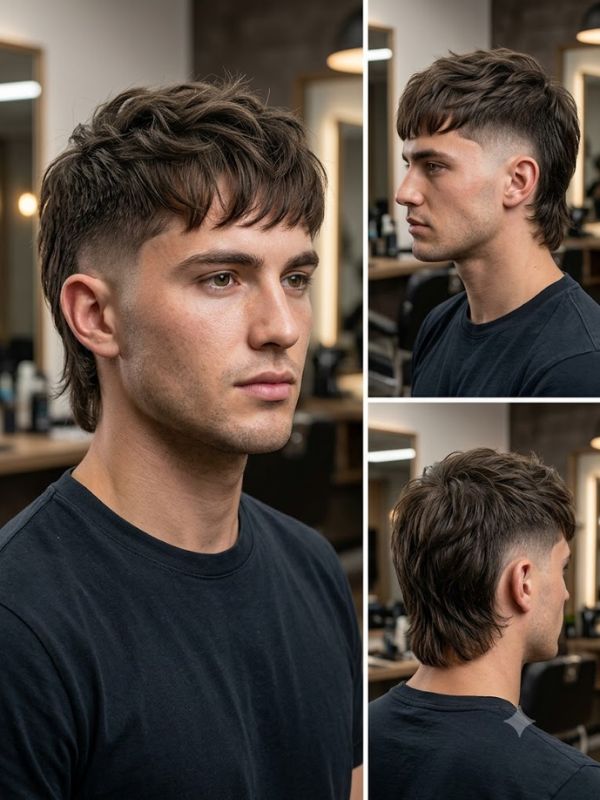
Multiple layers are cut through the top and back to reduce bulk and introduce natural movement throughout the cut. This approach works especially well for thick or wavy hair, which can otherwise feel heavy and hard to style. The layering also helps the hair fall more naturally, following the shape of the head instead of sitting in one solid mass.
Barbers typically use this technique to give the mullet more dimension without dramatically changing its length. It’s a versatile option that pairs well with almost any fade height. The result is a cut that moves and flows rather than sitting stiff.
Choppy Modern Mullet with Burst Fade

Razor-cut ends give this version a jagged, textured finish that leans into an edgier, alternative aesthetic. Unlike smooth, blunt layers, choppy cuts create intentional irregularity that adds personality to the overall shape. This style is popular among guys who want a mullet that feels more punk or rock-inspired rather than polished.
It pairs especially well with a mid or high burst fade, which adds contrast to the roughened texture on top. A small amount of matte clay helps separate the choppy pieces without making them look greasy. It’s a bold, expressive option for anyone wanting to stand out.
Tousled Burst Fade Mullet

Achieved with a texturizing spray and minimal combing, this style has a soft, wind-blown finish that still holds its shape throughout the day. It looks effortless, but the clean fade underneath does the real work of keeping the cut looking deliberate rather than unkempt. This version suits guys who don’t want to spend much time styling but still want a put-together appearance.
It works well on wavy and curly hair types, which naturally lend themselves to a tousled look. A quick scrunch or finger-comb in the morning is usually all it takes to refresh the style. It’s a relaxed, low-maintenance option with real visual impact.
Burst Fade Mullet with Fringe

The front fringe brings a youthful, modern edge to the mullet and works especially well for softening a strong or prominent forehead. The fringe can be worn straight down for a fuller look or slightly textured for more movement. This addition pairs easily with any fade height, from low to skin, without clashing with the overall shape.
It’s a simple way to update a classic mullet without changing the length at the back. Regular trims to the fringe are needed to keep it from growing into the eyes. This style is popular among younger guys looking for a trendier finish.
Burst Fade Mullet with Textured Fringe
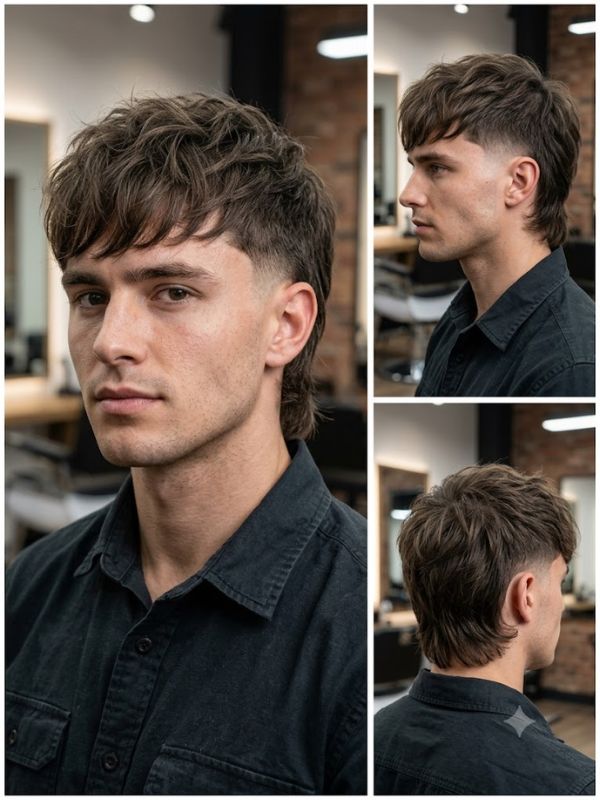
A piece-y, choppy fringe at the front adds extra dimension and a more dynamic finish compared to a straight-cut fringe. This version tends to photograph particularly well, since the separated pieces catch light and create visual depth. It suits fine to medium hair densities best, as heavier hair can make the choppy fringe look clumpy rather than textured.
A small amount of pomade or clay worked through the fringe with fingertips helps define individual pieces. This style adds a modern, editorial feel to an otherwise classic mullet shape. It works well paired with a mid or high burst fade for extra contrast.
Burst Fade Mullet with Side-Swept Fringe
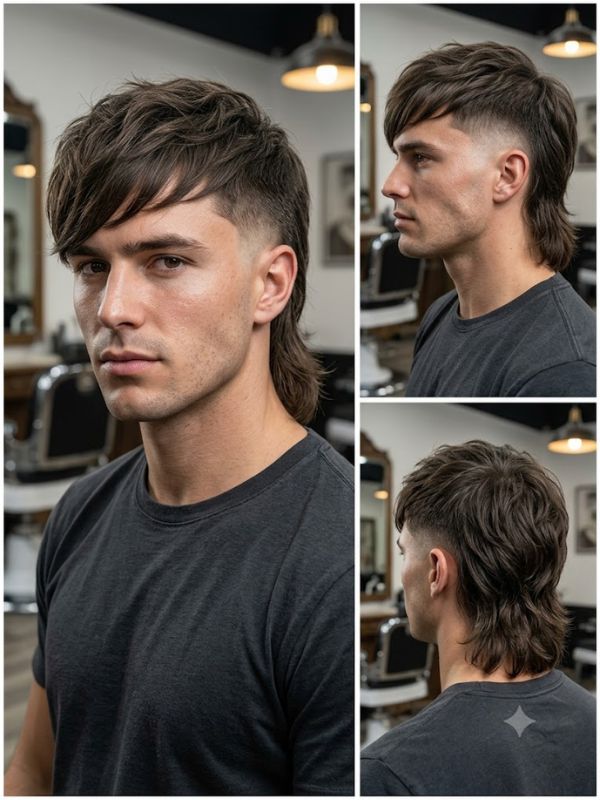
Instead of falling straight down, the fringe in this version is styled to one side, giving a slightly more polished and intentional look. It still keeps the edge and character of a mullet while feeling a touch more refined for smart-casual settings. This style works well with a light-hold pomade, which helps guide the fringe in one direction without looking stiff.
It also tends to suit oval and round face shapes particularly well, since the angled fringe adds visual length. Regular trims keep the sweep controlled as the hair grows. It’s a good transitional style between a full fringe and no fringe at all.
Burst Fade Mullet with Spiky Top
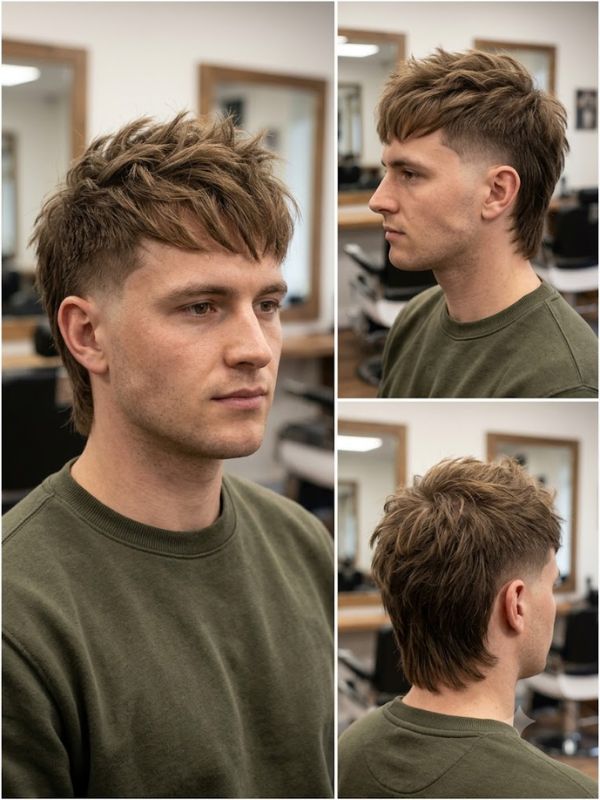
Short, gelled spikes on top create bold contrast against the longer, flowing hair at the back. This combination works best with a mid or high burst fade, since the added height and sharpness on top needs equally sharp sides to balance it out. Styling requires a strong-hold gel or wax applied to damp hair, then worked into individual spikes as it dries.
This is a higher-maintenance daily style compared to more textured or messy options, since spikes need to be redone each morning. It suits guys who enjoy a more dramatic, high-energy look. This version tends to stand out the most in group photos.
Burst Fade Mullet with Quiff

A lifted quiff at the front adds height and a touch of polish, making this version more adaptable to smart-casual environments than most other mullet styles. It’s created by blow-drying the front section upward and back while applying a medium-hold product for structure. This style balances the boldness of a mullet with a slightly more grown-up, refined appearance.
It works particularly well with thicker hair, which holds the quiff’s shape throughout the day. The burst fade on the sides keeps everything looking sharp and intentional rather than overgrown. It’s a solid choice for guys who want versatility between casual and dressier occasions.
Mohawk Burst Fade Mullet
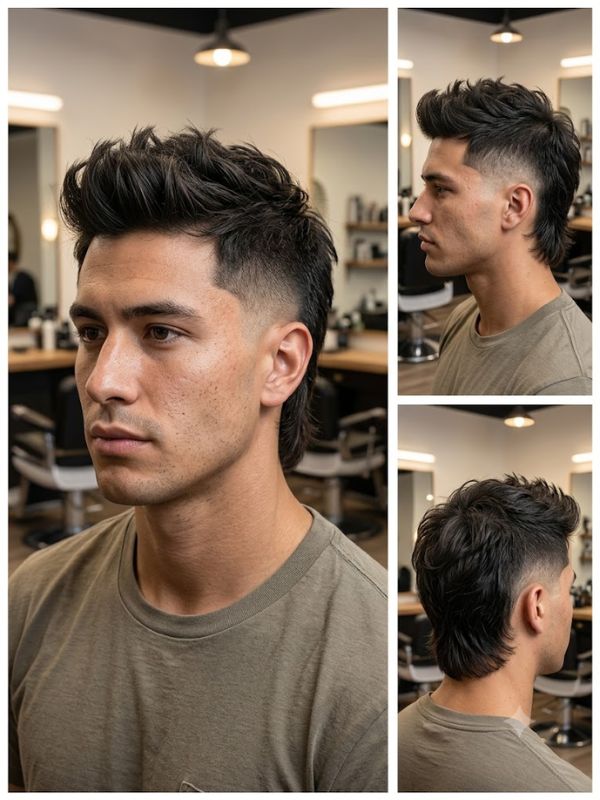
A narrow strip of longer hair runs down the center of the head, flowing seamlessly into the length at the back for a bold, statement-making shape. The burst fade on both sides is essential here, since it’s what makes the center strip pop visually. This style takes more daily effort to style upright, usually requiring a strong-hold product and some blow-drying.
It’s a striking option for guys who want their haircut to be the focal point of their look. Barbers need to carefully blend the sides into the strip to avoid harsh, uneven lines. This version is best suited to occasions or lifestyles where a bold look is welcome.
Punk-Inspired Burst Fade Mullet

This version leans into sharper shapes, higher fades, and choppier texture on top for a more alternative, rebellious feel. It’s often paired with bold or unconventional hair color to push the look even further from the traditional mullet. The contrast between the aggressive fade and the rougher top texture gives this style a real edge.
It suits guys who want their haircut to reflect a specific subculture or aesthetic rather than a conventional, everyday look. Maintenance is similar to other high-fade styles, needing touch-ups every couple of weeks. This is one of the more expressive, individualistic options on the list.
Razor Design Burst Fade Mullet
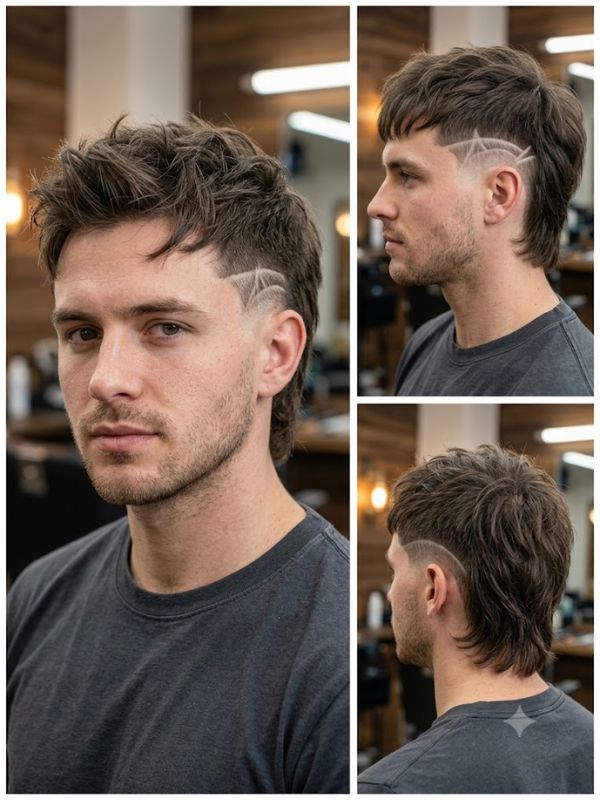
A shaved line, star, or geometric pattern is carefully etched into the fade itself, turning the haircut into a personalized, signature piece. This customization requires a skilled barber with steady hands, since designs are unforgiving of mistakes. It works best on skin or high fades, where there’s enough bare skin to make the design clearly visible.
Designs need to be refreshed every one to two weeks along with the fade, since regrowth blurs the lines quickly. This option is popular among younger guys and anyone wanting a truly unique variation of the style. It adds a creative, artistic layer to an already bold haircut.
Hard Part Burst Fade Mullet
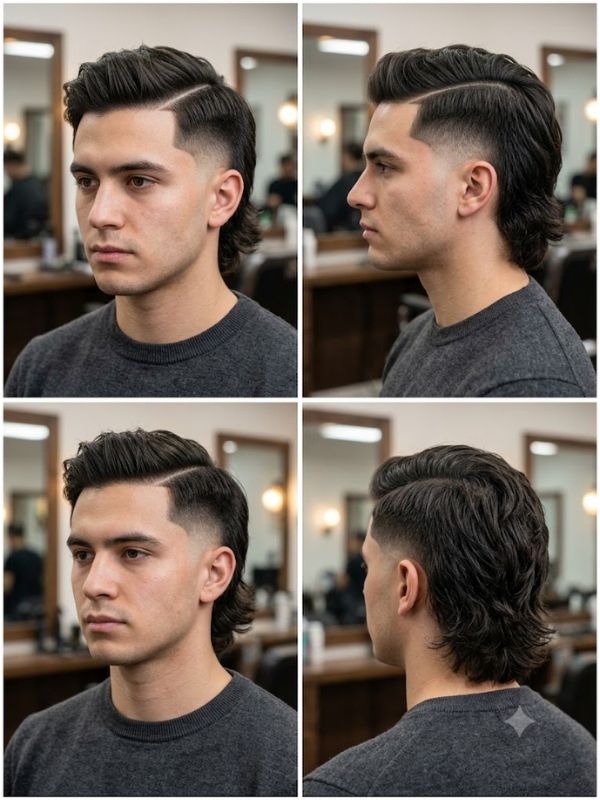
A shaved line separates the top section of hair from the fade, adding a crisp, defined edge to the overall shape. This detail works especially well with side-swept or combed-over top styles, since it visually reinforces the direction of the hair. It’s a relatively low-effort addition that makes a noticeable difference in how sharp the haircut looks.
The hard part needs to be touched up alongside the regular fade maintenance to stay clean. This style suits guys who like a slightly more structured, tailored appearance. It bridges the gap between a classic side part and a modern fade haircut.
Burst Fade Mullet with Undercut

In this version, the sides and back are cut noticeably shorter than the top, similar to a disconnected undercut, before blending into the rounded burst arc near the ear. This creates strong contrast between the short sides and the fuller top section. It works particularly well for guys who want a dramatic difference in length without necessarily going for a skin fade.
The undercut portion is lower maintenance than a fade, since it doesn’t need to be blended as precisely. This combination suits thick or wavy hair especially well, giving the top plenty of room to move. It’s a bold, modern twist on the standard burst fade mullet.
Burst Fade Mullet with Beard Fade
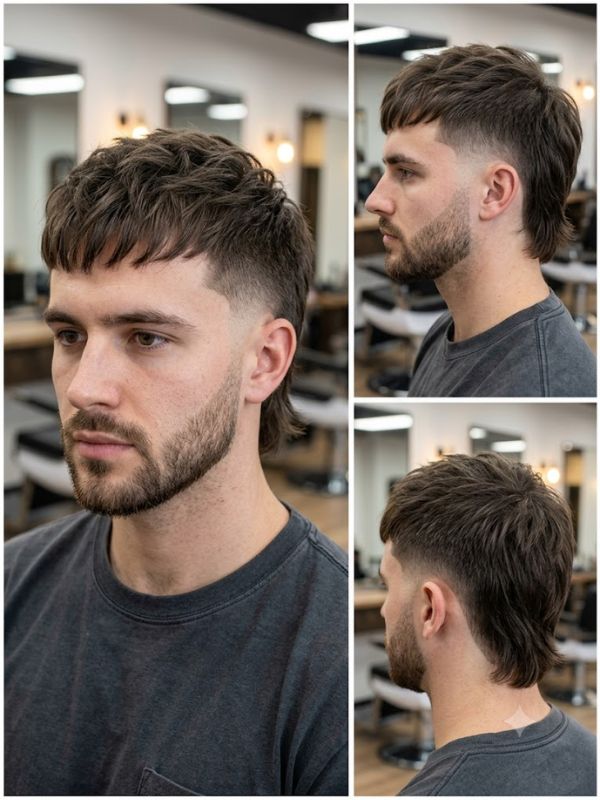
Here, the fade on the sides connects smoothly into a matching faded beard line along the jaw and cheeks. This creates a cohesive, well-groomed look that ties the haircut and facial hair together into one unified style. It requires more frequent maintenance, since both the hairline and beard need regular trimming to stay blended.
A skilled barber will taper both areas at the same angle to avoid any harsh, mismatched lines. This combination works well for guys who already maintain a beard and want their haircut to complement it. It’s a popular choice for a polished, put-together overall appearance.
Burst Fade Mullet with Line Up

A crisp, straight-edge line up along the front hairline adds sharp definition that contrasts nicely with the rounded shape of the burst fade. This detail is especially popular for guys with naturally curly or coily hair, where a defined line up creates a cleaner frame around the face.
It typically needs refreshing every one to two weeks to stay sharp, since hairline growth is quick to blur the edge. Barbers use a straight razor or fine clippers to achieve the precise, clean line. This addition works with virtually any fade height or top length. It’s a simple way to add extra polish to the overall haircut.
Burst Fade Mullet with Neck Taper

Instead of leaving the nape blunt or squared off, this version tapers the neckline for a cleaner, more finished look at the back of the head. The length above the taper stays intact, so the mullet’s shape isn’t compromised. This detail is especially useful for guys who want their haircut to look neat from every angle, not just from the front.
It also helps the hair grow out more evenly over time compared to a hard, squared neckline. Barbers usually blend the neck taper into the same fade used on the sides for consistency. It’s a subtle detail that makes a noticeable difference in overall polish.
Burst Fade Mullet with Temple Fade

This variation focuses the fade tightly around the temples and sideburn area rather than sweeping broadly across the whole side of the head. It’s particularly effective for narrowing wider face shapes, since it visually trims down the width near the top of the head. The arc stays smaller and more compact, which also means it stays looking neat for longer as it grows out.
It’s a great option for guys who wear glasses, since a clean temple area avoids interference with the frames. This style pairs well with most top lengths and textures. It offers a subtler alternative to a full burst fade across the entire side.
Burst Fade Mullet with Drop Fade

This hybrid style blends the rounded burst arc near the ear with a drop that continues lower behind the ear, following the natural curve of the head. It creates a slightly different silhouette than a pure burst fade, with a bit more length retained behind the ear. This combination suits guys who want the sharpness of a burst fade but a softer, more gradual transition toward the neckline.
It works well with straight or wavy hair, which shows off the curved fade line clearly. Maintenance is similar to a standard burst fade, needing regular touch-ups to keep the shape crisp. It’s a good option for those wanting a slightly more unique fade shape.
Colored Modern Mullet with Burst Fade
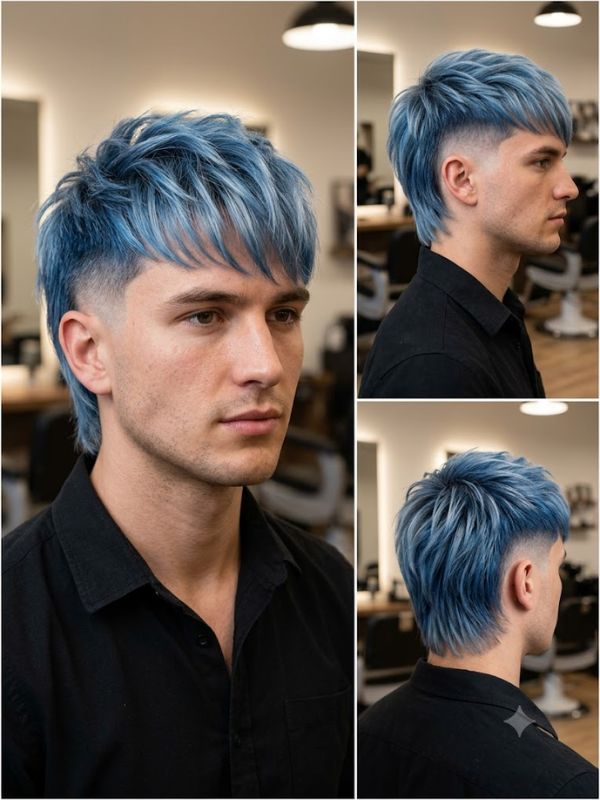
Adding color, whether subtle or bold, introduces an extra dimension to the mullet that a single-tone cut can’t achieve. Darker roots fading into lighter tips are a popular way to add depth and movement without committing to an all-over color change. This approach also helps disguise the natural regrowth line for longer between color touch-ups.
Coloring works especially well on the longer sections at the top and back, where there’s more surface area to show off the effect. It’s worth consulting a colorist alongside your barber to make sure the color complements the cut’s shape. This option suits guys who want their haircut to feel more personalized and expressive.
Blonde Burst Fade Mullet
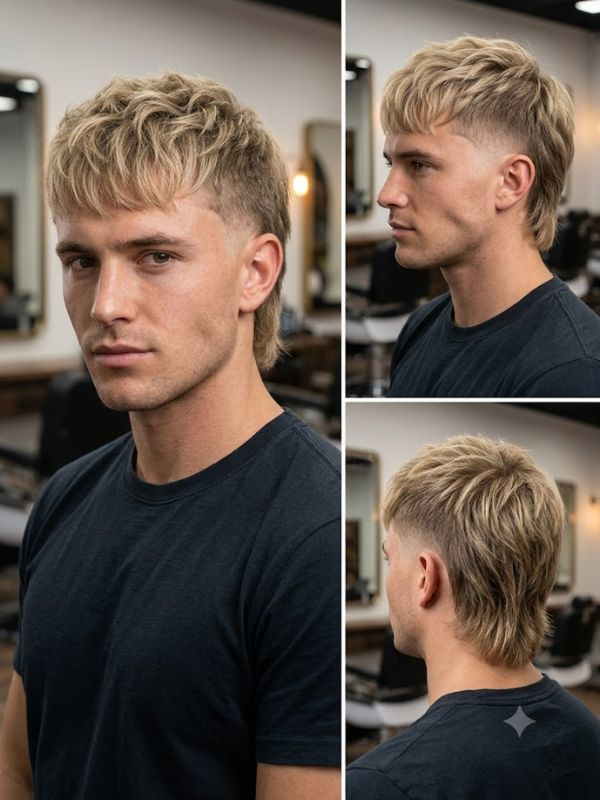
Full or partial blonde coloring makes the length at the back and top stand out dramatically against the tight, often darker-rooted fade. This high-contrast look draws attention to the mullet’s signature shape and works particularly well in photos and under bright lighting. Maintaining blonde hair requires purple shampoo and regular toning to prevent brassiness between salon visits.
It also demands more frequent conditioning treatments, since bleach can leave hair drier and more prone to breakage. This style suits guys who are comfortable with a higher-maintenance color routine in exchange for a bold, eye-catching result. It pairs especially well with textured or wavy top styles.
Burst Fade Mullet with Highlights

Rather than a full color change, highlights are added to specific sections, usually around the face or through the top, to create subtle dimensions. This is a lower-commitment way to introduce color without altering the entire look of the haircut. Highlights catch the light differently depending on how the hair moves, adding a dynamic, three-dimensional quality to the style.
They also require less frequent touch-ups than a full color job, since regrowth is less noticeable. This option suits guys who want a hint of color rather than a dramatic transformation. It works well on both straight and wavy hair textures.
Also Read This: Best Low Taper Fade Haircuts
Burst Fade Mullet with Braids
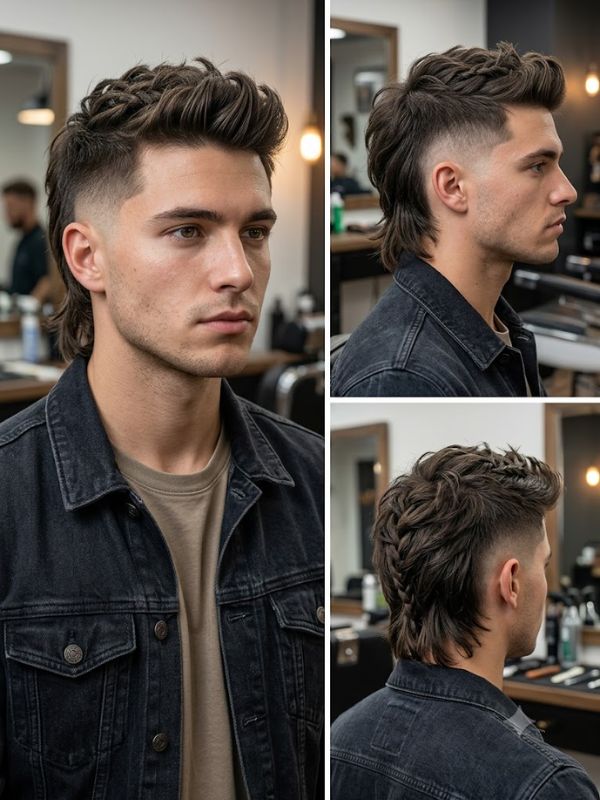
Small braids or twists incorporated into the top or back section add a unique textural element that sets this style apart from standard mullets. This works especially well on thicker or curlier hair types, which hold braided patterns more securely throughout the day. The braids can be styled in various patterns, from simple cornrows to more intricate designs, depending on personal preference.
This combination requires some skill to execute well, so it’s worth seeking a barber experienced with braiding techniques. The burst fade sides keep the overall look controlled and balanced against the more elaborate top. It’s a great option for guys wanting to combine two distinct style elements.
Burst Fade Mullet with Twists
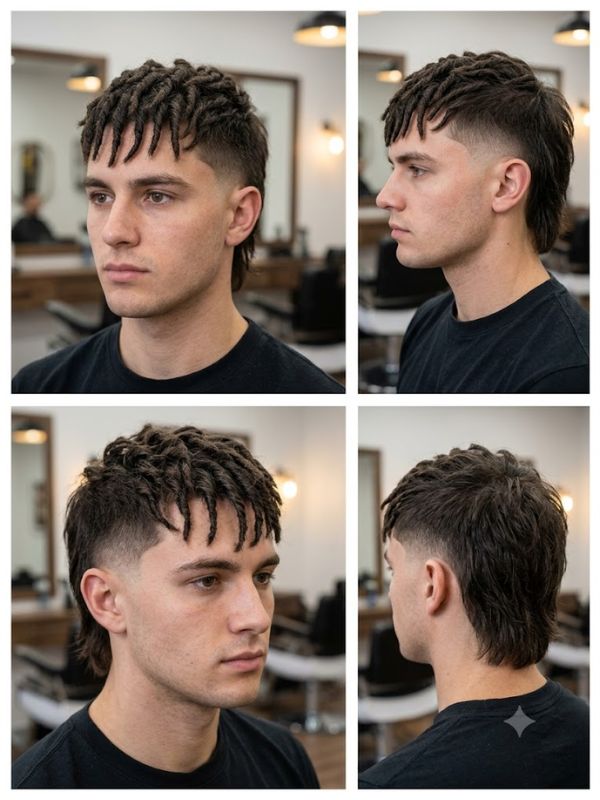
Twisted sections replace a traditional flat or layered top, giving the hair natural definition, texture, and dimension. This style works particularly well on coily or very curly hair, which holds twists cleanly without much extra product. It pairs nicely with a skin or high burst fade, since the sharp sides provide strong contrast against the textured, twisted top.
Maintenance involves re-twisting periodically to keep the pattern neat as new growth comes in. A lightweight twisting cream helps define each section without leaving hair greasy or stiff. This combination is popular for its bold, distinctive look that stands apart from more conventional mullet styles.
Soft Modern Mullet with Burst Fade
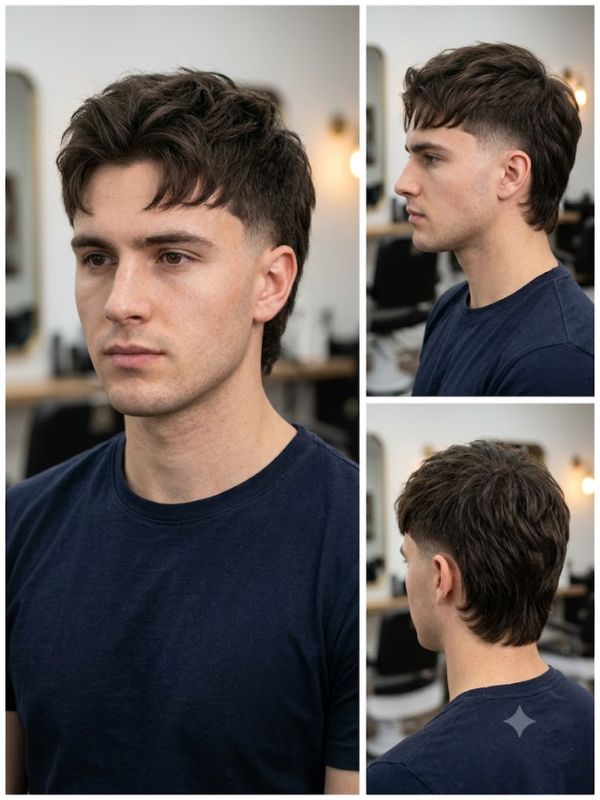
This gentler version pairs a low fade with soft, feathered layers and minimal use of styling product for an understated, natural finish. It’s a great option for guys who like the mullet silhouette but want something that reads as everyday-friendly rather than bold or dramatic. The low contrast between the fade and the top length keeps the overall look subtle and easy to wear in most settings, including work.
It also grows out more gracefully, meaning fewer trips to the barber for touch-ups. This style suits fine to medium hair densities particularly well. It’s a solid choice for a first mullet if you’re easing into the style.
Korean-Style Burst Fade Mullet

This version pairs softer, curtain-style fringe at the front with a lightly textured back for a trendy, K-pop-inspired finish. The fringe typically parts down the middle and falls gently across the forehead, softening the overall look compared to bolder mullet styles. It works especially well with straight to slightly wavy hair, which holds the curtain shape without much styling effort.
A light styling cream is usually enough to keep the fringe controlled throughout the day. This style has become increasingly popular for its youthful, fashion-forward appearance. It pairs well with low to mid burst fades for a balanced, polished result.
Asian-Inspired Burst Fade Mullet
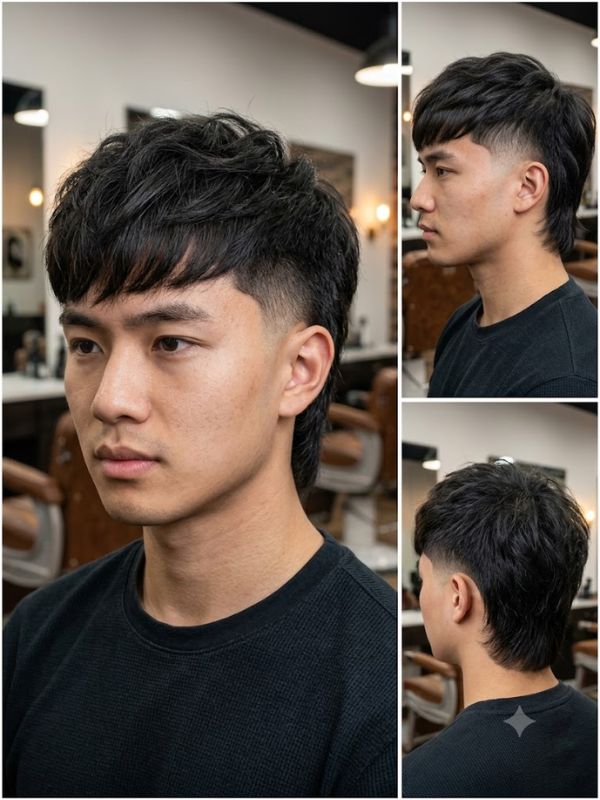
This style works particularly well with naturally thick, straight hair, using textured layers on top to introduce movement while the sides stay clean and sharp. The layering helps prevent thick, straight hair from looking heavy or block-like, giving it more shape and dimension. A matte finishing product enhances the texture without adding unwanted shine or weight.
This version often incorporates a soft fringe or side-swept top for added versatility. The fade keeps the overall silhouette modern, even as the top carries more length and texture. It’s a popular choice for guys wanting a contemporary take on traditional hair textures.
Teen Burst Fade Mullet
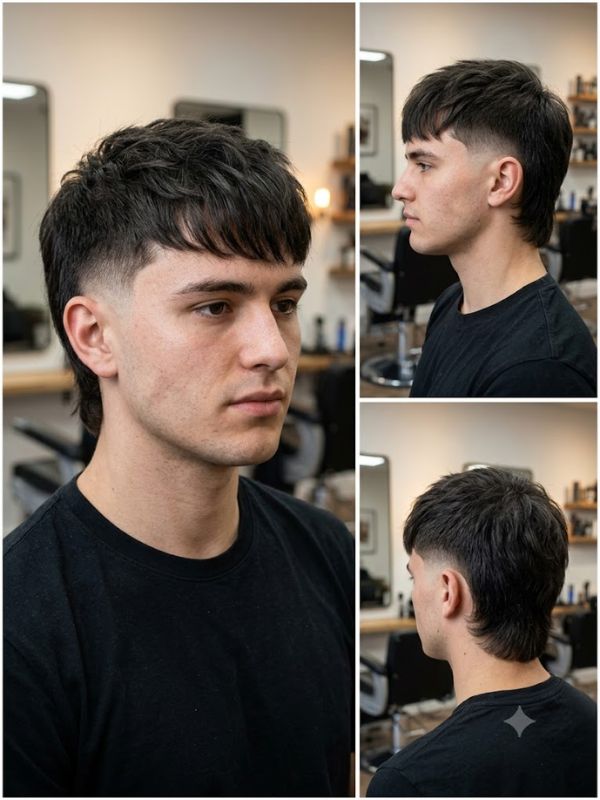
This is a slightly shorter, lower-maintenance version designed to stay neat through school days, sports practice, and everyday activity. The reduced length on top and back means less daily styling time while still delivering the modern mullet silhouette. It’s an easy style to keep tidy between barber visits, since there’s less hair to fall out of place.
Parents and barbers often recommend this version as an approachable entry point into the mullet trend. It suits most hair types with only minor adjustments to fade height or top texture. This style balances trend-forward appeal with practicality for an active lifestyle.
Modern Wolf Mullet with Burst Fade
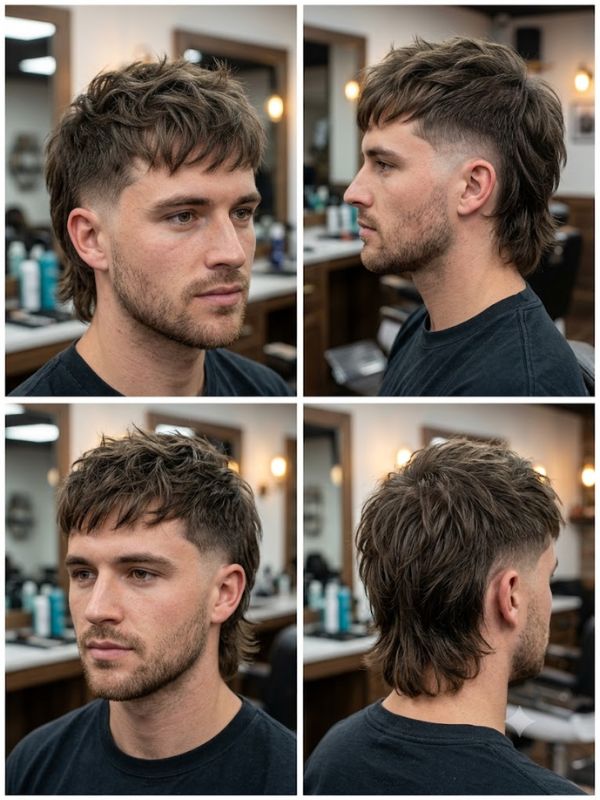
This version combines heavy layering and noticeable volume, similar to a wolf cut, with a burst fade along the sides for a shaggier, more textured overall shape. It’s bolder and more voluminous than a standard mullet, with choppy layers throughout the top and back creating a wild, statement-making silhouette. This style suits thick or wavy hair best, since there’s enough density to fill out the heavy layering.
It requires a texturizing spray or light paste to enhance the natural volume without weighing the hair down. The burst fade keeps the sides from competing with the dramatic top and back. This is one of the boldest, most fashion-forward options on this entire list.
How to Style a Modern Mullet with Burst Fade
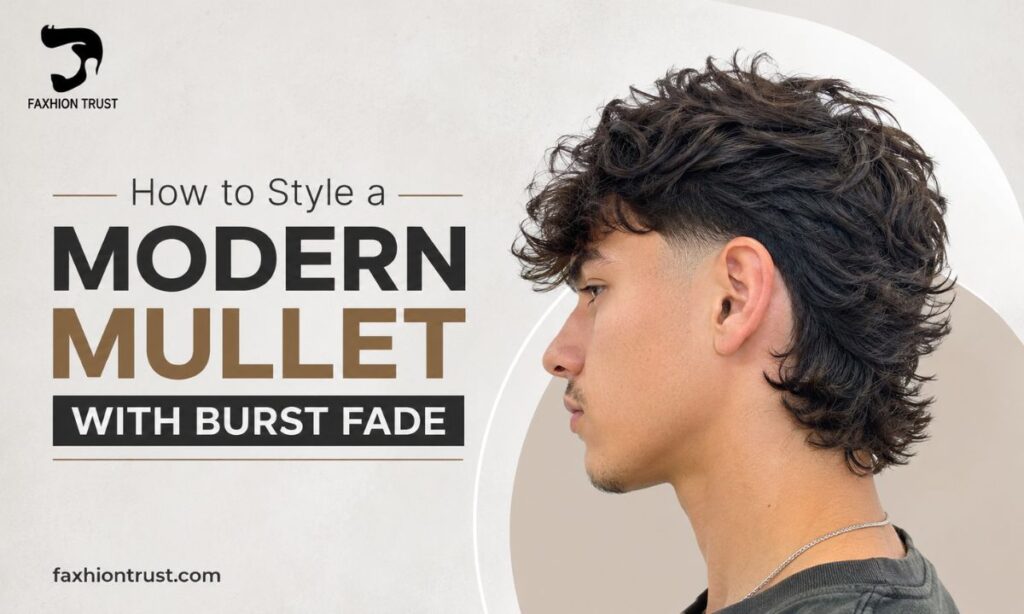
Styling a burst fade mullet is simpler than it looks. Most of the work happens at the barbershop through cutting and layering. Daily styling just needs to enhance what’s already there, using the right products and a consistent routine.
Products You Need for Styling
- Matte clay or paste – adds texture without shine, ideal for daily styling and messy or textured finishes
- Sea salt spray – enhances natural waves, adds grip, and gives a relaxed, beachy texture
- Light-hold pomade – good for slicked-back styles, side-swept fringe, or more polished, defined looks
- Texture powder – boosts volume at the roots, especially useful for fine or thin hair
- Heat protectant spray – essential if you regularly blow-dry, straighten, or use any heated styling tool
How to Maintain the Burst Fade
- Get the fade refreshed every 2–3 weeks to keep the rounded arc looking sharp and well-defined.
- Use clippers with a guard at home for light touch-ups on the neckline between full barber visits.
- Keep the length on top and back trimmed slightly on a regular basis to preserve the intended shape.
- Wash with a clarifying shampoo weekly to remove product buildup that can weigh hair down over time.
- Ask your barber to blend the fade line carefully, so regrowth looks softer and less obvious as weeks pass.
How Often Should You Get a Burst Fade Mullet?
Most guys need a fade touch-up every 2–3 weeks, since fades grow out noticeably faster than the rest of the haircut, especially higher or skin fades. The top and back length, on the other hand, can typically go 6–8 weeks between full trims, since that extra length is part of the mullet’s core appeal.
Balancing these two maintenance schedules is key to keeping the cut looking sharp without losing the length you’re growing out. Skin and high fades need the most frequent attention, while low and taper fades can stretch a little longer between visits.
How to Choose the Right Burst Fade Mullet
Best Burst Fade Mullet for Your Hair Type
| Hair Type | Recommended Style |
| Straight | Sleek burst fade mullet with feathered ends |
| Wavy | Textured or tousled burst fade mullet |
| Curly | Curly hair burst fade mullet with volume on top |
| Thick | High or mid burst fade with layered top |
| Fine | Higher fade with texture powder for added fullness |
Your natural hair texture plays a bigger role in how the finished haircut looks than the fade height alone. Straight hair shows off crisp fade lines clearly, while curly and wavy hair naturally disguise regrowth and add movement without much extra styling. Thick hair can support bolder, higher fades since there’s enough volume on top to balance the contrast, whereas fine hair often looks best with lighter layering and a slightly higher fade to create the illusion of density.
Best Mullet Length for Your Face Shape
| Face Shape | Best Fit |
| Round | Low or mid fade with height on top to elongate |
| Square | Mid or high fade with a smooth, rounded arc |
| Oval | Almost any length or fade height works well |
| Long | Low fade, avoid extra height at the crown |
| Diamond | Mid burst fade with soft fringe to balance cheekbones |
Face shape mainly affects how much height and fade contrast will look proportionate. Round faces benefit from added height on top to create the illusion of length, while long faces should avoid extra crown height to prevent the face from looking stretched. Square and diamond face shapes generally have the most flexibility, since a smooth, well-blended arc complements strong jawlines and cheekbones rather than competing with them.
According to hairstylists interviewed by Business Insider, the modern mullet with faded sides is one of the top men’s hair trends clients keep requesting.
How to Ask Your Barber for a Burst Fade Mullet
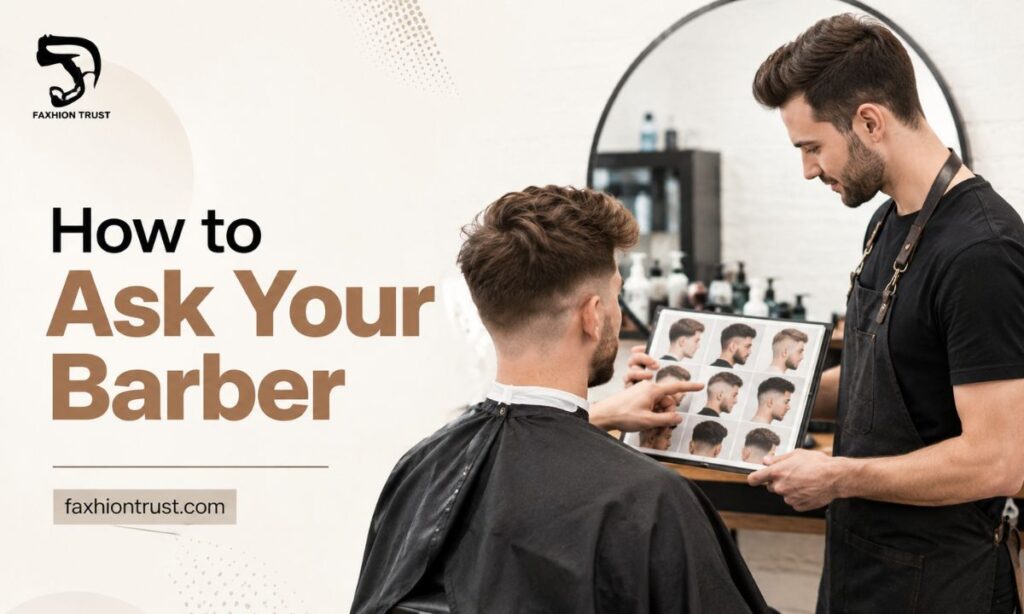
Be specific about three things: fade height (low, mid, high, or skin), how much length to leave at the top and back, and any extras like a beard fade, line up, or shaved design. Bringing a reference photo helps avoid miscommunication and gets you closer to the exact look you want.
It also helps to mention your hair type and how much daily styling time you’re realistically willing to put in, since that affects which version of the cut will work best for you long-term. A quick conversation before the clippers come out saves you from an outcome that doesn’t match what you had in mind.
Conclusion
The burst fade mullet earns its popularity because it’s flexible. It works with straight, wavy, curly, thick, or fine hair, and it adapts to nearly any face shape by adjusting fade height and top length. Whether you want something subtle and office-friendly or bold and statement-making, there’s a version on this list built for you.
Bring a reference photo to your next barber visit, be clear about fade height and length, and you’ll walk out with a cut that’s sharp on the sides and full of personality up top.